Apple knows the iPad mini market, but internet unimpressed by 60Hz
Apple called the new iPad mini its biggest update ever, with an 8.5-inch OLED display and A20 Pro, while commenters rejected the still-60Hz panel.
By Dillip Chowdary • Oct 27, 2026 • Source: 9to5Mac
Apple yesterday officially launched what it describes as “the biggest update ever” to the iPad mini, an OLED screen in a thinner, lighter design with A20 Pro and water and dust resistance. 9to5Mac's report is Ben Lovejoy’s October 27, 2026 column, published at 4:15 am PT. Commenters focused on the one spec the announcement left unnamed: the display refresh rate.
This piece is for buyers comparing the mini with ProMotion or Redmagic’s Astra 2, and for staff who relay orders, take payments, or track inventory on a mini. It covers the hardware Apple named, the 60Hz reading, who is unaffected, and why Lovejoy says Apple should have shipped a faster panel anyway.
Apple knows the iPad mini market: what actually changed
Apple highlighted a stunning OLED display in an even thinner and lighter design, a huge leap in performance with A20 Pro, and water and dust resistance. The larger 8.5-inch OLED display, also available with a nano-texture option, delivers higher contrast and more than 2x higher peak brightness than the previous-generation iPad mini. The company calls that a brilliant and immersive viewing experience. Those are the changes Apple itself put in the announcement before replies narrowed to the unstated refresh rate.
A20 Pro carries the performance half of that announcement. Apple says A20 Pro supercharges AI with Neural Accelerators in each GPU core and a Dual 16-core Neural Engine. It also lists a 12MP Center Stage front camera on the landscape edge, called perfect for video calls, an Acoustic Display for better audio, faster wireless and cellular connectivity, and fast-charge support. The refresh rate is missing from the list. Lovejoy’s obvious conclusion is a panel that remains 60Hz, not ProMotion varying from 1 to 120Hz.
Apple knows the iPad mini market: how it works
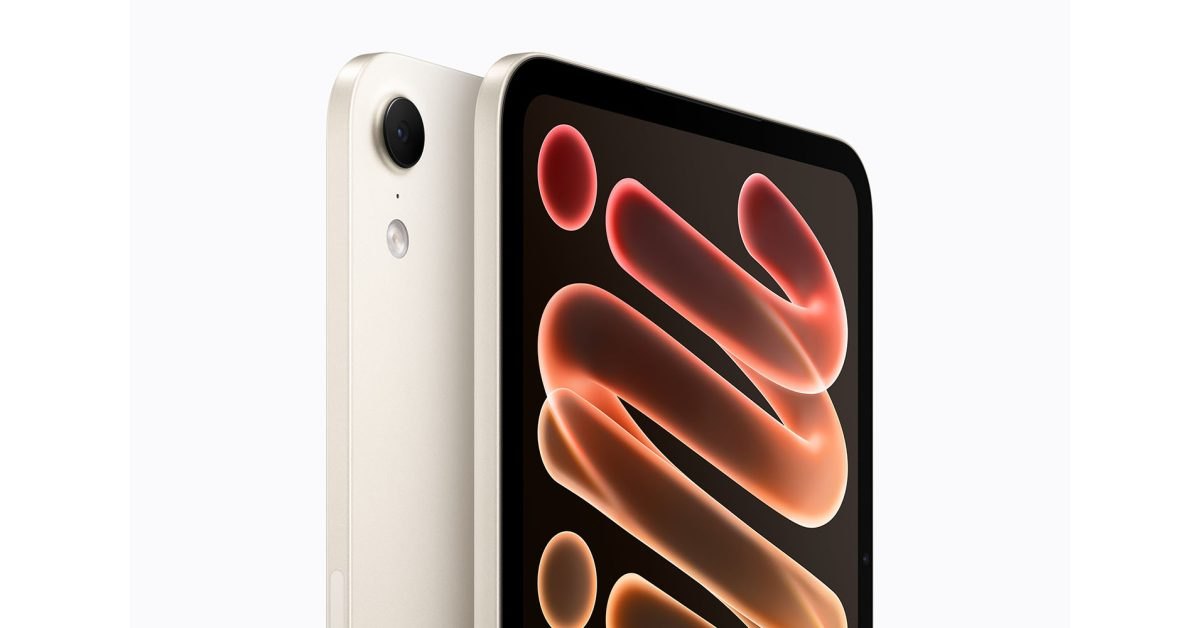
Apple ties each gain to a named part. Higher contrast and more than 2x peak brightness are attributed to the 8.5-inch OLED versus the previous-generation iPad mini, and nano-texture is an option on that glass. The AI gain is attributed to A20 Pro through Neural Accelerators in each GPU core and a Dual 16-core Neural Engine. The 12MP Center Stage camera sits on the landscape edge for video calls. Acoustic Display is the audio change, listed with faster wireless and cellular connectivity and fast-charge support.
The refresh rate was never mentioned, so Lovejoy calls the conclusion obvious: the panel remains 60Hz instead of moving to ProMotion at a variable 1 to 120Hz. 9to5Google, which the column calls 9to5Mac’s sister site, put the closest Android competitor beside that number. Redmagic’s Astra 2 has a 185Hz refresh rate. That write-up has not found 185Hz inherently better than a standard 120Hz panel, calls it way better than the 60Hz panel Apple’s latest will still use, and calls the missing 120Hz rate utterly insane in 2026.
Advertisement
Tech Pulse Daily
Get tomorrow's pulse first
Join engineers who read Tech Pulse before stand-up. Free, weekday mornings.
Apple knows the iPad mini market: why it matters now
Lovejoy calls the omission surprising in a 2026 device and quotes the replies directly. “700 bucks and no 120hz display?” “I was someone interested in adding a mini but at 60hz, 128gb, no Face ID I can’t justify the already inflated price tag.” “60Hz right? in 2026 right? Hell no.” “60Hz? Next…” “60Hz in 2026. Apple should be ashamed.” He adds that he could include many more quotes and that the idea is already clear. The complaint bundles price, storage, Face ID, and Hertz.
He writes that Apple knows the iPad mini market better than commentators do, and that it has historically been primarily a business device. He is sure that not everyone appreciates the benefits of a 120Hz display. Some commenters claimed they could not tell the difference, while others said it was only really relevant to gaming. Add those buyers to the majority business market, he argues, and Apple has undoubtedly correctly concluded that most customers simply do not care about this feature.
Apple knows the iPad mini market: who is affected
Restaurant waitstaff relay orders to the kitchen on the mini. Other uses are mobile payment terminals and warehouse inventory systems. Lovejoy writes that none of these applications would remotely benefit from a display with a faster refresh rate, which is why he treats 60Hz as irrelevant to the product’s historical majority. The announced changes that do reach those jobs are the thinner, lighter design, water and dust resistance, faster wireless and cellular connectivity, and fast-charge support on the new model.
The thread is a second audience, already declining the mini. One reader was interested in adding one but will not pay the already inflated price at 60Hz, 128GB, and no Face ID. Another frames the same stop at 700 bucks without 120Hz. Lovejoy also notes commenters who cannot tell a 120Hz difference and commenters who confine that difference to gaming. People comparing Redmagic’s Astra 2 are looking at 185Hz instead. He writes that those who care about refresh rate care rather a lot.
Apple knows the iPad mini market: what to watch
He fully acknowledges that Apple knows the iPad mini market better than any outside observer, and he calls that majority conclusion correct. What he will not set aside is the minority. The quotes he prints from the comments walk away from the update Apple calls the biggest ever because the panel is 60Hz, the storage they cite is 128GB, and Face ID is absent, in a 2026 device. Those buyers, he writes, care about the refresh rate rather a lot.
The missing figure is the cost of a faster panel. Lovejoy does not know the unit-cost difference for 120Hz. Since that rate is now standard on a great many cheaper devices, he cannot imagine the difference is substantial. He calls this a case where Apple should have done the right thing even if only a minority of buyers would appreciate it. Set beside that is Redmagic’s Astra 2 at 185Hz, judged by 9to5Google as not inherently better than 120Hz and way better than Apple’s 60Hz.
Developer Action Items
- ☐ Diff the official changelog for Apple / Android 8.5 before you bump — APIs, defaults, and removed flags only.
- ☐ Install through the vendor's documented channel in staging; keep a one-command rollback and time-box the canary.
- ☐ Grep your repo for old flag names, lockfile pins, and plugin versions that the notes mark as breaking.
- ☐ Prefer the first patch cut over the day-zero tag unless you have a reason to be on the leading edge.
- ☐ If 9to5Mac did not name a region, plan, or SKU, screenshot the official availability line before you promise it to users.
Apple knows the iPad mini market FAQ
What did Apple change on the new iPad mini?
Apple launched what it calls the biggest update ever to the iPad mini: an OLED screen in a thinner, lighter design, A20 Pro performance, and water and dust resistance. The 8.5-inch OLED, also available with a nano-texture option, delivers higher contrast and more than 2x the peak brightness of the previous-generation iPad mini, plus a 12MP Center Stage camera, an Acoustic Display, faster wireless and cellular connectivity, and fast-charge support.
Did the new iPad mini get a 120Hz ProMotion display?
Apple did not mention the refresh rate. Ben Lovejoy’s October 27, 2026 column says the obvious conclusion is that the panel remains 60Hz instead of a ProMotion variable refresh rate of 1 to 120Hz.
Why are commenters rejecting the new iPad mini?
They object to 60Hz in 2026 at the price and storage they cite. Printed replies include “700 bucks and no 120hz display?” and a buyer who will not pay an already inflated price for 60Hz, 128GB, and no Face ID.
How does the iPad mini’s refresh rate compare with the Redmagic Astra 2?
9to5Google, cited by 9to5Mac as its sister site, says the Astra 2 has a 185Hz panel. That write-up calls 185Hz not inherently better than a standard 120Hz panel, and way better than the 60Hz panel on Apple’s latest iPad mini.
Why does Ben Lovejoy say Apple kept the iPad mini at 60Hz?
He writes that the mini has historically been a business device for restaurant orders, mobile payment terminals, and warehouse inventory, none of which benefit from a faster panel. Some consumers cannot tell 120Hz apart and others limit it to gaming, so he says Apple concluded most customers do not care, even though he thinks Apple should still have shipped 120Hz.
Sources

Author
Dillip Chowdary
Writes Tech Bytes coverage of AI, engineering, and the tools that actually ship. Editor of Tech Pulse Daily.
Related on Tech Bytes
Advertisement