Best Chromebooks and Googlebooks (2026): Laptops With a Google Touch
Google introduced five premium Googlebook laptops with 16 GB of RAM and 512 GB of storage running an Android-based OS, while Chromebooks start at $130.
By Dillip Chowdary • Nov 01, 2026 • Source: Wired
Google launched a brand-new series of laptops called Googlebooks running on an Android-based operating system designed to succeed Chrome OS, as detailed in Wired's report. While Google announced standard Chromebooks will remain in the retail lineup for the foreseeable future, select recent Chromebook hardware will also qualify for software upgrades to the new operating system. Five launch hardware models are already out from manufacturers including Acer, Dell, Asus, and HP, establishing a premium tier that pairs 16 GB of memory with 512 GB of onboard storage.
This guide evaluates the entire spectrum of Google-powered mobile computing in 2026, contrasting the new flagship platform against proven budget Chromebook alternatives. It is targeted at prospective laptop buyers deciding whether to invest in top-tier performance hardware or rely on the classic low-cost formula that established Chromebooks in consumer tech. Readers will find real hardware comparisons, specifications, component compromises, and actionable buying recommendations across every pricing bracket currently in stores.
Best Chromebooks and Googlebooks (2026): what actually changed
The defining shift is Google's departure from traditional Chrome OS architecture in favor of Googlebook OS, a customized variant of Android tailored for clamshell laptop computing. Unlike older Chromebooks that tightly bundled the browser into core system builds, Googlebooks run the full Chrome desktop browser decoupled from the underlying operating system so it can update independently. Furthermore, Android applications downloaded via Google Play execute natively rather than through containerized virtualization layers, producing noticeably faster execution that closely mirrors performance on Android mobile handsets and tablets.
Hardware baselines have also changed substantially compared to standard budget Chrome OS portables. Every first-generation Googlebook features a minimum specification floor of 16 GB of RAM alongside 512 GB of internal storage, aligning the lineup directly with premium Windows portables and the MacBook Air. Premium displays also arrived on the platform, exemplified by the $899 Acer Googlebook 14, which incorporates a 2880 x 1800 resolution OLED panel running at a 120-Hz refresh rate.
Best Chromebooks and Googlebooks (2026): how it works
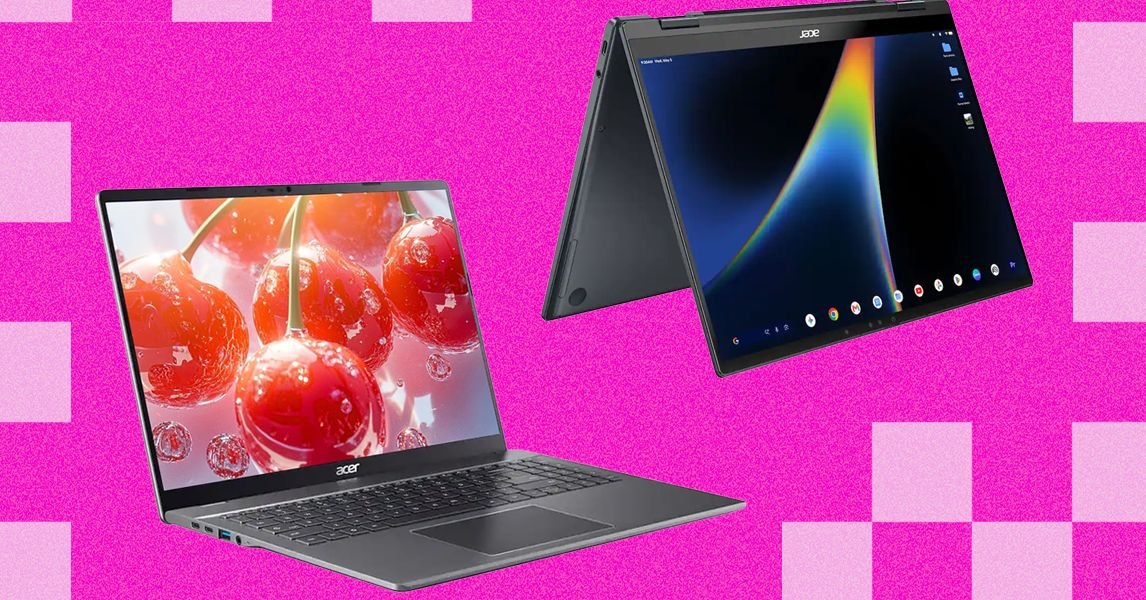
Under the hood, Googlebook hardware diverges across competing silicon architectures depending on the vendor. The Acer Googlebook 14 and the $999 Dell XPS Googlebook are powered by Qualcomm Snapdragon X Elite processors, whereas competing models from HP and Asus utilize Intel processors. In terms of external chassis construction, the Dell XPS Googlebook directly repurposes the 13-inch chassis of the modern Dell XPS 13, producing a reduced desk footprint but also discarding the traditional 3.5mm headphone jack.
The operating system deepens ecosystem ties with Google Pixel mobile hardware by enabling users to send and receive text messages or mirror and control phone applications straight from the laptop desktop. Software packages also bundle a complimentary one-year subscription to Google Gemini artificial intelligence utilities, matching the promotional software suite provided to Chromebook Plus systems. The operating system additionally exposes an integrated AI-driven context menu designed to accelerate everyday desktop tasks.
Advertisement
Tech Pulse Daily
Get tomorrow's pulse first
Join engineers who read Tech Pulse before stand-up. Free, weekday mornings.
Best Chromebooks and Googlebooks (2026): why it matters now
The arrival of Googlebooks represents Google's attempt to shed the legacy reputation of Chrome OS as purely a budget, low-spec computing tier. However, early benchmarks demonstrate that early software optimization hurdles remain on the new operating system. On browser performance benchmarks like Speedometer 3.1, Apple's M5 silicon inside the MacBook Air continues to considerably outperform these devices, while Qualcomm-powered units fail to deliver the battery longevity seen on equivalent Windows Snapdragon laptops.
Early adopters must also navigate several day-one software defects and interface inconsistencies across native software. On Intel-based Googlebook configurations, specific Chrome extensions refuse to load, while various Android apps feel sluggish or fail to properly support physical keyboard and touchpad navigation. While Google adapted first-party productivity tools like Google Docs for pointer navigation, third-party software like Microsoft Outlook fails to support standard touchpad text selection, and audio applications like Spotify remain oriented around touchscreen controls.
Best Chromebooks and Googlebooks (2026): who is affected
Shoppers on tighter spending allowances continue to find practical utility in classic low-cost Chromebook hardware. The Acer Chromebook Plus 516 represents a functional middle ground, frequently retailing under $500 and dipping to $350 during promotional sales with an Intel Core i3 processor, 8 GB of RAM, and 128 GB of storage. Its primary limitation is a washed-out 1920 x 1200 display spread over 16 inches, but its smooth, responsive physical touchpad offsets screen shortcomings for daily typing and browsing.
At the lowest end of the price spectrum, entry-level buyers can consider the Asus Chromebook CX14 and CX15, which can drop as low as $130 at retail. These non-Plus budget laptops carry dim 250-nit screens, 720p webcams, and weaker processors, though versions equipped with 8 GB of RAM provide acceptable basic usability. The CX14 remains preferable over the CX15 because it omits the cramped numeric keypad and off-center trackpad found on the larger 15-inch variant.
Best Chromebooks and Googlebooks (2026): what to watch
Prospective laptop purchasers should monitor future software updates to see how quickly Google resolves early bugs across Googlebook OS and third-party developer toolkits. Until application builders properly retool mobile layouts for keyboard and pointer inputs, many users will simply revert to browser-based web applications inside desktop Chrome. Shoppers should also keep an eye on upcoming system update eligibility lists to track which modern Chromebook machines will receive the official transition update to Googlebook OS.
Pricing developments will dictate market adoption, as the entry price for Googlebooks currently starts around the $899 mark established by Acer. By comparison, established models like the Lenovo Chromebook 14 and Acer Chromebook Plus Spin 514 offer viable alternatives for users who prefer proven Chrome OS stability without paying luxury hardware premiums. Buyers looking for value should wait for subsequent operating system revisions before paying top dollar for first-generation Googlebook hardware.
Developer Action Items
- ☐ Verify the claim on the official Gemini / Google / Android page (or Wired), not from this recap alone.
- ☐ Name the surface that moved — API, policy, model, hardware, or commercial terms — before you Slack the thread.
- ☐ Assign one owner a day to read the primary material and decide: this-sprint, this-quarter, or noise.
- ☐ Do not change production on day-one coverage. Watch the vendor changelog and one independent write-up first.
Best Chromebooks and Googlebooks (2026) FAQ
What is the main difference between a Chromebook and a Googlebook?
Googlebooks run a specialized Android-based operating system with native Android app support and an independently updated Chrome browser, whereas standard Chromebooks run Chrome OS. All initial Googlebooks also feature higher hardware minimums of 16 GB of RAM and 512 GB of internal storage.
Which processors power the new Googlebook laptops?
Launch devices utilize different processors depending on the manufacturer, with the Acer Googlebook 14 and Dell XPS Googlebook using Qualcomm Snapdragon X Elite chips, while HP and Asus models rely on Intel processors.
How much do the new Googlebooks cost compared to cheap Chromebooks?
Googlebooks start at $899 for the Acer Googlebook 14 and $999 for the Dell XPS Googlebook, while budget Chromebook alternatives like the Asus Chromebook CX14 sell for as low as $130 and the Acer Chromebook Plus 516 retails around $350 on sale.
Do existing Chromebooks get upgraded to Googlebook OS?
Google announced that standard Chromebooks will remain available in stores, but confirmed that select recent Chromebook models will be eligible for a software upgrade to the new Googlebook operating system.
Sources

Author
Dillip Chowdary
Writes Tech Bytes coverage of AI, engineering, and the tools that actually ship. Editor of Tech Pulse Daily.
Related on Tech Bytes
Advertisement