Buildkite Adds Scoped Secrets and New Agentic CI Tools
Buildkite launched pipeline-scoped secrets, Linux arm64 GitHub Actions support, and Model Context Protocol tools for automated build failure diagnostics.
By Dillip Chowdary • Oct 19, 2026 • Source: InfoQ
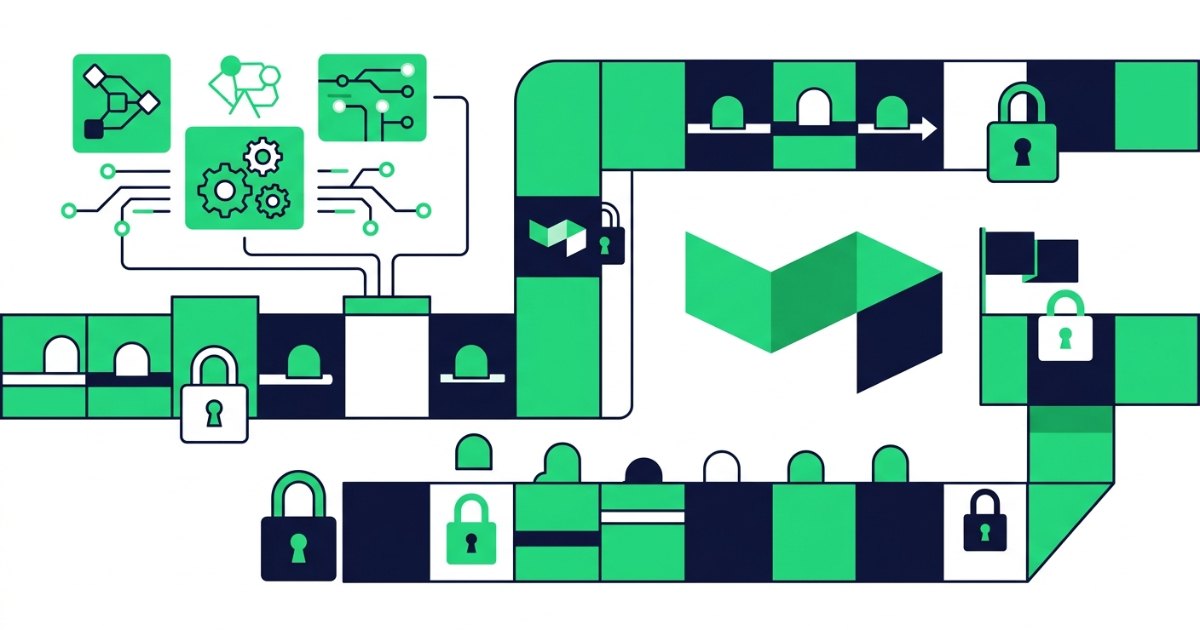
Continuous integration platform Buildkite launched pipeline-scoped secrets alongside an expanded suite of Model Context Protocol tools engineered to diagnose broken jobs, repair webhooks, and validate pipeline definitions without starting builds. As detailed in InfoQ's report, the release combines fine-grained credential boundaries with new operational telemetry across agent fleets. The vendor paired these capabilities with native Linux arm64 execution inside its GitHub Actions compatibility runtime, widening hardware support for containerized workflows while retiring older deployment components across the stack.
This reporting examines the security boundaries, agentic tooling, operational limitations, and migration obligations introduced across Buildkite Agent v4.1.0, Elastic CI Stack v7, and the updated open-source MCP server. The developments directly target infrastructure engineers, platform architects, and developers managing self-hosted agent infrastructure who want to delegate pipeline remediation to artificial intelligence coding systems without compromising cluster-wide credentials.
What Buildkite Scoped Secrets and New Agentic CI shipped
Buildkite shipped a dedicated pipeline secrets interface under Pipeline settings that restricts access to the designated pipeline rather than exposing cluster-wide secrets across all builds. Engineers can attach strict execution conditions based on branch names, queues, build creators, or build trigger sources. Matt Mejia noted in Buildkite's announcement that the update keeps pipeline-specific secrets together while maintaining visibility over the total volume of cluster-managed items. To create or adjust these entries, users must hold permissions to edit the pipeline alongside cluster management rights. Secret values remain permanently obscured after entry, and pipelines running through the GitHub Actions translation layer display prompt links directly to secret setup before a workflow executes.
The company simultaneously shipped updates to its open-source Model Context Protocol server to provide specialized entry points for autonomous agents. The release introduced validate_pipeline, a tool that checks pipeline syntax and YAML layout against the official Buildkite schema prior to upload. A companion tool named compare_builds analyzes a failing run against previous successful runs on the same branch or a selected build target, surfacing newly broken, fixed, or persistently failing steps alongside execution duration deltas. The MCP suite also added create_pipeline_webhook to link missing GitHub webhooks to existing pipelines, Test Engine execution traces, slowest-execution queries, and an option to pin remote MCP endpoints to a specific organization.
What changed for builders in Buildkite Scoped Secrets and New Agentic CI
Builders managing complex automated delivery setups gain automated diagnostic context and significantly higher payload thresholds across workflow filters. The compare_builds tool automatically packages the trailing log output of up to three newly failed steps directly into the response payload, giving AI coding assistants immediate analytical context without requiring complete log queries. Matt Mejia stated that log access alone does not debug a build, highlighting why discrete validation and step delta comparisons replace low-level log parsing. Buildkite also reversed an evaluation decision by restoring unrun jobs into standard failure summaries because omitting them forced external agents to issue extra diagnostic queries.
Workflow migration and monitoring limits also saw substantial adjustments across multiple tools. The path-filtering system increased its changed-file evaluation ceiling tenfold to support large code repositories. Telemetry collection inside Buildkite Agent v4.1.0 now surfaces detailed cache operations, while OpenTelemetry job spans incorporate commit, pull request, and author identifiers. The update resolves container configurations that rely on service-container environments, matrix variables, named secrets, and runtime arguments, while exposing broader strategy parameters to step expressions.
| Feature Metric | Before Release | After Release |
|---|---|---|
| Path filter changed-file ceiling | 300 files | 3,000 files |
| Agent v4.0.9 token log sanitization | Unredacted prefix scanning | Prefixed token log redaction |
| MCP create_pipeline parameter requirements | create_webhook optional | create_webhook required |
| Telemetry cache tracking | Omitted cache metrics | Cache save/restore duration and size |
| Elastic CI Stack v7 runner support | Agent v3 supported | Agent v3 retired |
How to install or upgrade Buildkite Scoped Secrets and New Agentic CI
Upgrading to the latest capabilities requires updating the core command-line utility, adjusting agent daemon versions, and updating server installations. Engineers can update their local Buildkite CLI installation to retrieve version 3.59.1, which resolves relative path resolution bugs when migrating workflow definitions and associated credentials from GitHub Actions.
Advertisement
Tech Pulse Daily
Get tomorrow's pulse first
Join engineers who read Tech Pulse before stand-up. Free, weekday mornings.
brew upgrade buildkite/buildkite/bkTeams utilizing the open-source Buildkite MCP server can update their package dependencies to version 1.23.0 to access the validation and webhook repair tools. The remote server configuration allows administrators to pin execution context directly to an organization by adding the organization slug into the remote connection path for standard toolset or read-only operational modes.
npm install -g @buildkite/mcp-serverTo run builds with the latest OpenTelemetry spans and cache tracking, update the Buildkite Agent binary across cluster instances to version 4.1.0. Upgrading agents also enables token prefix masking in logs from version 4.0.9 and error scrubbing using job-registered secrets from version 4.0.8.
buildkite-agent start --config /etc/buildkite-agent/buildkite-agent.cfgTeams utilizing AWS infrastructure must deploy Elastic CI Stack v7 to transition their Linux and Windows instances to the Agent v4 architecture. Upgrade deployment scripts and verify environment injection sources before applying stack templates.
aws cloudformation update-stack --stack-name buildkite-elastic-ci --template-body file://elastic-ci-stack-v7.jsonGotchas and compatibility in Buildkite Scoped Secrets and New Agentic CI
Adopting these releases introduces several breaking configuration changes and behavioral boundaries that teams must prepare for. In version 1.23.0 of the MCP server, create_pipeline now strictly requires callers to specify the create_webhook parameter, breaking existing automated scripts that omitted it. Furthermore, the validate_pipeline utility only verifies schema conformity; it does not validate environment variable interpolation, third-party plugin configurations, external dependency references, or dynamic steps created at runtime.
Infrastructure migrations also carry rigid compatibility rules. The GitHub Actions compatibility layer now executes jobs on Linux arm64 machines when mapped to explicit queue labels like ubuntu-24.04-arm, but it does not provide fallback emulation for x86-64 steps. On AWS, Elastic CI Stack v7 completely drops support for Agent v3, replacing or removing several cancellation and tracing variables. Teams must review parameters supplied through AgentEnvFileUrl and their custom deployment configurations, as support for all Agent v3 variants permanently ends on September 3, 2027.
What to watch after Buildkite Scoped Secrets and New Agentic CI
In the coming weeks, engineering organizations should monitor credential usage across build steps. While pipeline-level secret scoping restricts visibility inside cluster administration consoles, it does not replace the requirement to restrict credential exposure to specific build steps. Teams should track whether automated agents leverage the new MCP repair functions responsibly, as webhook adjustments and pipeline creation modify live delivery infrastructure.
Organizations should also examine job span metrics within their observability backends, following approaches like Pinterest's integration of Buildkite with Honeycomb to isolate agent queue delays from script runtimes. With OpenTelemetry spans now tracking commit hashes, authors, and cache durations, platform operators can inspect retry trends and trace build spikes back to specific repository changes. Finally, teams running legacy infrastructure must schedule their migration away from Agent v3 before the published September 2027 deprecation date.
Developer Action Items
- ☐ Diff the official changelog for GitHub / Linux 4.1.0 before you bump — APIs, defaults, and removed flags only.
- ☐ Install through the vendor's documented channel in staging; keep a one-command rollback and time-box the canary.
- ☐ Grep your repo for old flag names, lockfile pins, and plugin versions that the notes mark as breaking.
- ☐ Prefer the first patch cut over the day-zero tag unless you have a reason to be on the leading edge.
- ☐ If InfoQ did not name a region, plan, or SKU, screenshot the official availability line before you promise it to users.
Buildkite Scoped Secrets and New Agentic CI FAQ
What does the new validate_pipeline tool in the Buildkite MCP server check?
It evaluates pipeline YAML structure against Buildkite's official schema without uploading files or triggering a build, though it excludes dynamic steps, plugin configurations, and variable interpolation.
How does the GitHub Actions compatibility layer handle Linux arm64 jobs?
It executes workflows mapped to specific arm64 labels such as ubuntu-24.04-arm on matching agent queues without providing fallback emulation or x86-64 translation.
When does Buildkite end support for Agent v3?
Buildkite will end support for all Agent v3 releases on September 3, 2027, with Elastic CI Stack v7 already dropping Agent v3 compatibility.
Sources

Author
Dillip Chowdary
Writes Tech Bytes coverage of AI, engineering, and the tools that actually ship. Editor of Tech Pulse Daily.
Related on Tech Bytes
Advertisement