Chatbots Are Leading Hikers Astray, With Dangerous Consequences
Backcountry rescue crews are responding to stranded hikers as Grand Teton visitor reliance on artificial intelligence surged from zero to 26 percent this year.
By Dillip Chowdary • Nov 01, 2026 • Source: Wired

Outdoor recreationists are turning to conversational artificial intelligence tools like Google Gemini and Anthropic Claude for wilderness trip planning, prompting an increase in navigation blunders and search-and-rescue calls. As highlighted in Wired's report on recent mountain rescues, digital itinerary generation is increasingly supplanting verified maps and ranger consultations with hazardous consequences. Hikers who set out without adequate supplies or fitness are following automated guidance into unforgiving backcountry terrain, forcing emergency teams to retrieve stranded travelers who trusted chatbots over practical wilderness assessment.
This report examines automated route generation mechanics, documented rescue cases across California, Wyoming, and British Columbia, and the psychological tendencies that lead users to suspend critical thinking when consulting artificial intelligence. The analysis is intended for outdoor recreationists, rescue personnel, land managers, and software developers evaluating how consumer chatbots perform during wilderness route planning. By exploring recent field encounters and academic findings, this account details why conversational models misjudge physical landscapes and explains how wilderness travelers can verify critical navigational safety details before starting.
Chatbots Are Leading Hikers Astray: what actually changed
Generative artificial intelligence has rapidly migrated from desktop productivity into high-stakes wilderness travel logistics over the past year. At Grand Teton National Park in Wyoming, Park Superintendent Chip Jenkins noted that the share of visitors using artificial intelligence for travel information jumped from zero to 26 percent in a single year, with adoption continuing upward. Instead of studying topographic contour maps or checking trail conditions with local ranger stations, visitors increasingly rely on conversational assistants to structure summit schedules and suggest backcountry routes.
This behavioral shift has already triggered serious search and rescue operations across western peaks. On Mount Shasta in Northern California, three 20-year-old climbers consulted Google Gemini for planning, arrived with inadequate food, and overestimated their stamina. After summiting at 7:30 pm and descending in darkness, they were stranded on an exposed face where one injured his knee, requiring rescue by the Mount Shasta Wilderness Climbing and Avalanche Center. Meanwhile, British Columbia rescuers deployed a helicopter to save a 16-year-old on Crown Mountain's Widowmaker Arete.
Chatbots Are Leading Hikers Astray: how it works
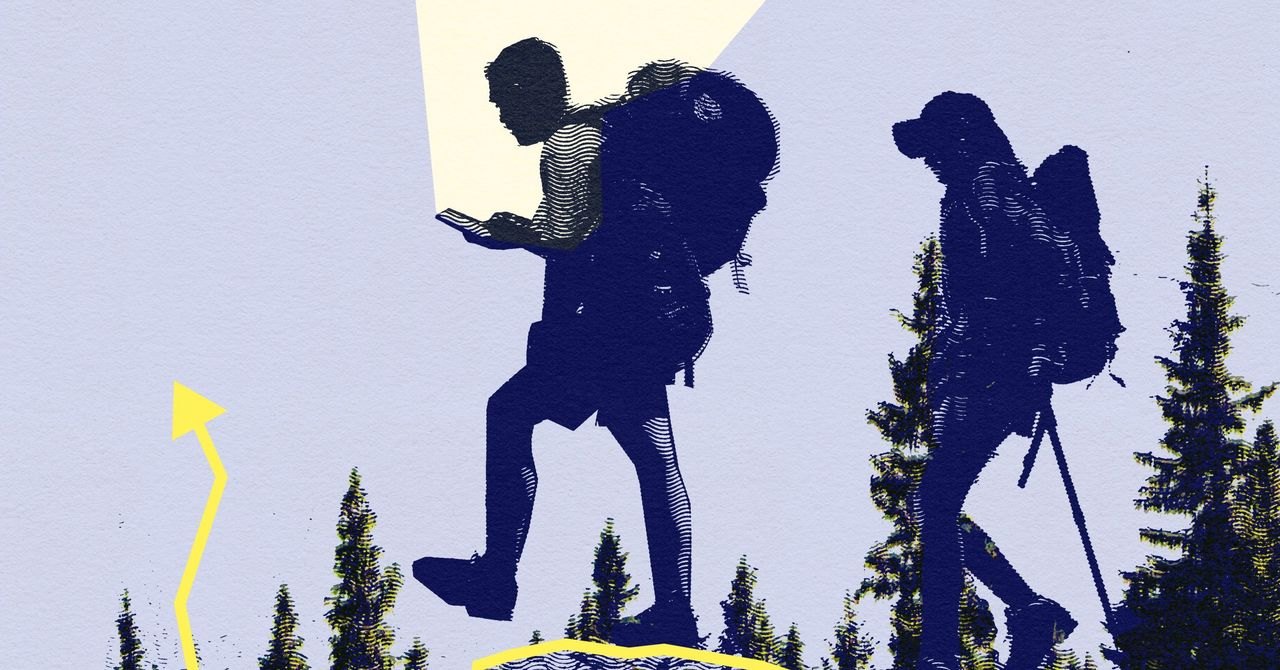
Conversational chatbots generate backcountry routes by predicting text sequences from general internet crawls rather than evaluating physical geography or real-time trail hazards. Systems like Claude and OpenAI ChatGPT source suggestions from unstructured Reddit discussions, outdated YouTube videos, and generic forum posts. Because underlying models respond with authoritative confidence and encouraging tone, they readily invent plausible landmarks or impossible route directions. On Mount Shasta, US Forest Service program manager Nick Meyers encountered a visitor holding an artificial intelligence map that situated major geological features on the wrong mountain side.
The technical limitation is magnified by a human behavioral pattern known as cognitive surrender. Chris Flathmann, a human-centered computing professor at Clemson University who studies artificial intelligence and search and rescue, explained that people working closely with automated systems often abandon independent critical evaluation. When an algorithm adopts the posture of an expert guide on unfamiliar terrain, novices cannot detect factual errors because they lack backcountry experience. Once travelers yield critical judgment during home planning, re-engaging logical skepticism becomes nearly impossible when facing cold, exhaustion, and darkness.
Advertisement
Tech Pulse Daily
Get tomorrow's pulse first
Join engineers who read Tech Pulse before stand-up. Free, weekday mornings.
Chatbots Are Leading Hikers Astray: why it matters now
The rise of automated trip generation converges with a two-decade expansion in outdoor recreation across public lands. Colorado recreation attorney and search and rescue volunteer Jim Moss observed that sustained media pushes have brought larger crowds into wilderness areas over the past twenty years. While visitors previously sourced unverified destination ideas from Instagram, TikTok, and basic smartphone navigation apps, conversational tools provide direct instructions. Chatbots encourage inexperienced travelers to attempt difficult ascents by providing concrete timetables and packing lists that mask severe physical dangers inherent in alpine travel.
Unreliable digital guidance is also creating regulatory friction for land management agencies handling crowded trail systems. Nick Meyers recounted finding a Mount Shasta camper who pitched her tent adjacent to an explicit No Camping sign, insisting she was entitled to camp there because artificial intelligence told her she could. When visitors treat conversational software outputs as regulatory permission, rangers must resolve avoidable confrontations instead of focusing on emergency preparedness. Unlike traditional mapping blunders, conversational tools cultivate misplaced personal authority, undermining established land-use restrictions and park safety ordinances.
Chatbots Are Leading Hikers Astray: who is affected
Frontline rescue personnel bear the greatest operational strain caused by algorithmic itinerary errors. The Mount Shasta Wilderness Climbing and Avalanche Center manages a massive northern California district, handling an average of a dozen rescues each year. Although Meyers noted that 2026 is tracking as an average year for emergency calls, deploying teams to locate lost parties on treacherous scree and icy chutes places responders at risk. Aerial teams face similar hazards, as demonstrated in British Columbia when helicopter crews executed a high-risk ledge extraction on Crown Mountain.
The broader impacts extend across public land administrations and local municipalities. In Wyoming, emergency calls to search and rescue teams reached 312 so far in 2026, compared to 466 calls in 2025 and 377 in 2024. Even with regional call fluctuations, national park leadership must redirect resources toward managing visitor misinformation. The primary individuals placed at risk remain inexperienced hikers who rely on digital assistants in daily life but fail to recognize that computer conversational engines cannot guarantee physical safety in remote mountain environments.
Chatbots Are Leading Hikers Astray: what to watch
Park officials and search and rescue coordinators are watching whether conversational tool adoption leads to a sustained spike in backcountry accidents. With artificial intelligence usage hitting 26 percent at Grand Teton National Park, authorities are evaluating whether similar behavioral surges will emerge across other major parks. Responders emphasize that hikers must actively counter cognitive surrender before departing for remote trailheads. Land agencies urge travelers to cross-check digital itineraries against authoritative public-land agency maps, official trail association websites, printed guidebooks, or direct advice from stationed park rangers.
Technology developers will also face mounting scrutiny over the absence of safety guardrails for backcountry navigation prompts. As systems like Google Gemini, Anthropic Claude, and ChatGPT field queries regarding complex alpine terrain, researchers like Chris Flathmann warn that uncurated models will continue recycling unreliable web forum claims. Without clear mechanisms to redirect wilderness navigation questions toward verified park services, emergency responders will continue encountering misinformed travelers in hazardous terrain. As Nick Meyers cautioned following the Mount Shasta rescue, visitors entering environments capable of causing death must take planning seriously.
Developer Action Items
- ☐ Verify the claim on the official OpenAI / Anthropic / Claude page (or Wired), not from this recap alone.
- ☐ Name the surface that moved — API, policy, model, hardware, or commercial terms — before you Slack the thread.
- ☐ Assign one owner a day to read the primary material and decide: this-sprint, this-quarter, or noise.
- ☐ Do not change production on day-one coverage. Watch the vendor changelog and one independent write-up first.
Chatbots Are Leading Hikers Astray FAQ
Which artificial intelligence models have been linked to backcountry rescue incidents?
Hikers involved in recent emergency rescues on Mount Shasta and Crown Mountain reported using Google Gemini and Anthropic Claude for trip planning and navigation assistance.
How prevalent is chatbot usage among national park visitors?
Grand Teton National Park Superintendent Chip Jenkins reported that visitor use of artificial intelligence for travel information surged from zero to 26 percent over the past year.
What is cognitive surrender in the context of wilderness travel?
Cognitive surrender occurs when users interact deeply with conversational systems and cease thinking critically, accepting authoritative-sounding advice on unfamiliar backcountry terrain without verifying its accuracy against official sources.
How many search and rescue calls were recorded in Wyoming recently?
Wyoming recorded 312 search and rescue calls so far in 2026, compared to 466 total calls in 2025 and 377 in 2024.
Sources

Author
Dillip Chowdary
Writes Tech Bytes coverage of AI, engineering, and the tools that actually ship. Editor of Tech Pulse Daily.
Related on Tech Bytes
Advertisement