Cisco gives engineer unlimited AI tokens to rewrite legacy code
Cisco gave a 27-year-old engineer unlimited AI model tokens to lead a two-person team tasked with refactoring 98% of its legacy code in 24 months.
By Dillip Chowdary • Nov 01, 2026 • Source: fortune.com
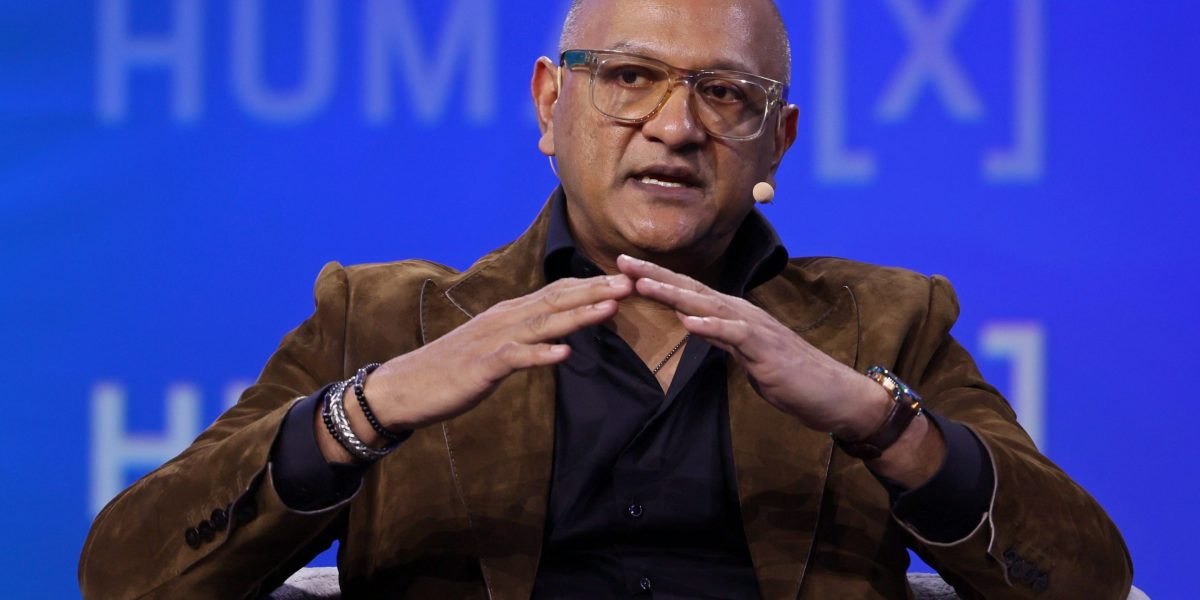
Cisco has handed one of its largest software modernization projects to a 27-year-old engineer, granting him unlimited artificial intelligence model tokens to rewrite the company's legacy code base. Jeetu Patel, Cisco's president and chief product officer at the $429 billion networking giant, removed token budget limits for Padmanabhan "Paddy" Krishnamurthy after discovering him working five levels down in the organizational chart. According to details shared in fortune.com's report, Krishnamurthy joined Cisco in 2025 following its acquisition of EzDubs, the real-time translation startup he cofounded in 2023, and proposed tackling the modernization effort with a two-person team rather than a sprawling corporate committee.
This report examines Cisco's experimental deployment of unmetered AI access, detailing the exact operational timeline, the technical refactoring workflow, the management philosophy behind pairing junior engineers with legacy systems, and the broader corporate shift toward hiring early-career talent. It is designed for software engineering managers, enterprise architects, and technology leaders evaluating how generative AI tooling and small, autonomous development squads can displace traditional enterprise modernization schedules.
Cisco gives engineer unlimited AI tokens: what actually changed
The immediate operational shift centers on removing token allocation boundaries for Krishnamurthy's team while placing an aggressive benchmark on corporate legacy code. Patel met Krishnamurthy during a visit to Cisco's San Francisco office, discovering that the former startup chief executive officer was assigned to unstrategic work several management layers below senior leadership. Convinced that standard corporate refactoring approaches were too slow, Patel authorized Krishnamurthy to consume unrestricted generative model tokens to overhaul the code base without standard per-seat billing caps.
Rather than assigning an extensive enterprise division to the initiative, Cisco empowered a two-person engineering pod to lead the effort. Krishnamurthy established a four-week trial window to prove the feasibility of the workflow, aiming to demonstrate measurable progress on production code. The ultimate benchmark for the initiative is to refactor 98 percent of Cisco's legacy code base within a 24-month operational roadmap, bypassing conventional multi-year planning stages through automated AI-assisted code rewrites.
Cisco gives engineer unlimited AI tokens: how it works
The refactoring model relies on continuous AI inference to inspect, translate, and modernize proprietary system code at a scale unconstrained by developer query rationing. By removing API token limits, Cisco allows Krishnamurthy's two-person group to submit massive blocks of aged code through generative models, generating automated functional replacements, modular abstractions, and updated syntax. This unmetered token pipeline lets the pair test iterative rewrites repeatedly, discarding suboptimal model passes without administrative friction or budgeting approvals.
Beyond raw computational consumption, the project pairs this automated code generation with a distinct personnel structure designed to accelerate execution. Patel structures his product organization across three functional tiers: one-third experienced scaled operators who understand Cisco's existing engines, one-third systems thinkers bringing external industry perspective, and one-third entrepreneurial, AI-native founders operating in founder mode. Under this operational matrix, Krishnamurthy's unit functions as an internal agile startup, leveraging deep generative AI prompting while drawing on veteran institutional knowledge to validate that refactored components preserve core networking operations.
Advertisement
Tech Pulse Daily
Get tomorrow's pulse first
Join engineers who read Tech Pulse before stand-up. Free, weekday mornings.
Cisco gives engineer unlimited AI tokens: why it matters now
The initiative stands in sharp contrast to prevailing labor trends across the enterprise technology sector, where entry-level employment has contracted rapidly. Industry survey data shows approximately 40 percent of managers plan to hire fewer college graduates under the belief that generative AI can perform lower-tier software tasks at a lower operating cost. Patel rejects the assumption that young talent is dispensable, arguing that early-career engineers are essential because they approach systems without legacy assumptions and ask questions that experienced staff overlook.
By placing an early-career engineer in direct charge of core infrastructure refactoring, Cisco is testing whether AI-native developers can solve technical debt problems that seasoned engineers consider impractical. Patel actively encourages friction between twentysomething staff and veteran personnel who have spent decades at Cisco, asserting that institutional tension generates superior ideas. Establishing trust while mandating unreasonable goals forces development squads to look past established corporate conventions, challenging long-standing refactoring practices that have historically stalled across enterprise vendors.
Cisco gives engineer unlimited AI tokens: who is affected
The program directly impacts enterprise development teams, junior hires, and technical leadership inside Cisco while mirroring hiring experiments across major venture funds and startups. At Cisco, Patel has extended this philosophy to interns, treating them as reverse mentors who instruct veteran engineers on modern technical methodologies. One recent intern, a Stanford scholarship student named Baya whom Patel met after a campus lecture, earned an internship following a monthly technical correspondence commitment and succeeded in redesigning an engineering component that experienced staff had failed to resolve.
Outside Cisco, prominent venture capitalists and technology executives are similarly prioritizing early-career talent to harness generative tools. Josh Kushner, founder of Thrive Capital, deliberately recruits staff with under four years of experience, a practice rooted in his founding days at age 26 that shaped early investments in OpenAI, which has pursued up to $30 billion at a $1.25 trillion valuation. Investor Will.i.am, an early backer of Tesla, OpenAI, and Pinterest, focuses capital on young talent out of MIT and Stanford, while Alon Chen, chief executive officer of Tastewise, targets entry-level candidates without industry boundaries to drive generative development for multinational enterprise clients like PepsiCo, Nestlé, and Mars.
Cisco gives engineer unlimited AI tokens: what to watch
The immediate milestone to observe is the conclusion of Krishnamurthy's initial four-week proof-of-concept phase in San Francisco. Technical leaders will be watching whether a two-person development team can sustain code reliability while maintaining the automated velocity required to meet the larger mandate. Delivering tangible functional parity on Cisco's enterprise networking software will demonstrate whether unlimited token allocations can substitute for large, specialized systems maintenance teams.
The broader metric remains Cisco's 24-month timetable to overhaul 98 percent of its legacy code footprint. Industry observers will track whether this high-pressure, three-tier organizational structure can scale across additional product lines without introducing regressions or destabilizing veteran engineering ranks. Observers should also track whether Patel's recruiting aggressive push for founder-mode engineers, campus innovators, and junior staff alters hiring patterns across peer legacy networking vendors who are currently pulling back on entry-level technical headcount.
Developer Action Items
- ☐ Map where Cisco sits in your stack (SDK, API key, billing, data-processing addendum).
- ☐ Hold the $429 billion figure to the primary report; do not brief a number that is not on the record.
- ☐ Hold non-urgent migrations until the integration or use-of-proceeds roadmap is public — day-one coverage is not a ship signal.
- ☐ If you are mid-contract or mid-POC, ask the vendor what changes for existing customers this quarter.
- ☐ Write the single decision this forces: stay, dual-source, or exit.
Cisco gives engineer unlimited AI tokens FAQ
Who is leading Cisco's legacy code refactoring effort?
The project is led by Padmanabhan "Paddy" Krishnamurthy, a 27-year-old engineer who joined Cisco in 2025 after it acquired his real-time translation startup EzDubs.
What are the target goals and timeline for the refactoring project?
Krishnamurthy established an initial four-week window to validate the workflow, with a target of refactoring 98 percent of Cisco's legacy code within 24 months using a two-person team.
How does Cisco structure its teams around this AI initiative?
Cisco president Jeetu Patel splits his team into three parts: one-third experienced scale operators, one-third outside systems thinkers, and one-third entrepreneurial, AI-native founders operating in founder mode.
Sources

Author
Dillip Chowdary
Writes Tech Bytes coverage of AI, engineering, and the tools that actually ship. Editor of Tech Pulse Daily.
Related on Tech Bytes
Advertisement