Evercade Nexus Review: The Best Retro Handheld Yet
Blaze Entertainment launched the $200 Evercade Nexus handheld with dual thumbsticks, a 5.89-inch screen, and a 5,000-mAh battery for native 64-bit games.
By Dillip Chowdary • Nov 15, 2026 • Source: Wired
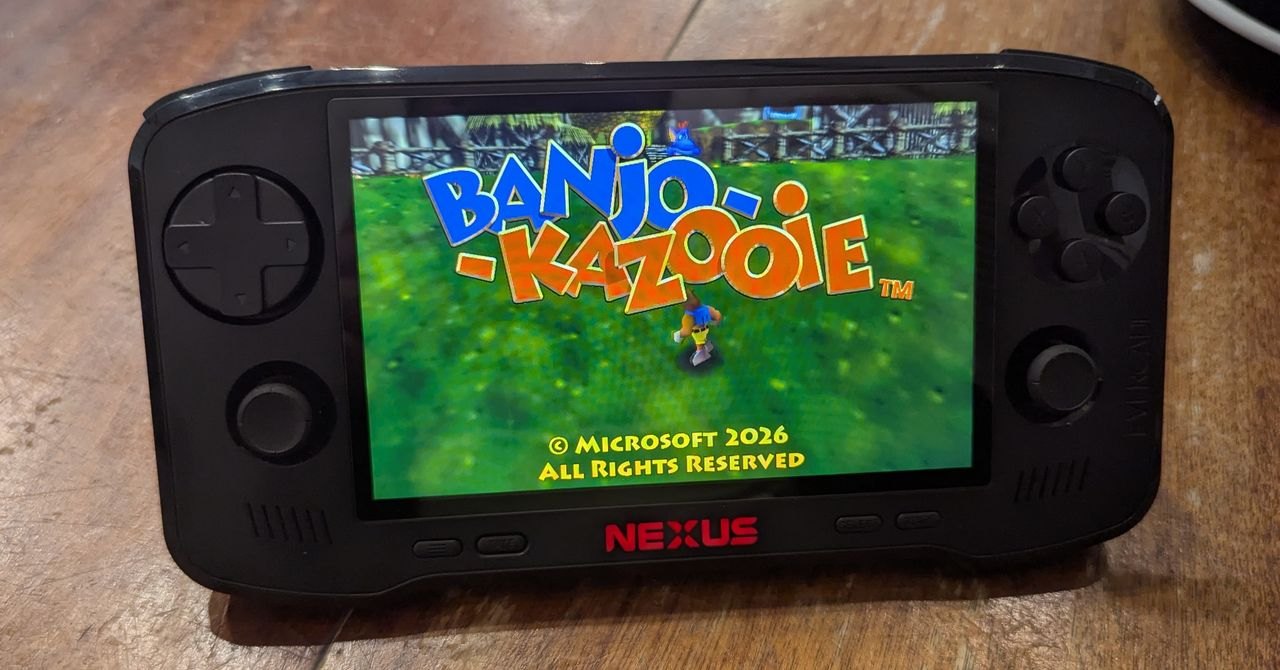
Blaze Entertainment has launched the Evercade Nexus, a $200 retro handheld console designed to modernize the company's dedicated physical cartridge ecosystem. According to Wired's report, the device arrives with twin thumbsticks, an expanded 5.89-inch screen, and native support for 32-bit and 64-bit software releases. The unit maintains full backward compatibility with all existing Evercade cartridges while shifting the platform toward 3D classics.
This review covers the hardware ergonomics, internal component choices, operating system changes, wireless capabilities, and game library additions introduced with the new model. The handheld is built for retro enthusiasts and cartridge collectors seeking dedicated physical media without relying on software emulation on smartphones or general-purpose hardware. It evaluates how the upgraded chassis balances modern portability with legacy cartridge performance.
01Chassis expansion and twin symmetrical thumbsticks
Blaze Entertainment scaled up the physical footprint compared to earlier pocketable systems that mirrored the Game Boy Advance. The Evercade Nexus measures 215 by 111 by 34 millimeters and weighs 410 grams, placing its dimensions near the Nintendo Switch Lite. As Wired observed, the revised dimensions feel more like a "real" handheld console rather than a pocketable novelty.
The revised control layout retains standard ABXY face buttons, a directional pad, shoulder bumpers, and rear triggers. The triggers are chunkier and curved forward to align naturally against the player's fingers. Blaze added textured grip surfaces to all four shoulder inputs and across the rear chassis to prevent slippage during handheld play.
The primary physical addition is a pair of symmetrical analog thumbsticks placed below the traditional button layout. These sticks expand the input vocabulary beyond older directional pads, giving players modern analog movement for upcoming releases. They also eliminate the need for redundant face buttons on the left edge of the case.
02Vertical display rotation and brighter panel
The console introduces a 5.89-inch IPS display delivering an 840 by 512 resolution at 167 pixels per inch. This replaces the 4.3-inch LCD from earlier models with a panel that exceeds 500 nits of peak brightness. The resulting image provides sharper detail, punchier colors, and improved outdoor visibility across classic arcade and console software.
The display retains dedicated Tate Mode support, rotating the screen 90 degrees for vertically scrolling arcade titles. While the earlier Evercade EXP rotated left and forced awkward movement on a directional pad, the Nexus rotates in the opposite direction. Players control vertical games using the right thumbstick and standard ABXY buttons on a cleaner layout.
A few minor build flaws persist on the exterior shell. The directional pad sits noticeably high above the casing, leaving it prone to rocking during rapid inputs. Additionally, the glossy accent finish surrounding the face buttons and front trim collects micro-scratches quickly, standing in contrast to the durable matte plastic body.
Advertisement
Tech Pulse Daily
Get tomorrow's pulse first
Join engineers who read Tech Pulse before stand-up. Free, weekday mornings.
03Internal processing limits and battery capacity
Under the casing, Blaze retained the internal computing architecture from the Evercade EXP rather than adding faster silicon. The handheld runs on a 1.5-GHz quad-core processor paired with 512 MB of RAM. While this configuration easily handles vintage hardware emulation, it leaves the system feeling sluggish during navigation.
Cold boot sequences require between 35 and 40 seconds to reach the home interface, with cartridge titles taking a similar duration to load. The system lacks a modern quick-suspend feature, requiring players to perform complete power cycles between play intervals. Cartridge titles run smoothly once initialized, but menu transitions and launching processes remain slow.
Battery performance received a substantial boost through an integrated 5,000-mAh battery, expanding upon the 3,000-mAh cell in the prior handheld. Despite driving a larger and brighter panel, the console delivers roughly five hours of continuous playtime on a single charge. That runtime yields approximately one additional hour of active gaming over the EXP.
04Wireless networking upgrades and television omissions
Blaze introduced wireless headphone support by adding integrated Bluetooth alongside the standard 3.5-millimeter audio jack. Front-facing stereo speakers have also been upgraded to produce clearer, louder sound during portable sessions. Network connectivity moves to the Wi-Fi 6 standard, allowing the handheld to connect to 5-GHz wireless frequencies rather than older 2.4-GHz bands.
Faster wireless speeds accelerate firmware patches and monthly Game of the Month downloads. The hardware also introduces EverSync, a proprietary protocol designed to connect multiple Nexus devices for local wireless multiplayer. The feature aims to allow shared multiplayer sessions from a single game cartridge, mirroring Nintendo GameShare mechanics across nearby hardware.
The firmware features new aesthetic customization menus, allowing users to modify background themes, aspect ratios, virtual scan lines, and the illuminated LED Nexus logo. However, Blaze eliminated the mini-HDMI output found on preceding handhelds. Players seeking to display cartridge libraries on a television must now purchase the separate Evercade VS-R home console.
05Native game ports and sixty-four-bit cartridges
The inclusion of analog thumbsticks allows Blaze to expand beyond 8-bit and 16-bit 2D games into 32-bit and 64-bit releases. The company is supplementing standard emulation with native software ports compiled directly for the hardware architecture. These native builds deliver widescreen aspect ratios, 60 frames per second rendering, higher display resolutions, and direct on-cartridge save files.
The platform highlights this transition through a Banjo-Kazooie and Banjo-Tooie double-pack alongside a DOOM and DOOM II collection. Rare's platformers benefit heavily from twin-stick camera manipulation, avoiding the control compromises of original Nintendo 64 hardware. The DOOM release packages classic first-person action with supplemental mission packs, presenting smooth portable performance on physical media.
These newly formatted releases retain compatibility across the entire Evercade hardware catalog, including the budget Super Pocket line. On systems lacking analog sticks, secondary camera inputs map directly to shoulder buttons. While universal cartridge support preserves player investments, future game generations will eventually demand higher processing horsepower than this shared architecture provides.
Evercade Nexus Review FAQ
How much does the Evercade Nexus cost and where is it available?
The Evercade Nexus retails for $200 and is available through major retailers including Amazon, Best Buy, and GameStop.
Can the Evercade Nexus connect directly to a television?
No, Blaze Entertainment removed the mini-HDMI port from the Nexus, so players who want television playback must use the Evercade VS-R home console.
How long does the Evercade Nexus battery last on a single charge?
The handheld includes a 5,000-mAh battery that delivers approximately five hours of continuous gameplay, roughly one hour longer than the Evercade EXP.
Does the Evercade Nexus support older Evercade cartridges?
Yes, the console is fully backward compatible with all previously released Evercade cartridges, and new 32-bit and 64-bit releases remain playable across older Evercade hardware.
Sources

Author
Dillip Chowdary
Writes Tech Bytes coverage of AI, engineering, and the tools that actually ship. Editor of Tech Pulse Daily.
Related on Tech Bytes
Advertisement