Gemini app for macOS adding send and read iMessage integration
Google’s latest update to the Gemini app for macOS readies local iMessage integration. Gemini app for macOS adding send and read iMessage integration
By Dillip Chowdary • Sep 20, 2026 • Source: 9to5Mac
Google has updated the Gemini app for macOS to include local iMessage integration, enabling users to send and read messages directly from within the AI assistant interface. The update follows Google's expansion of Gemini to Windows last week, extending the app's reach across major desktop platforms.
This article breaks down what the iMessage integration actually involves, how it functions within macOS's permissions model, and why the timing matters for anyone using Gemini as a daily productivity tool. It is aimed at macOS users, developers building on Gemini's desktop footprint, and enterprise teams evaluating AI assistants for cross-platform workflows.
Gemini app for macOS adding send and read: what actually changed
Google's Gemini app for macOS has gained the ability to interact with iMessage, specifically the capacity to both send and read messages from within the app. This is a local integration, meaning it operates through macOS system-level access rather than routing data through a cloud messaging relay. The capability moves Gemini beyond a standalone AI chat surface into something that can observe and act on communications happening elsewhere on the same machine.
The addition comes shortly after Google launched Gemini for Windows, making the back-to-back releases a clear push to establish desktop parity across operating systems. The iMessage feature is macOS-specific by nature, since iMessage is an Apple platform service, so Windows users will not see the same integration on that side.
Gemini app for macOS adding send and read: how it works
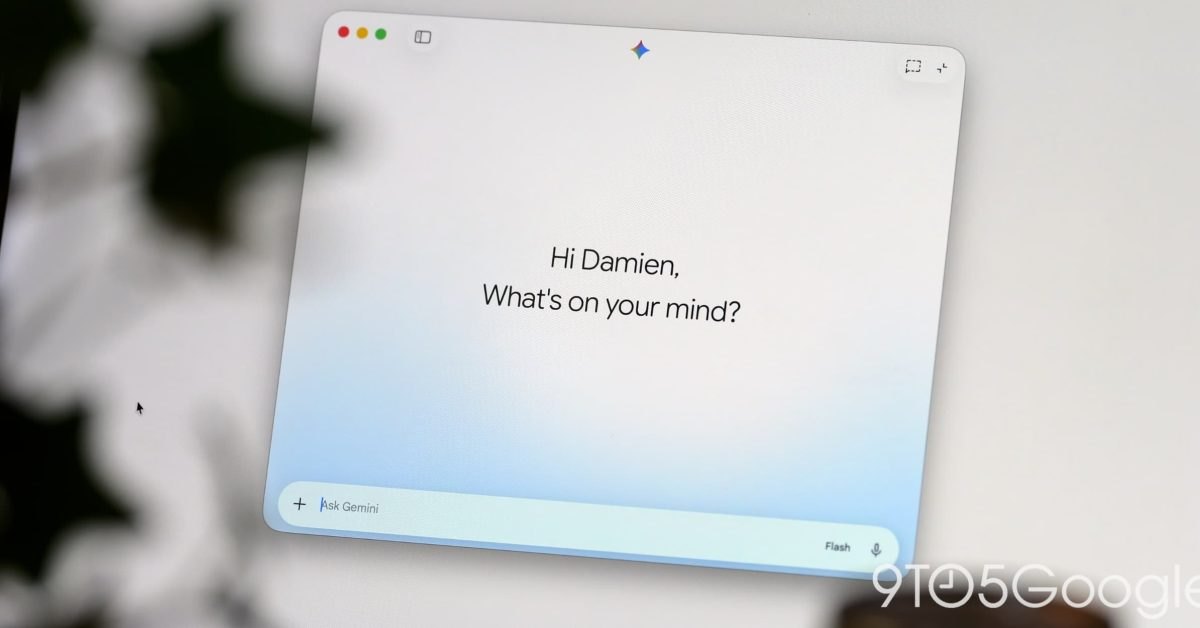
Because iMessage lives inside Apple's ecosystem, any third-party app that wants to read or send iMessages on macOS must work through system-level permissions that the user explicitly grants. The Gemini app for macOS is pursuing that local route, meaning the integration hooks into the Messages app data stored on device rather than intercepting traffic at a network layer. This design keeps message content on the machine and avoids requiring Google's servers to touch iMessage payloads directly.
Advertisement
Tech Pulse Daily
Get tomorrow's pulse first
Join engineers who read Tech Pulse before stand-up. Free, weekday mornings.
Practically, this means users will likely see a permissions prompt asking Gemini to access Messages when they first enable the feature. Once granted, Gemini can surface message content as context — allowing the assistant to summarize conversations, draft replies, or send messages on command. The exact scope of what Gemini can read (all threads versus selected contacts) has not been detailed in the announcement.
Gemini app for macOS adding send and read: why it matters now
Google shipped Gemini to Windows last week and is already following up with a platform-specific capability on macOS that Windows cannot replicate. That sequencing signals Google is moving quickly to differentiate the macOS version rather than simply porting a lowest-common-denominator feature set. Messaging integration is one of the stickiest categories of OS-level AI capability, because it ties the assistant to a communication workflow users return to constantly throughout the day.
The move also places Gemini in more direct competition with Apple Intelligence, which has its own system-level access to Messages on macOS. Google is effectively building a parallel AI layer that can operate on the same Apple platform data, without waiting for Apple to open any formal partnership channel. How Apple responds — through future permission restrictions or sandboxing changes — is worth monitoring.
Gemini app for macOS adding send and read: who is affected
Developers and IT administrators should take note as well. In enterprise environments where iMessage is used informally alongside managed communication tools, granting a third-party app read access to Messages raises policy questions. Administrators who manage macOS fleets will want to evaluate whether Gemini's permissions request aligns with their data handling requirements before the feature rolls out broadly to users.
Gemini app for macOS adding send and read: what to watch
The key open question is scope — whether Gemini's iMessage access will be limited to composing and reading individual messages on demand, or whether it will extend to proactive monitoring, thread indexing, or contact-based filtering. Google has not disclosed how message data is handled once Gemini processes it, including whether any content is sent to Google's servers as part of context building for the AI model.
Builders integrating Gemini into macOS workflows should verify the permission model carefully once the feature is live, particularly how access is revoked and whether there is a granular control to restrict Gemini to specific contacts or time ranges. Privacy advocates and Apple itself are likely to scrutinize how a Google-owned app handles on-device iMessage data — regulatory or platform-level pushback could affect the feature's long-term availability or shape.

Author
Dillip Chowdary
Writes Tech Bytes coverage of AI, engineering, and the tools that actually ship. Editor of Tech Pulse Daily.
Related on Tech Bytes
Jev is the fastest-adopted model in AI Gateway history
Read →
Hackers breach OpenAI using Claude tools, gaining access to employee accounts
Read →
Claude Code now reads AGENTS.md if there is no Claude.md
Read →
Upcoming deprecation of selected GitHub Copilot models in mid-October
Read →
Today's Tech Pulse briefing
Full briefing →
Advertisement