Google Widens Gemini 4 Carbon Access After AI Agents Verify Signal Code
Google expanded Gemini 4 Carbon access to paying API developers at $2 per million tokens as DeepMind used the model to verify libsignal machine code.
By Dillip Chowdary • Nov 10, 2026 • Source: SecurityWeek
Google on Tuesday expanded commercial availability for its Gemini 4 Carbon model across multiple enterprise and developer channels, moving the system beyond its initial closed defense deployment. Alongside the commercial rollout, Google announced that automated agents built on Carbon successfully verified core cryptographic guarantees inside the underlying implementation of the Signal messaging protocol. According to SecurityWeek's report, the public release pairs widened API access with formal verification findings generated by Google DeepMind.
This report details the updated token pricing structure, subscriber tiers, automated exploit assessments, and the collaborative proof methodology deployed across the libsignal codebase. The technical breakdown is tailored for software engineers, cryptography practitioners, security researchers, and enterprise infrastructure leaders evaluating AI-driven vulnerability discovery and formal proof workflows. It outlines how automated systems mathematically verified compiled machine code within weeks rather than years of manual human labor.
01Commercial API pricing and Fairwind access
Paying developers and business accounts can now access the Gemini 4 Carbon model directly through the Gemini API and Gemini for business surfaces. Individual subscribers to the Google AI Ultra tier are also receiving access as part of this expansion. The model was previously limited to a restricted group of vetted cyber defenders participating in Google's invite-only Fairwind Program.
Google is offering introductory pricing of $2 per million input tokens and $10 per million output tokens for developers accessing Carbon through the API. These reduced introductory rates remain active until November 30, after which both input and output prices are scheduled to double. Standard commercial customers gain access to general model capabilities under this billing framework.
Participants still require active membership in the Fairwind Program to unlock Carbon for cyber, a specialized variant tuned for security operations. Google claims this dedicated defensive edition tops performance on major industry benchmarks for discovering, exploiting, and remediating software flaws. The restricted access tier ensures offensive and automated exploitation tooling remains under controlled distribution.
02SaaS zero days and vulnerability research
External cybersecurity vendor Wiz deployed Carbon for cyber during defensive assessments, uncovering zero-day vulnerabilities across two major SaaS providers in under two hours. The automated evaluation highlighted the model's speed in analyzing complex software environments and surfacing undisclosed attack paths. Google presented the enterprise findings to showcase how specialized defensive agents accelerate vulnerability triage.
Google's Cloud Vulnerability Research team also used Carbon to examine an existing open-source project and confirm that two identified bugs were actively exploitable. The research team evaluated the flaws as having severity comparable to PHP2Shell, a pair of high-profile PHP vulnerabilities that malicious actors had previously weaponized. The system analyzed code interactions to demonstrate viable exploitation paths.
By using Carbon to construct a functional proof of concept, the Cloud Vulnerability Research team demonstrated real-world impact to project maintainers. Google stated that this proof helped the external maintainers promptly re-classify the flaw as critical and swiftly release an official patch. The rapid confirmation prevented potential exploitation in downstream production systems relying on the open-source code.
Advertisement
Tech Pulse Daily
Get tomorrow's pulse first
Join engineers who read Tech Pulse before stand-up. Free, weekday mornings.
03Formal verification across core messaging protocols
Google DeepMind introduced AlphaProof Code, a framework that pairs human technical specialists with automated AI agents to conduct formal software verification. The hybrid architecture mathematically demonstrates that target software strictly adheres to defined security and functional requirements. DeepMind directed the verification system toward libsignal, the open-source reference implementation of the Signal messaging protocol.
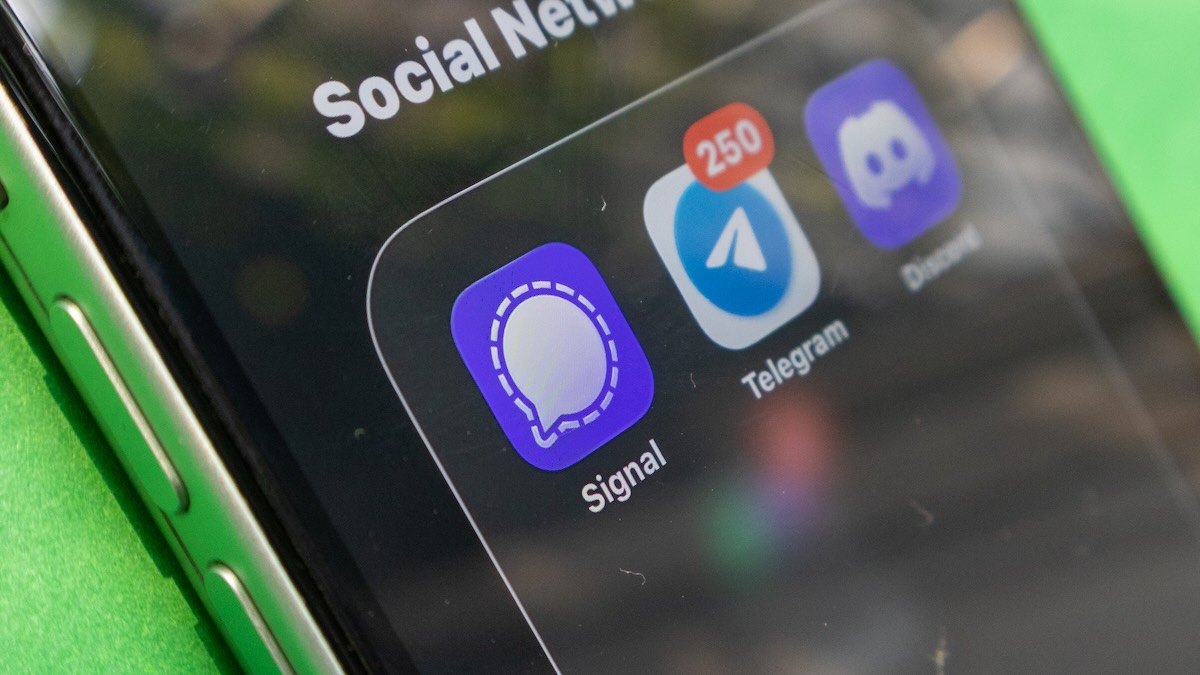
The Signal protocol forms the encryption backbone for hundreds of millions of global users, securing private conversations across multiple communications platforms. Beyond the standalone Signal client, modified versions of the underlying cryptographic protocol protect user messages inside WhatsApp and Google Messages. Securing libsignal therefore delivers downstream privacy assurances to multiple consumer ecosystems.
Formal mathematical proof differs fundamentally from traditional software testing or empirical fuzzing by eliminating entire classes of algorithmic errors. By verifying that code cannot deviate from mathematical specifications, the DeepMind team sought to establish deterministic guarantees for core privacy functions. The exercise tested whether agentic AI could handle the rigorous mathematical demands of cryptographic validation.
04Specification drafting and compiled machine code
The formal proof initiative began with human engineers collaborating with AI agents powered by Carbon and Claude Opus 5.5 to draft formal specifications. These specifications established the precise mathematical invariants and security properties that the target software had to satisfy. The cross-model setup leveraged both systems to translate human security intentions into rigorous formal statements.
Once the initial requirements were codified, Carbon-based agents generated all of the approximately 6.5 million lines of formal proofs within the Lean interactive theorem prover. The Lean environment served as an automated arbiter, programmatically verifying each logical deduction and rejecting every invalid proof step submitted by the models. This closed feedback loop prevented false mathematical assertions.
The proven guarantees covered essential cryptographic properties, including forward secrecy, post-compromise security, and mutual party authentication. Unlike conventional academic protocol verification, which typically inspects only abstract high-level designs, DeepMind proved these guarantees directly for the compiled machine code. Verifying machine code ensures that compiler artifacts and binary transformations introduce no hidden flaws.
05Reinserted flaw tests and wrapper limitations
A team of five researchers completed the entire libsignal formal verification effort in four weeks. Google noted that equivalent mathematical verification projects have historically required specialized teams working over several years. Researchers stated that these efficiency gains suggest AI can transform formal verification from an expensive academic exercise into a practical safeguard for real-world production systems.
To confirm the automated pipeline reliably detects genuine flaws, the team deliberately reinserted two previously patched historical bugs into libsignal. The Lean verification system successfully detected the regressions, proving mathematically that those modified builds violated the required security guarantees. This controlled test demonstrated that the generated proofs remain sensitive to actual implementation errors.
The research evaluated Google's internal build of libsignal executed through a command-line wrapper rather than Signal's official consumer client applications. The proof scope also deliberately excluded certain side-channel vulnerabilities from parts of the mathematical analysis. Signal CTO Ehren Kret noted that rigorously verifying the protocol implementation provides greater confidence in code privacy guarantees as AI threats expand.
Google Widens Gemini 4 Carbon Access After AI FAQ
What is the current pricing for the Google Gemini 4 Carbon API?
Google is charging introductory rates of $2 per million input tokens and $10 per million output tokens for paying developers using the Gemini API. These promotional prices remain active through November 30, after which both input and output rates double.
Who can access the specialized Carbon for cyber variant?
Carbon for cyber remains restricted to members of Google's Fairwind Program. Standard developers, businesses, and Google AI Ultra subscribers receive general Carbon access, but only Fairwind members can use the dedicated security edition.
How did DeepMind verify the Signal protocol using AI agents?
DeepMind used AlphaProof Code, pairing human researchers with Carbon and Claude Opus 5.5 to write formal specifications before Carbon agents generated roughly 6.5 million lines of Lean proofs. The mathematical proofs confirmed authentication, forward secrecy, and post-compromise security directly on compiled machine code.
Did the mathematical proofs validate Signal's official consumer apps?
No, the formal verification examined Google's own build of libsignal executed via a command-line wrapper rather than Signal's production mobile or desktop applications. Portions of the analysis also excluded side-channel vulnerabilities from the proof scope.
Sources

Author
Dillip Chowdary
Writes Tech Bytes coverage of AI, engineering, and the tools that actually ship. Editor of Tech Pulse Daily.
Related on Tech Bytes
Advertisement