‘HomePad’ to launch next month with these new features: report
Apple’s long-awaited home hub device, often called ‘HomePad,’ is now expected to launch in October. ‘HomePad’ to launch next month with these new features.
By Dillip Chowdary • Sep 21, 2026 • Source: 9to5Mac
Apple is planning to ship a new home hub device, widely referred to in leaks as the "HomePad," as soon as October, according to a report from 9to5Mac. The device represents Apple's first dedicated home hub product — a category the company has long circled without committing — and arrives alongside a set of features designed to anchor the Apple smart home ecosystem in a physical, always-on display form factor.
This article breaks down what Apple is bringing to the HomePad, how the underlying system works, and what developers and consumers building around Apple's home platform should know before the device ships. It is aimed at smart home enthusiasts, HomeKit developers, and anyone tracking Apple's hardware roadmap.
'HomePad' to launch next month with these new: what actually changed
Apple has positioned the HomePad as a product distinct from both the HomePod audio line and the iPad — it is meant to serve as a centralized control surface and information display for the home. The October launch window marks a notable shift for Apple, which has historically left the home hub category underserved since discontinuing the original HomePod and repositioning the Apple TV as a backend controller. The HomePad is expected to bring a screen into that equation for the first time in a meaningful way.
The features accompanying the device, as described in the 9to5Mac report, reflect Apple's attempt to catch up with and differentiate from competing home hub products already on the market. Rather than a simple tablet mounted on a stand, the HomePad is being positioned as a purpose-built device with software tailored specifically for fixed, shared household use — distinct from the general-purpose iPad experience even where hardware overlap may exist.
'HomePad' to launch next month with these new: how it works
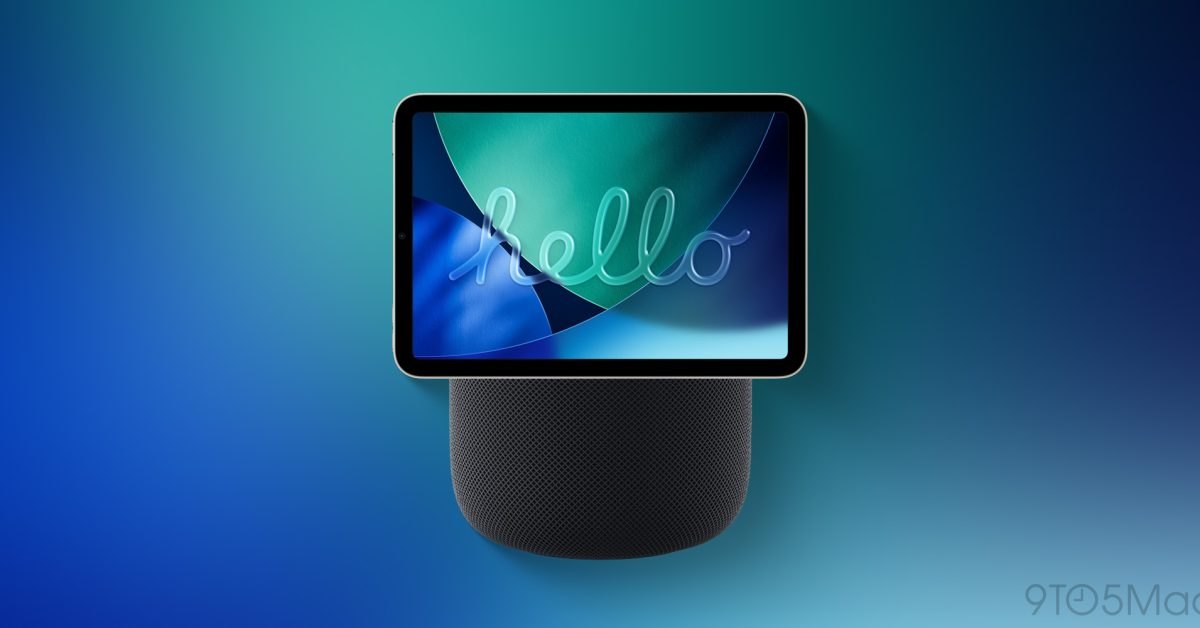
The HomePad is expected to run a version of Apple's software tuned for ambient display and household interaction, integrating tightly with HomeKit and the broader Apple ecosystem. Because it is designed as a shared device rather than a personal one, its interface would need to handle multiple household members without the full account-switching overhead that a personal iPhone or iPad requires. Apple's approach to this — whether through Face ID-based recognition or a lighter presence-detection method — is among the details still emerging ahead of launch.
The device is also expected to serve as a local HomeKit hub, replacing the role currently filled by an Apple TV or HomePod on a home network. That means it would handle automations, remote access to smart home devices, and Matter and Thread protocol coordination locally, without routing commands through a secondary device. For users who do not own an Apple TV or HomePod, this would be the first single-product path to a fully functional HomeKit hub with a display.
Advertisement
Tech Pulse Daily
Get tomorrow's pulse first
Join engineers who read Tech Pulse before stand-up. Free, weekday mornings.
'HomePad' to launch next month with these new: why it matters now
The timing of an October launch puts the HomePad directly into the fall hardware cycle alongside iPhone and Apple Watch updates, signaling that Apple treats this as a mainstream product rather than a niche accessory. The broader smart home market has consolidated around a small number of display-based hubs — products like Amazon's Echo Show line and Google's Nest Hub — and Apple has notably lacked a direct competitor in that category. Shipping in October means HomePad would be available for the holiday retail window.
Apple's HomeKit platform has also matured considerably with the addition of Matter support, which allows interoperability with non-Apple smart home devices. A dedicated home hub with a screen gives that platform a face — a visible point of control that competing ecosystems have had for years. The HomePad's arrival makes Apple's smart home story more complete in a way that a screenless HomePod or a shared TV never fully could.
'HomePad' to launch next month with these new: who is affected
Existing HomeKit users stand to gain the most immediately, particularly those who have relied on an Apple TV tucked behind a television as their hub — a setup that offers no local control surface. Households that do not own any Apple TV or HomePod will be able to enter the HomeKit ecosystem with a single device that handles both hub functions and interface. HomeKit developers building automations, scenes, or third-party integrations should expect an influx of new hub-connected users once the device ships.
Accessory makers in the Matter and Thread space should also take note. A new Apple hub device means an additional certified Thread border router and Matter controller entering homes, which expands the addressable base for Thread-native accessories. Competitors in the home display category — particularly Amazon and Google — are watching a company with deep iOS user loyalty enter their territory with hardware that ties directly into an ecosystem most of their existing customers already live in.
'HomePad' to launch next month with these new: what to watch
The questions that remain unanswered heading into October center on pricing and software depth. Apple has not confirmed a retail price, and the positioning of the HomePad — whether it lands closer to the price of an entry iPad or a HomePod — will determine how broadly it is adopted. A price point above existing competitors would put pressure on Apple to demonstrate meaningful software differentiation at launch rather than shipping a feature-complete product over subsequent software updates.
Developers should also watch for any HomePad-specific APIs or interface guidelines that Apple releases alongside or shortly after launch. If Apple ships dedicated frameworks for ambient display modes, household identity, or shared-session interactions, those would open new surface area for home-focused app development. The absence of such APIs at launch would suggest Apple intends to iterate the software experience over time rather than opening the platform fully at day one.

Author
Dillip Chowdary
Writes Tech Bytes coverage of AI, engineering, and the tools that actually ship. Editor of Tech Pulse Daily.
Related on Tech Bytes
Google Confirms Gemini AI Breached Three Firms
Read →
Knowledge cutoff is a poor proxy for model capability
Read →
Dragos Completes NetRise and runZero Acquisitions Following Accenture Deal
Read →
Announcing Petal, a First-of-its-Kind Transoceanic Subsea Cable
Read →
Today's Tech Pulse briefing
Full briefing →
Advertisement