How Remedy designed Control Resonant’s wildest mission: ‘Anything kind
Remedy Entertainment detailed how level designers used asset reuse and environmental wear to build Control Resonant's time-bending Underpass mission.
By Dillip Chowdary • Nov 07, 2026 • Source: The Verge
Remedy Entertainment designed one of the most complex spatial sequences in Control Resonant by building around time loops, multi-timeline combat, and brutalist environmental navigation. According to details shared in The Verge's report, developers detailed the production history behind the mission titled Recursions and Iterations. Protagonist Dylan Faden investigates timeline anomalies across intersecting dimensions while searching for lost Federal Bureau of Control researchers. The sequence demonstrates how level architecture, movement systems, and modular animation assets can convey speculative narrative concepts without restricting player mobility or requiring linear cutscenes.
This breakdown examines the technical design principles, environmental storytelling techniques, and production choices Remedy utilized to ship Recursions and Iterations. The analysis is structured for game designers, technical artists, combat encounters specialists, and players interested in the internal mechanics of Remedy Entertainment's supernatural world-building. By dissecting the balance between player agency, visual clarity, and narrative ambiguity, this case study reveals how the team resolved core navigation bottlenecks while preserving an unsettling, unguided player experience.
‘Anything kind: what actually changed
During initial playtesting for Recursions and Iterations, testers repeatedly became disoriented because the mission layout relied heavily on identical concrete stations scattered across the Underpass. Lead level designer Anne-Marie Grönroos and senior level designer Admir Burnic noted that early playtesters could not identify how many distinct research stations existed, guessing anywhere from one to six outposts due to visual uniformity. To establish clear orientation without introducing excessive UI waypoints, Remedy rebuilt the environmental narrative across three main stations. The outposts maintained matching architectural layouts but were dressed in progressively deteriorating visual states reflecting different passage of time, categorized internally as two weeks, three months, and ten years of isolation.
Beyond art dressing adjustments, Remedy implemented mechanical prerequisites to gate and stabilize traversal through the Underpass. The studio made Dylan Faden's Reach ability, which functions as a long-range grapple across wide gaps, an explicit requirement to access the floating concrete islands. Previously, navigation issues had degraded playtest retention and disrupted mission progression. Mechanically mandating the Reach grapple transformed traversal across the cavernous void from a frustrating navigation hazard into an intentional spatial puzzle, allowing the level design team to construct larger vertical chasms between each outpost.
‘Anything kind: how it works
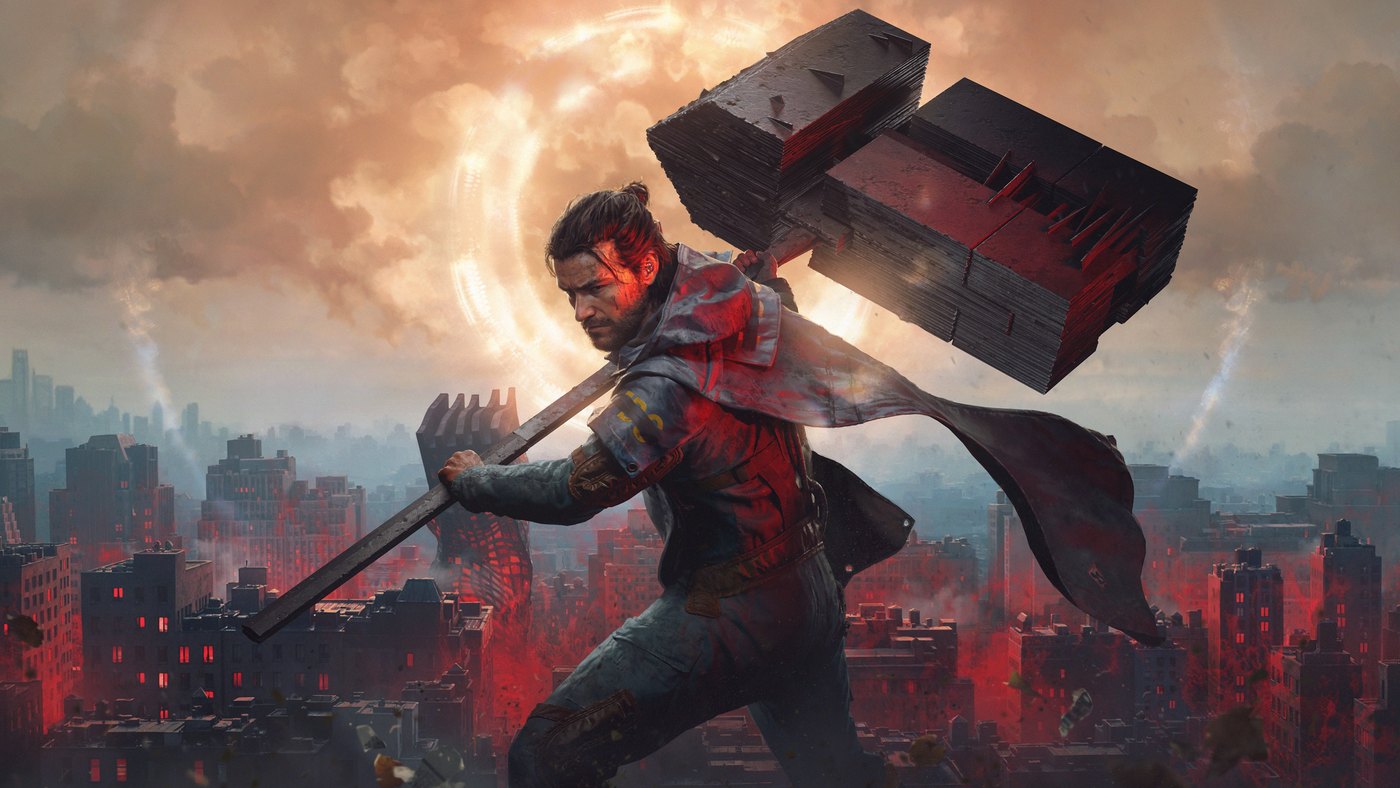
Recursions and Iterations operates through non-linear spatial discovery paired with modular animation reuse. As Dylan Faden traverses the Underpass islands to locate trapped researchers, the narrative plays out across overlapping timelines where researchers recognize Dylan before he recognizes them, culminating in temporal glitches where the researchers perish across every encountered timeline. Rather than scripting a rigid pathway where narrative audio logs and character encounters must trigger in strict chronological sequence, Remedy treated narrative beats as standalone puzzle pieces that players can assemble regardless of the order in which they discover the three research stations.
The mission climax introduces a chaotic multi-timeline battle where duplicate glitch versions of Dylan spawn into the arena to execute enemies. Burnic developed this sequence late in production, drawing direct inspiration from the time-shifting mechanics seen in Titanfall 2's Effect and Cause level. To execute the idea without disrupting active development schedules or overtaxing the character art pipeline, Burnic bypassed traditional pitch cycles and sourced existing Dylan combat and execution animations directly from an animator. By layering duplicated player character rigs executing existing combat animations into the encounter logic, the team simulated parallel-universe co-op without writing custom combat systems.
Advertisement
Tech Pulse Daily
Get tomorrow's pulse first
Join engineers who read Tech Pulse before stand-up. Free, weekday mornings.
‘Anything kind: why it matters
The architectural solutions deployed in Recursions and Iterations highlight the persistent tension between immense player power and narrative environmental pacing in modern action games. Burnic noted that Dylan Faden's supernatural mobility allows players to cross wide distances rapidly, creating scenarios where aggressive traversal can easily break traditional environmental pacing. Attempting to force players into rigid camera angles or guided corridors often feels excessively hand-holdy, conflicting with Remedy's design philosophy. By designing modular narrative beats, Remedy proved that environmental storytelling can remain coherent even when powerful movement mechanics disrupt intended designer pathways.
Furthermore, the production methods demonstrate pragmatic triple-A pipeline execution under late-stage production constraints. High-concept narrative mechanics like alternate-timeline clones often require dedicated scripting teams, specialized AI logic, and bespoke assets. By identifying that player animation banks could be reused for autonomous combat glitches, senior level design delivered a memorable set-piece while avoiding feature creep. The success of the sequence underscores how studio teams can execute ambitious creative ideas late in a project lifecycle when design experiments leverage pre-existing technical architecture.
‘Anything kind: who is affected
Level designers and technical artists managing large-scale, traversal-heavy action titles can directly apply Remedy's environmental differentiation techniques. When dealing with abstract, brutalist architectures or modular asset kits where rooms share identical floor plans, subtle prop degradation and narrative weathering can anchor player navigation without relying on intrusive minimap markers. The implementation illustrates how environmental art serves a functional mechanical role in guiding players through complex three-dimensional geometry, directly reducing disorientation while maintaining visual atmosphere.
Players of Control Resonant experience the benefits of this design philosophy through enhanced agency and uncompromised combat fluidity. Rather than hitting invisible walls or encountering artificial power dampeners, players can utilize Dylan's full suite of supernatural powers across the Underpass without breaking mission logic. Even if players miss minor narrative collectibles or view the degradation of the research outposts out of historical sequence, the systemic structure ensures the central atmospheric mystery and core combat escalation remain fully intact.
‘Anything kind: what to watch
The open-ended nature of the mission leaves significant narrative threads unconfirmed for future expansions or sequels. Both Grönroos and Burnic acknowledged that the team embraced intentional ambiguity regarding the final fate of the researchers, noting that time-travel logic frequently defies clean, definitive resolution. Whether the researchers remain alive in parallel branches or whether tracking them down fundamentally altered the primary timeline remains open to interpretation, leaving room for Remedy's narrative teams to revisit the Underpass anomalies in subsequent content drops.
Future updates and project post-mortems from Remedy Entertainment will likely reveal whether this modular combat approach expands into other titles within the connected universe. As supernatural traversal abilities grow increasingly potent in modern third-person action games, the studio's strategy of leaning into player capabilities rather than restricting them offers a sustainable blueprint. Industry observers will be watching to see if the asset-efficient timeline mechanics prototyped in Recursions and Iterations become standardized systems in upcoming studio productions.
Developer Action Items
- ☐ Diff the official changelog for Remedy designed Control Resonant before you bump — APIs, defaults, and removed flags only.
- ☐ Install through the vendor's documented channel in staging; keep a one-command rollback and time-box the canary.
- ☐ Grep your repo for old flag names, lockfile pins, and plugin versions that the notes mark as breaking.
- ☐ Prefer the first patch cut over the day-zero tag unless you have a reason to be on the leading edge.
- ☐ If The Verge did not name a region, plan, or SKU, screenshot the official availability line before you promise it to users.
‘Anything kind FAQ
What inspired the multi-timeline combat sequence in Recursions and Iterations?
Senior level designer Admir Burnic was inspired by the time-travel mission Effect and Cause from Titanfall 2, prompting him to create a Remedy-style combat encounter where glitching duplicates of Dylan execute enemies.
How did Remedy solve player navigation problems across the Underpass stations?
The team visually differentiated the identically shaped stations to show varying passage of time, staging them at two weeks, three months, and ten years of wear, while requiring the Reach grapple ability to access the area.
Who is the protagonist of Control Resonant during this mission?
Players navigate the Underpass and investigate the research anomalies as protagonist Dylan Faden.
Sources

Author
Dillip Chowdary
Writes Tech Bytes coverage of AI, engineering, and the tools that actually ship. Editor of Tech Pulse Daily.
Related on Tech Bytes
Advertisement