A developer gave an agent a lakehouse and control of my garden
A developer connected an AI agent to an Apache Iceberg lakehouse, streaming over four million soil telemetry readings into a 3.22 MB catalog via LakehouseBox.
By Dillip Chowdary • Nov 07, 2026 • Source: jatorre.github.io
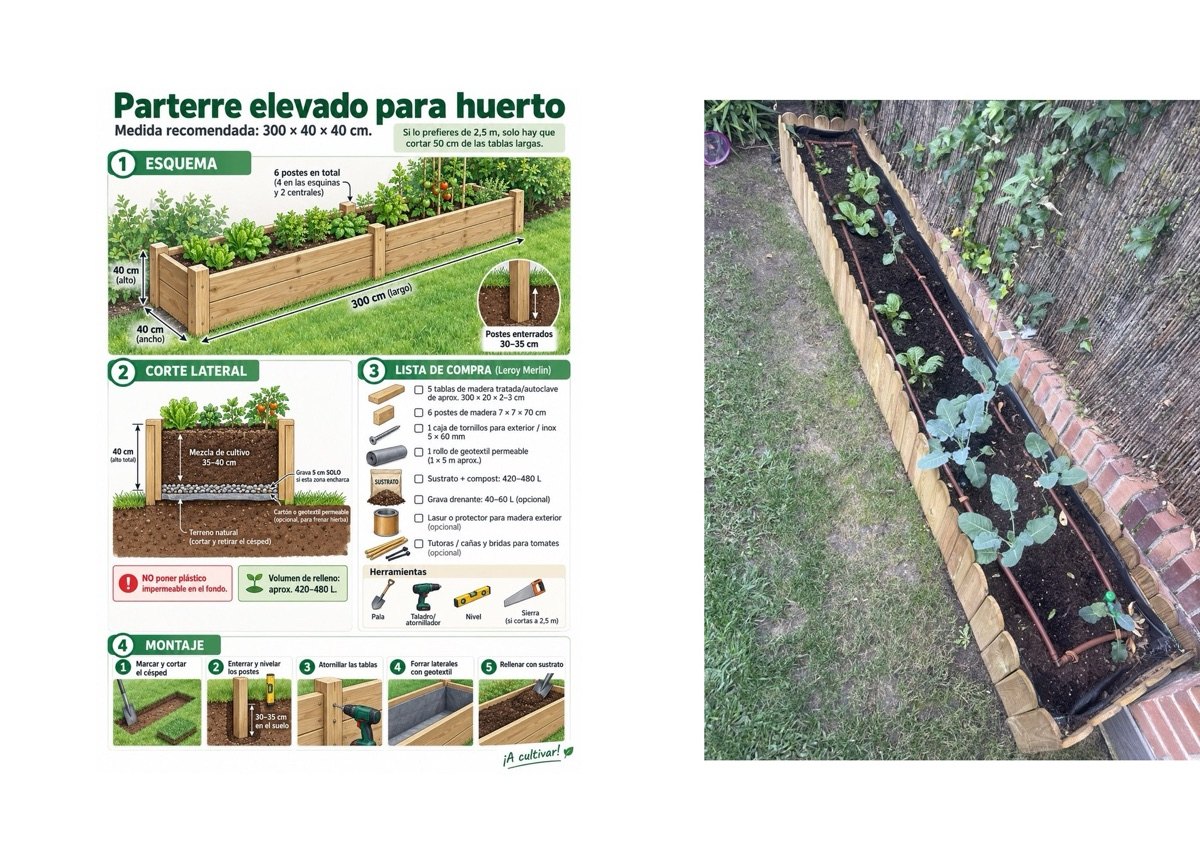
Software developer Javier de la Torre built an autonomous agricultural management setup by connecting an artificial intelligence agent directly to an Apache Iceberg lakehouse and an array of hardware environmental sensors. As detailed in jatorre.github.io's report, the system automates telemetry ingestion from a residential raised garden bed measuring just over three metres in length. Rather than relying on static timer schedules or generic dashboards, the architecture streams continuous telemetry from eleven wireless field instruments into a unified data catalog called LakehouseBox hosted on European infrastructure.
This technical analysis covers the physical instrumentation, data pipeline design, spatial mapping techniques, and autonomous structured query generation that enable an agent to oversee soil moisture and crop health. It examines how low-cost telemetry hardware pairs with modern tabular formats to eliminate dedicated server middleware while preserving local data sovereignty. The report is intended for data engineers, systems architects, and software developers evaluating how autonomous reasoning agents can interact directly with physical environments, run spatial queries against tabular storage, and replace brittle manual dashboards across connected Internet of Things deployments.
A developer gave an agent a lakehouse: what actually changed
The physical project transformed a two-square-metre domestic garden plot planted with winter cabbage, broccoli, lettuce, and spinach into an intensely measured telemetry environment. After initially using Anthropic Claude to determine soil mix, bed depth, and planting intervals, the project expanded to physical instrumentation using roughly three hundred euros in commercial Ecowitt equipment. The deployment encompasses eleven battery-operated units: eight soil moisture probes, a leaf-wetness monitor, a dedicated weather station tracking wind, rain, and solar radiation, an indoor gateway sensor, and a Reolink security camera providing round-the-clock visual surveillance.
On the architectural side, the configuration abandoned complex multi-cloud plumbing in favor of an integrated lakehouse model running on sovereign European servers. An initial prototype required separate Apache Iceberg tables in Cloudflare R2, individual per-table pipelines, custom receiving scripts, and a Google Cloud virtual machine to relay camera imagery. That collection of cloud services was replaced by LakehouseBox, a streamlined system that receives direct HTTP posts from hardware gateways. The new design strips gateway authentication passkeys at ingest and writes incoming measurements straight into Iceberg tables without intermediate databases or polling scripts.
A developer gave an agent a lakehouse: how it works
Data capture relies on an automated device sink configured through the LakehouseBox command-line interface. Using the Ecowitt preset, the catalog creates a table designated as sensor readings that exposes a private network path acting as an ingestion password. The hardware gateway transmits sixty-two telemetry rows every sixty seconds directly to this sink, recording parameters like soil temperature, electrical conductivity, solar exposure, and moisture percentages. Since eighteenth September, the pipeline has ingested over four million discrete sensor readings, which compress into three point two two megabytes within the Apache Iceberg storage layout.
To provide spatial context, sensor coordinates, valve boxes, and sprinkler locations were mapped in Google Earth and stored in a sensor placements table. This coordinate registry allows the artificial intelligence agent to cross-reference physical geography with continuous metrics. Instead of relying on pre-rendered charts, the agent writes and executes custom Structured Query Language commands over the telemetry catalog to answer contextual questions about drying velocity, precipitation impact, and localized irrigation anomalies. For instance, after morning watering cycles, queries verify whether moisture jumps occurred evenly across probes or if specific corners remained dry.
Advertisement
Tech Pulse Daily
Get tomorrow's pulse first
Join engineers who read Tech Pulse before stand-up. Free, weekday mornings.
A developer gave an agent a lakehouse: why it matters
This implementation highlights a fundamental shift away from pre-configured visual dashboards toward on-demand agent reasoning over raw tabular datasets. Traditional smart-home and industrial monitoring systems trap readings within proprietary consumer applications, forcing human operators to inspect graphs or configure rigid threshold alerts. By streaming high-frequency telemetry directly into an open table format, an autonomous agent can perform ad-hoc aggregations, evaluate temporal trends, and diagnose physical anomalies without human intervention. The agent can determine whether yesterday's irrigation altered deeper soil strata or if upcoming rain forecasts justify delaying an automated watering cycle.
The project also demonstrates the feasibility of combining lightweight edge hardware with cost-effective enterprise storage principles. Storing four million rows in barely three megabytes proves that high-resolution sensor telemetry does not require heavy, expensive database clusters or recurring cloud infrastructure bloat. Furthermore, pairing numerical measurements with spatial coordinates and automated high-resolution camera feeds addresses the limitations of blind sensor data. While moisture meters register numeric values, visual confirmation enables the agent to observe physical conditions, such as collapsed vegetation or animal intrusions, grounding agent conclusions in multiple sensory modalities.
A developer gave an agent a lakehouse: who is affected
Edge hardware manufacturers and Internet of Things platform developers face rising demand for open, direct-posting protocols over proprietary, walled-garden cloud ecosystems. Devices like the Ecowitt gateway, which permit custom HTTP target destinations, integrate seamlessly into autonomous workflows, whereas closed ecosystems require cumbersome reverse engineering or fragile third-party scrapers. Embedded systems teams will need to evaluate how hardware interfaces publish telemetry to ensure that modern agents and open lakehouse formats can interact directly with gateways without requiring proprietary mobile applications or locked software ecosystems.
Data architects and enterprise automation engineers are likewise influenced by this blueprint for conversational data access. The pattern of allowing language models to author precise analytical queries directly against Iceberg catalogs bypasses the need for engineering dedicated dashboard software. This development impacts organizations managing physical assets, manufacturing lines, logistics facilities, and agricultural fields, demonstrating that small-scale, sovereign data infrastructure can give intelligent systems direct observational access to real-world operations while cutting down administrative overhead, pipeline maintenance complexity, and recurring cloud hosting expenses.
A developer gave an agent a lakehouse: what to watch
Key technical benchmarks to watch include the closed-loop integration of automated irrigation controls driven entirely by model reasoning. While the current pipeline ingests sensor telemetry, visual frames, and spatial positions, granting the agent direct API authority over physical sprinkler valves represents the next operational milestone. Observers must assess whether autonomous systems can reliably balance predictive precipitation models against real-time ground moisture without over-watering crops or failing during edge-case weather anomalies, validating whether algorithmic decisions can manage delicate living plants over changing seasons.
Another critical aspect involves the refinement of continuous spatial interpolation models generated across sparse sensor networks. With eight soil probes distributed across a residential lawn and raised bed, testing mathematical surfaces between measurement nodes will reveal whether localized micro-climates can be predicted accurately. Industry watchers should also follow developments around LakehouseBox as an emerging sovereign data platform, examining how compact, local-first lakehouse implementations handle multimodal datasets combining tabular telemetry with high-resolution visual imagery on European infrastructure without incurring cloud provider lock-in.
Developer Action Items
- ☐ Map where Anthropic / Claude / Google sits in your stack (SDK, API key, billing, data-processing addendum).
- ☐ Hold non-urgent migrations until the integration or use-of-proceeds roadmap is public — day-one coverage is not a ship signal.
- ☐ If you are mid-contract or mid-POC, ask the vendor what changes for existing customers this quarter.
- ☐ Write the single decision this forces: stay, dual-source, or exit.
A developer gave an agent a lakehouse FAQ
What hardware was used to instrument the garden?
The deployment uses eleven battery-powered Ecowitt sensors, including eight soil moisture probes, a leaf-wetness monitor, an indoor gateway sensor, and a weather station measuring wind, rain, and solar radiation. Visual monitoring is handled by a 4K Reolink security camera providing continuous day and night surveillance.
How does telemetry flow from the sensors into the lakehouse?
The Ecowitt gateway posts sixty-two telemetry rows every sixty seconds directly to a private device sink created with the LakehouseBox command-line interface. The data is written straight into Apache Iceberg tables without requiring intermediate server middleware or external database services.
What queries does the agent run against the sensor data?
The artificial intelligence agent authors custom SQL queries to analyze soil moisture trends, calculate drying speeds across mapped coordinates, and evaluate whether morning watering cycles reached dry garden zones. Over four million readings have been collected since September 18, consuming 3.22 megabytes of storage.
Why was the original multi-cloud architecture replaced?
The initial setup relied on separate Iceberg tables in Cloudflare R2, individual pipelines, custom ingestion code, and a Google Cloud virtual machine to relay camera uploads. The developer replaced this configuration with LakehouseBox to run a simpler, unified lakehouse on sovereign European infrastructure.
Sources

Author
Dillip Chowdary
Writes Tech Bytes coverage of AI, engineering, and the tools that actually ship. Editor of Tech Pulse Daily.
Related on Tech Bytes
Advertisement