iPhone Air 2 is coming next year, here’s why it has more to prove than ever
Apple is preparing to unveil its iPhone Air 2 next spring, adding a second camera and larger battery to fix the compromises of its ultra-thin predecessor.
By Dillip Chowdary • Nov 07, 2026 • Source: 9to5Mac

Apple is preparing to unveil its second-generation iPhone Air next spring, returning to the drawing board after its initial ultra-thin handset struggled to secure mass-market sales. According to 9to5Mac's report, Apple plans to introduce a revised design that directly tackles the severe hardware trade-offs of the original device, most notably by integrating a second rear camera and expanding internal battery capacity. While the first iPhone Air stood as a notable engineering marvel by packaging core smartphone components into an exceptionally slender chassis, its premium positioning placed it within roughly $100 of the flagship Pro tier. Without the novelty factor that accompanied the first release, Apple must now reposition the upcoming successor to capture general consumers who previously hesitated at its pricing and feature reductions.
This analysis examines the specific engineering adjustments, performance limitations, and competitive challenges awaiting the second-generation ultra-thin smartphone ahead of its spring debut. The overview is designed for prospective buyers, mobile hardware followers, and existing iPhone owners assessing whether Apple can eliminate key hardware penalties while maintaining a thin profile. With the introduction of the dual-screen iPhone Duo shifting consumer fascination toward new form factors, Apple faces rising pressure to prove that slimness alone is a durable selling point. Moving past the original model's niche appeal requires balancing charging rates, acoustic output, and imaging capabilities so that everyday functionality matches the device's near-flagship price bracket.
IPhone Air 2 is coming next year: what actually changed
Apple is altering its hardware blueprint by incorporating two major functional upgrades that were conspicuously absent from the initial generation: an additional rear camera module and a higher-capacity battery pack. The original release relied on a single camera sensor and a constrained battery volume to reach its slim profile, drawing criticism from shoppers who found those cutbacks unacceptable at near-Pro prices. By returning to development to engineer space for a secondary lens, Apple addresses the absence of standard shooting modes such as dedicated macro photography, which previously suffered due to the lack of an ultrawide sensor. At the same time, expanding the battery cell aims to remedy the short operational endurance that constrained the original phone during everyday usage.
Beyond the revised camera array and increased power reserve, the second model must contend with persistent compromises that defined the first iteration. The debut handset was limited to an individual mono earpiece speaker, basic USB 2 wired data transfer speeds, and restricted wireless charging capabilities that lagged behind contemporary high-end releases. While the original generation proved that a functional smartphone could be compressed into an ultra-thin frame, its modest commercial performance highlighted that customers expect baseline flagship conveniences. The incoming revision attempts to convert the chassis thickness from an excuse for feature omissions into a standard design attribute that coexists with practical daily battery life and dual-lens flexibility.
IPhone Air 2 is coming next year: how it works
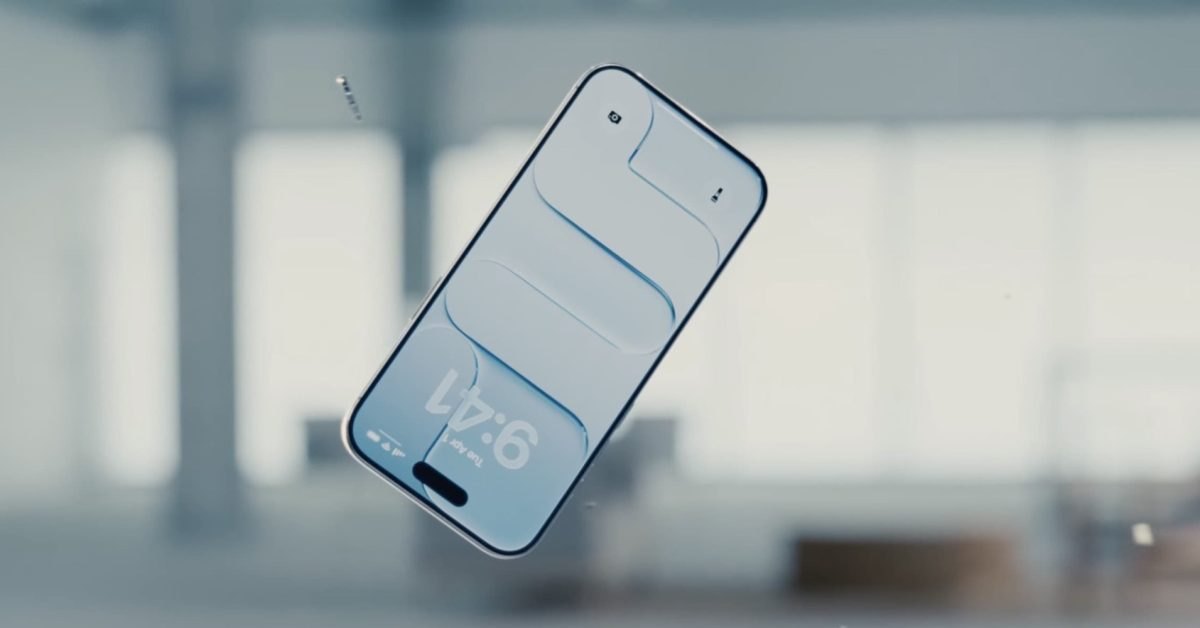
The operational setup of the iPhone Air series reflects an ongoing tension between internal chassis clearance and modern hardware components. On the original model, power input is capped at 20W MagSafe wireless charging and 25W fast wired charging, trailing significantly behind the 25W MagSafe and 60W wired charging rates delivered on the iPhone 18 Pro. Data connectivity over the physical port is similarly restricted to legacy USB 2 bandwidth, contrasting with the high-speed USB 3 controller available on upper-tier Pro devices. In terms of photographic processing, the physical limitation of compact sensors forced the omission of Apple ProRAW capture, Cinematic mode video recording, and native macro shooting, while general audio playback was forced through a solitary mono earpiece assembly.
To overcome acoustic constraints inside such tight volume, Apple has potential architectural solutions already deployed in other product lines. With the iPad mini 8, Apple introduced acoustic display technology, an engineering approach that channels audio output directly through the front display glass rather than requiring dedicated speaker chambers. Incorporating display-driven acoustic mechanics or adapted transducer systems into the second-generation handset could resolve the hollow output of the original mono earpiece. Meanwhile, fitting a secondary camera sensor requires tighter component stacking across the logic board, enabling ultrawide perspective mapping and sensor-assisted macro focusing without widening the external profile beyond its core thin-and-light specifications.
Advertisement
Tech Pulse Daily
Get tomorrow's pulse first
Join engineers who read Tech Pulse before stand-up. Free, weekday mornings.
IPhone Air 2 is coming next year: why it matters
The debut of the second-generation handset represents a critical test of whether the ultra-thin smartphone category can survive as a permanent tier in Apple's portfolio. The original iPhone Air generated limited commercial volume, finding interest primarily among dedicated enthusiasts who prioritized extreme pocketability over battery runtimes and camera versatility. In today's lineup, the landscape has changed because the novelty of extreme thinness has been eclipsed by the debut of the iPhone Duo, which now commands the spotlight as the flashy hardware showcase. Without novelty to drive impulse purchases, the revised Air must justify its existence through functional competence rather than cosmetic distinctiveness alone.
Pricing dynamics amplify the necessity of these engineering refinements. The device occupies a retail position sitting roughly $100 below Apple's Pro smartphone tier, placing it in immediate competition with fully equipped alternatives. Mainstream buyers evaluating handsets in that tier routinely demand robust battery life, versatile photography setups, and fast wired transfers for media workflows. If the second iteration continues to demand steep compromises in exchange for its thin casing, prospective customers are likely to bypass it in favor of standard Pro devices or experimental offerings like the iPhone Duo. Proving that extreme portability does not require sacrifice is essential for Apple to sustain the product line.
IPhone Air 2 is coming next year: who is affected
The planned hardware updates directly affect general smartphone shoppers who declined to purchase the original model due to its practical limitations. Users who rely heavily on all-day battery life, frequent video recording, and versatile photography found the first generation difficult to recommend, especially given its single rear camera and lack of Cinematic mode or RAW capture. By integrating a second camera and a larger power pack, Apple makes the device viable for mainstream consumers who want an easy-to-carry phone without carrying external battery accessories. Enthusiasts who bought the first model primarily for its lightweight footprint will also see an upgrade path that resolves everyday audio and charging complaints.
At the same time, the release impacts potential buyers comparing options across Apple's upper price tiers. Shoppers considering an entry Pro model must weigh whether saving roughly $100 is worth accepting slower USB 2 wired sync speeds, smaller camera sensors, and 20W MagSafe limits compared to the 25W MagSafe and 60W wired charging of the iPhone 18 Pro. Mobile photographers who depend on advanced post-production will still find the Air line restricted if ProRAW remains exclusive to higher models. Conversely, consumers who prioritize pocket comfort over absolute benchmark metrics gain a substantially more complete daily driver that no longer forces them to endure single-speaker mono playback.
IPhone Air 2 is coming next year: what to watch
As Apple heads toward its spring presentation, attention centers on how many legacy limitations survive the physical redesign. Observers will watch closely to see if wired data speeds advance from USB 2 to USB 3 transfer standards, matching the capabilities expected near the thousand-dollar threshold. Charging velocity remains another vital metric, specifically whether Apple raises wired fast charging above the current 25W ceiling and increases MagSafe induction past 20W to approach the 60W wired and 25W MagSafe metrics found on the iPhone 18 Pro. Confirmation of display-driven acoustic mechanics will also indicate whether Apple has permanently solved the thin-frame speaker problem.
Camera functionality will provide the clearest indicator of Apple's market positioning for the handset. Observers will track whether the addition of the second lens brings standard ultrawide and macro focusing modes to the Air family, or if software capabilities like Cinematic mode and RAW support continue to be withheld to preserve Pro product differentiation. Finally, retail pricing will determine the phone's ultimate reception. If Apple prices the updated second-generation model within $100 of the Pro while successfully packaging dual cameras, expanded battery capacity, and improved audio into a sleek frame, it could transition the Air from an eccentric experiment into a staple offering.
Developer Action Items
- ☐ Verify the claim on the official Apple page (or 9to5Mac), not from this recap alone.
- ☐ Name the surface that moved — API, policy, model, hardware, or commercial terms — before you Slack the thread.
- ☐ Assign one owner a day to read the primary material and decide: this-sprint, this-quarter, or noise.
- ☐ Do not change production on day-one coverage. Watch the vendor changelog and one independent write-up first.
IPhone Air 2 is coming next year FAQ
When is Apple expected to announce the iPhone Air 2?
Apple is scheduled to unveil the second-generation handset next spring during its presentation stage.
What are the primary hardware upgrades planned for the second model?
Apple is addressing the biggest shortcomings of the original phone by adding a second rear camera and increasing battery capacity.
How did the charging speeds of the original iPhone Air compare to the iPhone 18 Pro?
The original model supported 20W MagSafe wireless and 25W fast charging, whereas the iPhone 18 Pro provides 25W MagSafe and 60W fast charging.
Why did the first generation lack macro photography and advanced shooting modes?
The phone lacked an ultrawide camera required for macro mode, featured smaller sensors, and omitted software features such as RAW support and Cinematic mode.
Sources

Author
Dillip Chowdary
Writes Tech Bytes coverage of AI, engineering, and the tools that actually ship. Editor of Tech Pulse Daily.
Related on Tech Bytes
Advertisement