Lame-duck Congress might actually do something: speed up energy projects
Instead, presiding judges will only be permitted to remand the decision back to the responsible agency to remediate documentation errors while work proceeds.
By Dillip Chowdary • Nov 07, 2026 • Source: The Verge
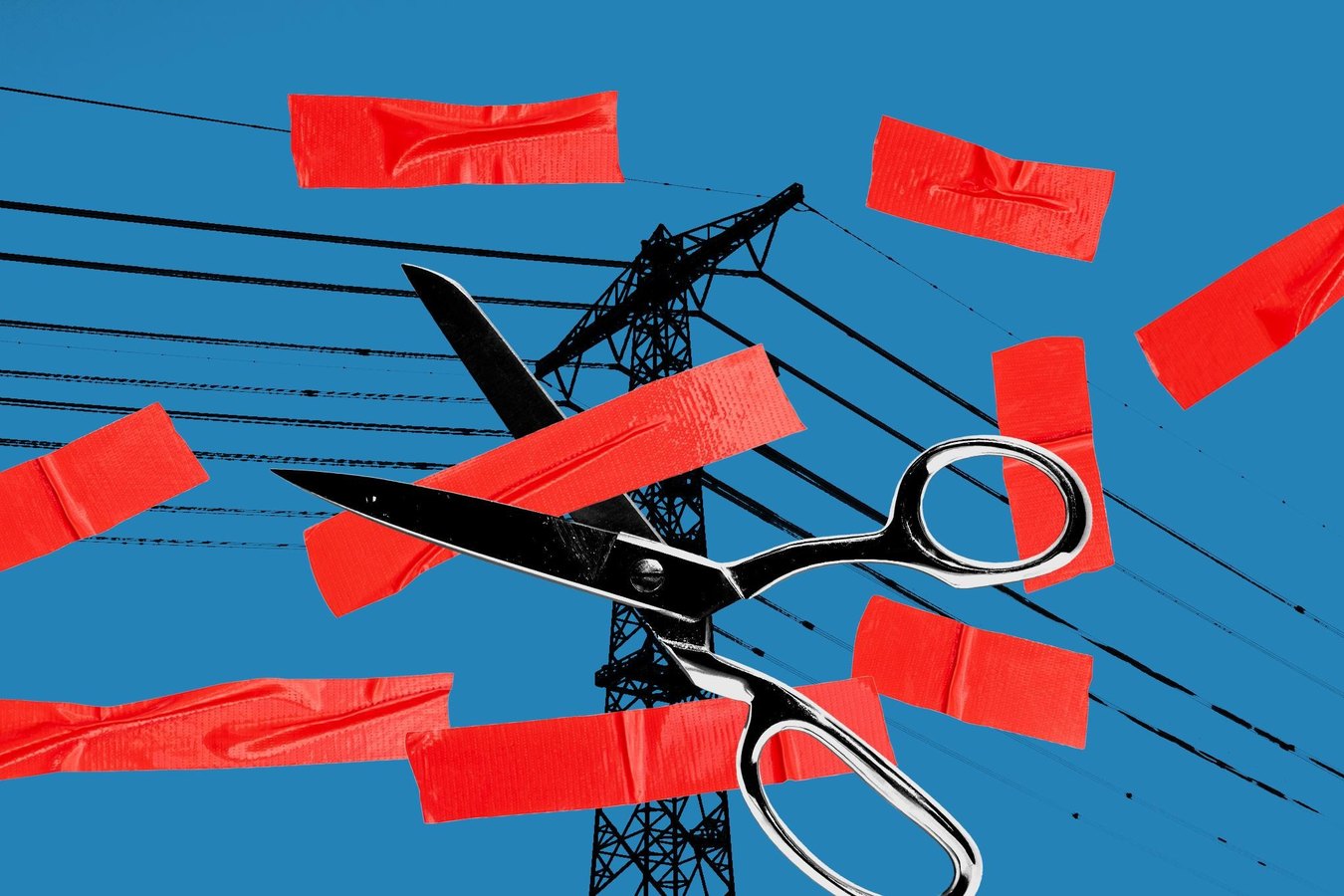
A bipartisan group of United States senators is advancing a sweeping energy permitting reform package known as the Bipartisan American Affordability and Jobs Act, designed to dramatically accelerate federal approvals for power infrastructure, interstate transmission lines, and fossil fuel pipelines. Originally introduced on September 30th by a coalition of four key lawmakers who call themselves the four corners, the legislative package aims to unlock stalled energy development and address surging electricity demand across the country. As detailed in The Verge's report, the legislation could receive a vote in the Senate as early as next week during the post-midterm lame-duck session, testing whether outgoing and incoming lawmakers can finalize a compromise before the new congressional term begins.
This analysis details the concrete statutory mechanisms inside the BAAJA legislation, examining the strict procedural clocks, judicial restrictions, and Clean Water Act permitting changes reshaping energy governance. The breakdown is written for enterprise infrastructure leaders, data center developers, utility executives, and environmental policy specialists who must navigate shifting federal timelines. Readers will find exact filing windows, statutory limits on agency review, litigation thresholds, and an assessment of how the pending congressional vote will influence power generation deployment across clean energy systems, natural gas facilities, and large-scale artificial intelligence computing hubs.
Lame-duck Congress might actually do something: what actually changed
The Bipartisan American Affordability and Jobs Act establishes hard statutory deadlines that replace multi-year, open-ended environmental assessments with accelerated agency schedules. Under the terms of the bill introduced by Senators Shelley Moore Capito, Sheldon Whitehouse, Mike Lee, and Martin Heinrich, federal lead agencies face a mandatory 45-day deadline to issue a final permit decision once a National Environmental Policy Act environmental review concludes. The measure directly narrows the scope of infrastructure projects that trigger full environmental reviews in the first place, carving out explicit statutory exclusions for power grid transmission upgrades and select pipeline expansions. Infrastructure initiatives that receive federal loans or loan guarantees, as well as facilities that have already completed an equivalent state-level environmental assessment, will no longer be forced through redundant federal environmental reviews.
In addition to compressing agency timelines, the legislation fundamentally alters judicial review for contested energy infrastructure. Citizens, local municipalities, and advocacy groups will face a strict 150-day window from permit issuance to file legal challenges alleging agency violations of the National Environmental Policy Act, the Clean Water Act, the Endangered Species Act, or the National Historic Preservation Act. Crucially, the bill eliminates the long-standing judicial remedy of project injunctions; federal courts will no longer hold the authority to halt construction work or vacate permits even if an agency is found to have violated environmental statutes. Instead, presiding judges will only be permitted to remand the decision back to the responsible agency to remediate documentation errors while work proceeds.
Lame-duck Congress might actually do something: how it works
The operational mechanics of the bill streamline the permitting pipeline by restructuring how federal agencies coordinate environmental documentation. According to the Bipartisan Policy Center, agency reviews that historically took several months have gradually stretched across decades because federal staff routinely spend years assembling defensive administrative records to withstand anticipated litigation. Under BAAJA, lead agencies are required to close their review records within the statutory window, preventing the circular rounds of supplemental reviews that have historically stalled both fossil fuel developments and clean electricity alternatives. By establishing rigid boundaries on procedural scope, the statute forces federal regulators to deliver a definitive yes or no determination within a bounded timeframe rather than maintaining indefinite review cycles.
The legislation also leverages general permitting authorities administered by the United States Army Corps of Engineers under the Clean Water Act. The statute expands eligibility for nationwide general permits covering discharges of dredged or fill material into domestic waterways, allowing large-scale industrial projects to bypass individual public review if their environmental impact is classified as having minimal adverse environmental effects. This general permitting framework allows infrastructure builders and facility developers to avoid standalone site reviews and bypass state or tribal public comment requirements. Rather than requiring distinct federal determinations for every stream crossing or wetland buffer, developers can register projects under overarching authorizations that require minimal agency intervention before ground disturbance begins.
Advertisement
Tech Pulse Daily
Get tomorrow's pulse first
Join engineers who read Tech Pulse before stand-up. Free, weekday mornings.
Lame-duck Congress might actually do something: why it matters
The stakes surrounding the bill center on the urgent need to expand generation capacity for energy-intensive artificial intelligence facilities while managing consumer energy costs. Sheldon Whitehouse framed the measure as an engine to flood the electrical grid with clean, affordable power while requiring expanding computing hubs to contribute equitably to system costs. Simultaneously, the package received enthusiastic backing from fossil fuel trade groups, with the US Oil and Gas Association issuing a statement calling on lawmakers to pass the bill immediately to restore construction velocity. Proponents emphasize that modernizing 1970s environmental statutes is essential to unblock stalled high-voltage transmission lines, battery installations, and clean energy projects that have languished in federal queues despite available commercial capital.
Conversely, environmental organizations contend that the bill systematically strips local communities and frontline populations of legal protections to satisfy private developers. Christy Goldfuss, executive director of the Natural Resources Defense Council, warned that the legislation exempts computing clusters and pipeline networks from answering to nearby residents regarding wetland destruction or localized pollution. Abigail Dillen, president of Earthjustice Action, argued that the package operates as a precision strike for developers of dirty data centers by facilitating rapid pipeline construction to deliver natural gas directly to computing facilities. The dispute underscores a sharp trade-off: accelerating infrastructure deployment across the American power sector comes at the expense of comprehensive environmental scrutiny and administrative due process.
Lame-duck Congress might actually do something: who is affected
Industrial power consumers, hyper-scale technology companies, and data center operators represent the primary commercial beneficiaries of the permitting overhaul. Energy research firm Wood Mackenzie reports that extensive regulatory delays in pipeline permitting have severely bottlenecked technology facility development across major regional markets. Under BAAJA, data center operators planning behind-the-meter generation facilities can connect private natural gas conduits directly to proprietary generation assets without waiting for lengthy interstate review proceedings. Siddhant Warrier, research analyst for North American Power at Wood Mackenzie, highlighted that the measure does not favor a single generation fuel over another, but instead establishes a neutral pathway that clears all generation technologies to connect to the broader electrical grid much faster.
Public interest groups, indigenous tribes, and frontline communities face substantial reductions in their capacity to contest nearby industrial build-outs. Because the legislation curtails public participation under Clean Water Act general permits, local residents near water-intensive cooling centers will have fewer institutional channels to challenge site permits or raise regional groundwater depletion concerns. Independent clean energy developers who have faced transmission interconnection backlogs will gain relief through statutory exclusions for grid line enhancements. Meanwhile, federal regulatory agencies will operate under intensified administrative pressure, as their legal staffs must conduct environmental reviews, assess mitigation protocols, and execute formal decisions within the inflexible 45-day post-review timeline without exposing determinations to remand proceedings.
Lame-duck Congress might actually do something: what to watch
The immediate focal point is whether congressional leaders can secure a floor vote during the ongoing post-election lame-duck session. Xan Fishman, executive vice president of the Energy Program at the Bipartisan Policy Center, indicated that White House officials under Donald Trump have been actively involved in negotiations and noted that Trump would likely sign the legislation if the Republican-led Congress approves it before year's end. However, the post-election realignment creates competing tactical incentives; newly empowered Democrats in the incoming Congress may prefer to delay final legislative action until next year to negotiate broader renewable energy concessions, rather than accepting the compromise crafted prior to the November elections.
A secondary structural mechanism to observe is the statutory firewall designed to safeguard energy projects against unilateral executive intervention. The bipartisan architecture of BAAJA includes provisions to bar future administrations from canceling approved energy infrastructure based purely on executive discretion, preventing actions similar to prior federal stop-work orders issued against offshore wind installations or regulatory efforts to phase down fossil fuel plants. Over the coming weeks, industry participants must monitor whether Senate leadership brings the measure to a formal vote or if committee leaders decide to reintroduce the permitting framework when the new legislative session convenes in January.
Developer Action Items
- ☐ Verify the claim on the official Windows page (or The Verge), not from this recap alone.
- ☐ Name the surface that moved — API, policy, model, hardware, or commercial terms — before you Slack the thread.
- ☐ Assign one owner a day to read the primary material and decide: this-sprint, this-quarter, or noise.
- ☐ Do not change production on day-one coverage. Watch the vendor changelog and one independent write-up first.
Lame-duck Congress might actually do something FAQ
What is the Bipartisan American Affordability and Jobs Act?
The Bipartisan American Affordability and Jobs Act is a bipartisan energy permitting bill introduced on September 30th by Senators Shelley Moore Capito, Sheldon Whitehouse, Mike Lee, and Martin Heinrich to accelerate federal infrastructure approvals.
How does BAAJA restrict judicial challenges against energy projects?
The legislation establishes a strict 150-day deadline for filing court challenges under environmental laws and eliminates the ability of federal judges to halt or enjoin construction projects even when an agency violates review requirements.
Why are environmental organizations opposing the energy permitting bill?
Advocacy organizations including the NRDC and Earthjustice Action argue the bill curtails public review, weakens Clean Water Act protections, and fast-tracks natural gas pipelines designed to supply electricity to artificial intelligence data centers.
How does the legislation affect commercial data center infrastructure?
The bill streamlines pipeline interconnections for behind-the-meter natural gas generation and expands Army Corps of Engineers general permits, allowing data center operators to deploy power generation without protracted regulatory delays.
Sources

Author
Dillip Chowdary
Writes Tech Bytes coverage of AI, engineering, and the tools that actually ship. Editor of Tech Pulse Daily.
Related on Tech Bytes
Advertisement