Lawsuit: Illegal Agreement of Anthropic, OpenAI, SpaceXAI, Google on AI
. Lawsuit: Illegal Agreement of Anthropic, OpenAI, SpaceXAI, Google on AI Why it matters for engineering teams What shipped and who is affected.
By Dillip Chowdary • Sep 24, 2026 • Source: HN Claude/Codex/Fable
The HTML is mostly CSS/JS. Let me search specifically for the article body text: Now I have all the key facts. Let me write the article:
A federal lawsuit filed September 19 in the U.S. District Court for the Northern District of California accuses four of the largest artificial intelligence companies — Google, OpenAI, Anthropic, and SpaceXAI — of colluding to slow the pace of their own technological development in violation of federal antitrust laws. The complaint centers on a cascade of coordinated public endorsements triggered by an essay from Anthropic CEO Dario Amodei calling for the industry to decelerate AI progress in favor of enhanced safety measures. Lawyers for four named plaintiffs argue that what their companies presented as a safety discussion was, in practice, an anticompetitive agreement among dominant rivals.
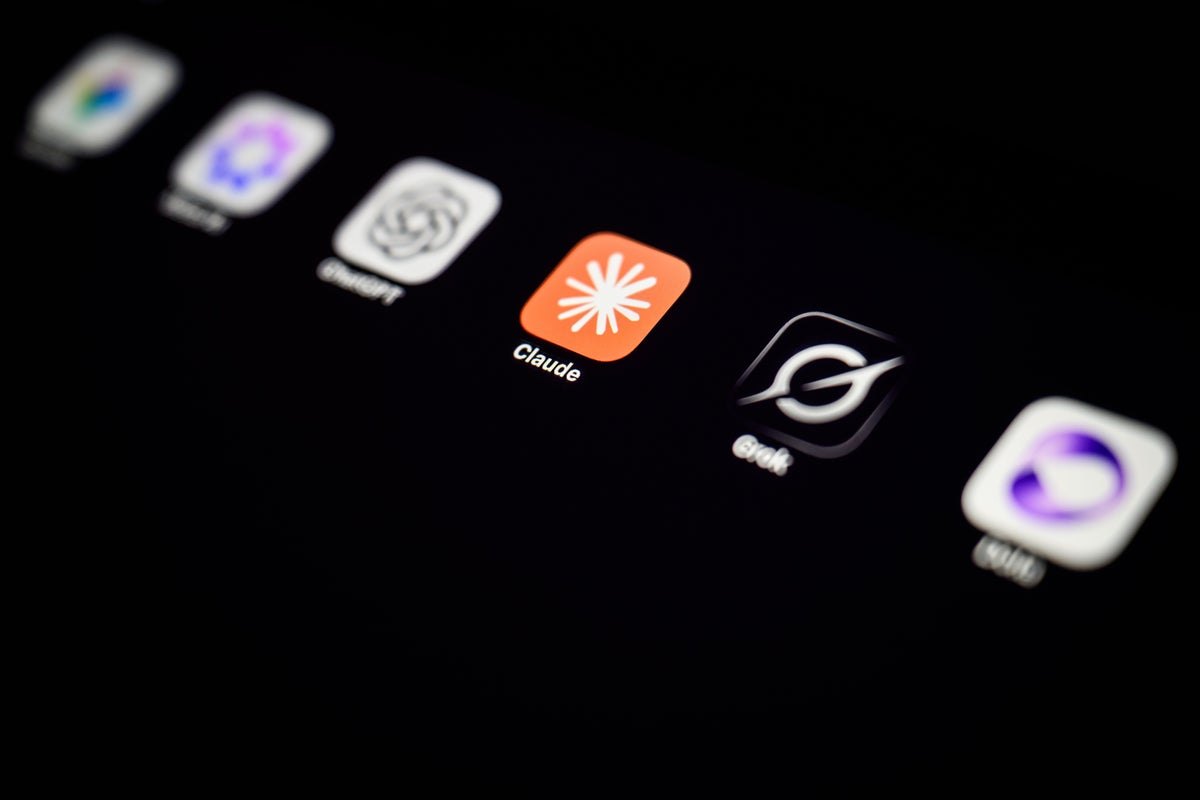
This piece covers what the lawsuit actually alleges, how the alleged coordination unfolded on September 12, and what the filing means for paid subscribers to ChatGPT, Claude, Grok, and Gemini. Builders deploying products on top of those platforms, enterprise procurement teams, and anyone tracking AI regulatory risk in the United States will find the legal mechanism and the open questions most relevant.
Illegal Agreement of Anthropic: what actually changed
On September 12, Dario Amodei published an essay calling for collective industry effort to curb rapid AI progress in favor of safety. Within hours, Google DeepMind's Demis Hassabis, OpenAI's Sam Altman, and SpaceXAI's Elon Musk publicly endorsed Amodei's proposals. The lawsuit, submitted Friday by lead attorney Nick Rowley, treats that sequence as more than a coincidence of public opinion. The complaint characterizes the coordinated endorsements as mutual pledges among dominant rivals to ensure their development timelines "should be slower than competition would otherwise produce," a formulation it argues carries a direct anticompetitive effect on consumers.
Amodei's essay itself acknowledged the legal tension. He wrote that it would assist if the U.S. government were to mediate "or at least enable" cross-lab discussions, adding that federal officials would not have to participate but would need to "issue a narrow waiver for certain kinds of safety conversations." Altman, in a social media reply, stated OpenAI supports a "federal framework that sets consistent safety requirements" while adding "we do not believe we need to wait for an anti-trust exemption or legislation to begin the work of providing this confidence." That statement now sits at the center of the plaintiff's theory about consciousness of guilt.
Illegal Agreement of Anthropic: how it works
The complaint's legal theory rests on the characterization of the September 12 endorsements as a horizontal agreement among competitors — a category of conduct that antitrust doctrine treats with particular suspicion regardless of the stated rationale. Because Google, OpenAI, Anthropic, and SpaceXAI all compete directly for the same AI subscription customers, a mutual commitment to slower advancement would, according to the filing, function identically to a price-fixing arrangement: it reduces the competitive pressure each company faces to ship faster, better products.
Advertisement
Tech Pulse Daily
Get tomorrow's pulse first
Join engineers who read Tech Pulse before stand-up. Free, weekday mornings.
The filing contends that this arrangement ultimately diminishes the value provided to customers paying for AI service subscriptions. Lawyers are bringing the suit on behalf of four named plaintiffs who pay for subscriptions to ChatGPT, Claude, Grok, or Gemini, and they seek certification as a proposed nationwide class covering other paid subscribers to those services. The mechanism under scrutiny is not a signed contract but rather a public, near-simultaneous convergence of statements among market leaders — which antitrust law can still treat as an unlawful agreement if it produces the effect of coordinated action.
Illegal Agreement of Anthropic: why it matters now
The timing of the filing places it at a moment when all four named companies command enormous market share in commercial AI services, and when subscription revenue from ChatGPT, Claude, Grok, and Gemini collectively reaches millions of paying users. A successful class action would require the court to find that slower AI development constitutes a cognizable antitrust harm — a novel legal question, since the "product" at issue is not a commodity with a fixed price but a capability that improves over time. If the court accepts the theory that capability deceleration harms subscribers, it would establish that innovation pace itself can be the subject of antitrust enforcement.
Lead attorney Nick Rowley framed the stakes in stark terms, stating that "AI will quickly spin out of human control and could kill us all if we allow AI safety and protocol ... to be controlled by private self-serving agreements between the world's most powerful 'for profit' technology companies." That framing is notable because it recasts a safety rationale as a power consolidation strategy — an argument that, if accepted by a jury, would make the defendants' public safety messaging a liability rather than a defense.
Illegal Agreement of Anthropic: who is affected
The proposed nationwide class consists of paid subscribers to ChatGPT, Claude, Grok, and Gemini. Four named plaintiffs, each paying for at least one of those subscriptions, anchor the class. If certified, the class would encompass every U.S. consumer who paid for one of those services during the relevant period — a population that could number in the tens of millions given the subscriber bases of OpenAI and Google alone. Builders whose production applications sit on top of these platforms via API contracts may also have standing arguments, though the current complaint is focused on consumer subscriptions rather than enterprise API agreements.
The companies named in the suit — Google, OpenAI, Anthropic, and SpaceXAI — did not immediately respond to requests for comment. No representatives appeared in the record as of the filing date. Executives whose statements are directly cited in the complaint — Amodei, Hassabis, Altman, and Musk — are not named as individual defendants, but their public communications on September 12 form the evidentiary backbone of the coordination claim.
Illegal Agreement of Anthropic: what to watch
The first procedural question is whether the court certifies a nationwide class. Antitrust class actions in consumer technology regularly founder at the certification stage, and defendants will argue that individual plaintiffs' subscription experiences vary too widely to constitute a coherent class. Builders and procurement leads should monitor certification briefing, which will determine whether this case resolves through a broad settlement or narrows to a handful of individual claims. The U.S. District Court for the Northern District of California, which handles most major technology antitrust matters, will also be asked to rule on whether capability-pace deceleration is a legally cognizable harm — a threshold question with no clear precedent.
A second variable is whether the Department of Justice or the Federal Trade Commission files an amicus brief or opens a parallel investigation. Amodei's own essay anticipated government involvement, calling for a federal "narrow waiver" for cross-lab safety discussions — a request that now reads, in the context of the lawsuit, as an admission that any such discussions require legal cover to avoid antitrust exposure. Whether regulators treat the September 12 coordination as a matter worth scrutinizing independently, or defer to private litigation, will signal how aggressively the government intends to apply antitrust doctrine to AI development decisions.

Author
Dillip Chowdary
Writes Tech Bytes coverage of AI, engineering, and the tools that actually ship. Editor of Tech Pulse Daily.
Related on Tech Bytes
Claude Opus 5.5, GPT-6 Sol, GPT-6 Luna, and a new price war
Read →
Airbnb widens access to GPT-6 Astra and OpenAI frontier models
Read →
Use open weight models as your AI coding agent with Amazon Bedrock
Read →
OpenAI just upgraded ChatGPT Voice in three ways
Read →
Today's Tech Pulse briefing
Full briefing →
Advertisement