NASA hopes the commercial space industry can help save Hubble
NASA issued a Request for Information open through November 30th at 3 PM ET to see if commercial space companies can boost Hubble before the 2030s.
By Dillip Chowdary • Nov 01, 2026 • Source: The Verge
NASA has officially opened a formal solicitation to the commercial space sector to determine whether private aerospace companies can execute an orbital boost to save the Hubble Space Telescope. According to details in The Verge's report, the agency initiated a Request for Information seeking private proposals to raise the observatory's altitude before decay causes atmospheric re-entry in the 2030s.
This report details NASA's administrative initiative, evaluating the physical mechanics of low Earth orbit decay, commercial re-boost logistics, and the broader stakes for astronomical research. It is written for aerospace engineers, commercial space providers, astronomers, and space policy analysts tracking NASA Administrator Jared Isaacman's operational statements, the Request for Information guidelines, and the November 30th deadline at 3 PM ET.
NASA hopes the commercial space industry can: what actually changed
NASA officially transitioned from managing Hubble's orbital trajectory internally to soliciting mission proposals directly from commercial space companies through an open Request for Information. Rather than planning an agency-funded rescue or accepting the loss of the telescope to atmospheric friction, leadership invited commercial firms to submit technical architectures capable of providing an orbital lift. The agency set a deadline of November 30th at 3 PM ET for private participants. This operational pivot allows private aerospace contractors to present innovative flight solutions for an existing orbital asset.
The initiative establishes a competitive mechanism to determine whether commercial spaceflight providers can extend the telescope's lifespan economically. Administrator Jared Isaacman emphasized that the agency must explore every reasonable opportunity to keep Hubble delivering science as long as possible. Isaacman noted that if cost-effective methods exist to prolong an in-orbit observatory, the agency owes it to American taxpayers and the scientific community to evaluate them. Formalizing this inquiry via the Request for Information creates an official pathway to examine whether private space ventures can prevent Hubble's demise in the 2030s.
NASA hopes the commercial space industry can: how it works
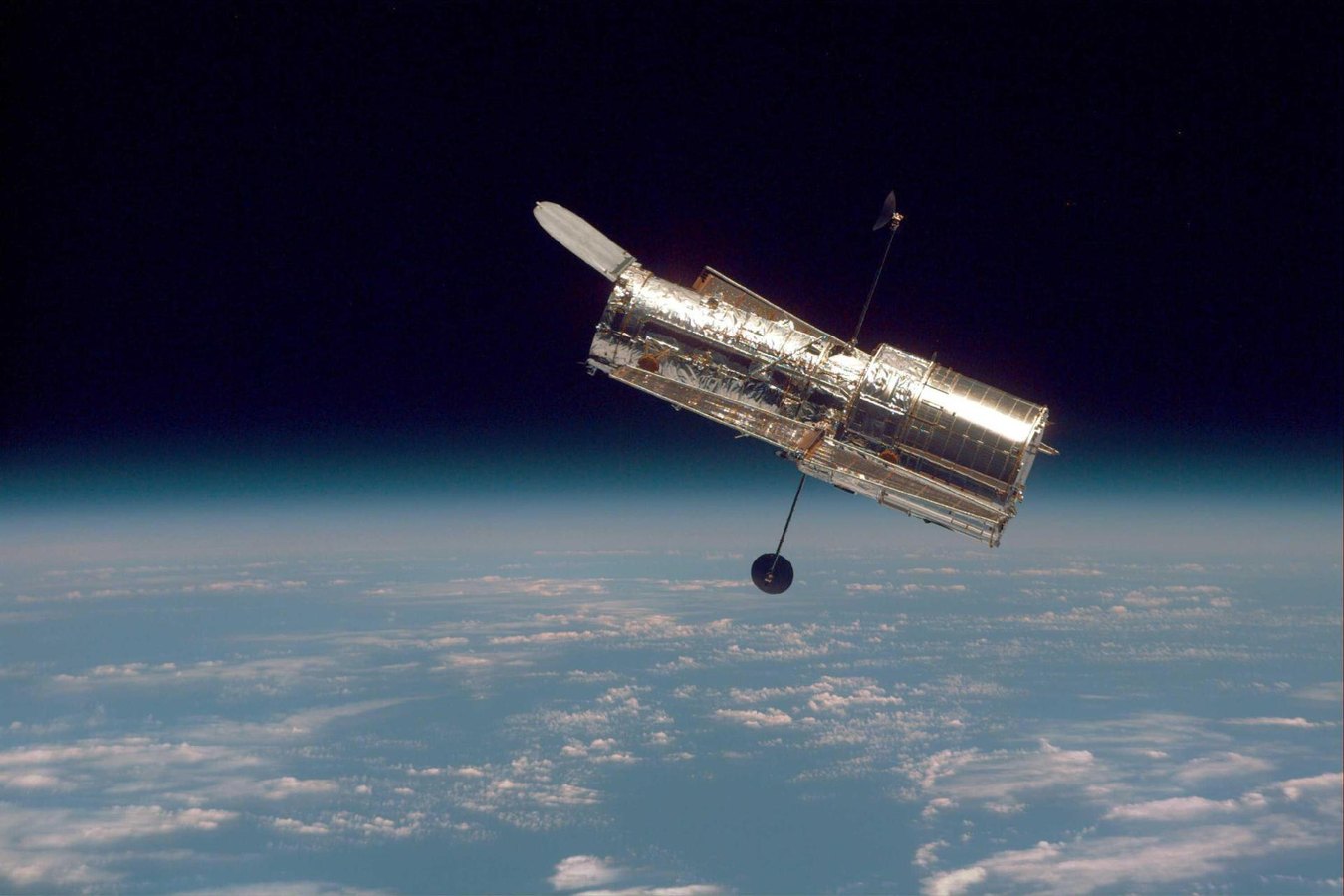
Hubble's orbital mechanics are dictated by atmospheric drag, which constantly robs the telescope of velocity and draws the spacecraft lower toward Earth. Although the observatory remains operational and faces no immediate danger of atmospheric destruction, continuous orbital degradation will cause it to crash to Earth in the early to mid-2030s without an altitude adjustment. Reversing this gradual orbital decline requires an external spacecraft to rendezvous with Hubble in orbit, establish a secure mechanical connection, and perform targeted propulsive maneuvers to elevate the observatory into a higher, more sustainable orbit.
Operationally, NASA is executing this strategy through its formal Request for Information process to evaluate private-sector capabilities before issuing any procurement contracts. Private aerospace companies must engineer and submit viable proposals outlining how their spacecraft would rendezvous with Hubble without damaging its delicate optical equipment. Agency specialists will review these technical documents after the November 30th at 3 PM ET deadline passes. If an approach demonstrates technical viability and cost efficiency, it could lead to a commercial servicing mission capable of executing the precise orbital boost necessary to preserve the spacecraft.
Advertisement
Tech Pulse Daily
Get tomorrow's pulse first
Join engineers who read Tech Pulse before stand-up. Free, weekday mornings.
NASA hopes the commercial space industry can: why it matters now
The imperative to act stems directly from Hubble's orbital trajectory and its projected decay timeline. Although the spacecraft is currently safe from atmospheric entry, orbital models confirm that its operational window will inevitably expire in the early to mid-2030s without an altitude intervention. NASA Administrator Jared Isaacman explained that the telescope still possesses important science ahead of it, making mission preservation an agency priority. Preparing an orbital servicing mission takes years of planning, which requires NASA to evaluate commercial capabilities well before atmospheric drag pulls the spacecraft into dangerous altitudes.
Scientific expansion and fiscal responsibility also dictate the urgency of exploring private-sector options. As Administrator Isaacman emphasized, extending Hubble's operational life means more discoveries, more science, and more opportunities to expand human understanding of the universe. Isaacman affirmed that if cost-effective commercial solutions can preserve an asset already in orbit, NASA is obligated to explore them on behalf of American taxpayers and scientists. Rather than allowing a premier scientific platform to burn up prematurely, extending Hubble's life offers maximum return on prior public investments while maintaining continuous observational access for global researchers.
NASA hopes the commercial space industry can: who is affected
The global scientific community is directly impacted by the prospect of prolonging Hubble's active operations. Research astronomers and academic institutions rely on the telescope's unique instruments to investigate astronomical phenomena across the cosmos. According to NASA Administrator Jared Isaacman, keeping Hubble operational preserves important science that lies ahead and ensures that researchers continue receiving observational data. If commercial intervention succeeds in preventing atmospheric re-entry during the 2030s, the scientific community avoids the loss of an invaluable orbital asset, gaining extended opportunities to explore fundamental questions about cosmology, galactic structures, and planetary systems.
Commercial aerospace enterprises and American taxpayers are also substantially affected by this initiative. Private aerospace companies have a distinct opportunity to demonstrate complex rendezvous and orbital boost capabilities under NASA scrutiny. Engaging commercial contractors allows the agency to evaluate competitive private proposals rather than financing expensive, bespoke government spacecraft. Administrator Isaacman noted that exploring innovative, cost-effective options is an agency obligation owed to American taxpayers. Securing a private-sector boost could establish a replicable commercial model for preserving other orbiting government assets, maximizing taxpayer value while expanding commercial spaceflight mission profiles.
NASA hopes the commercial space industry can: what to watch
The immediate milestone to observe is the official closing of NASA's Request for Information on November 30th at 3 PM ET. Observers will be watching how many commercial space companies submit viable proposals and whether any private providers present credible technical architectures for orbital maneuvering. Following the submission deadline, NASA engineers will evaluate incoming proposals to determine whether commercial rendezvous and docking operations can be performed safely. The agency's evaluation will reveal whether private aerospace capabilities have matured sufficiently to service delicate orbital infrastructure without risking catastrophic damage.
Subsequent announcements from NASA will indicate whether the agency formally initiates a funded commercial procurement or demonstration flight. If submitted concepts meet NASA's technical and budgetary standards, the agency will likely issue follow-on solicitations specifying contract terms and flight schedules. As the early to mid-2030s atmospheric re-entry window approaches, industry analysts will monitor whether public-private funding can be secured to execute an actual mission. NASA's actions in the coming months will ultimately determine whether commercial spaceflight can successfully rescue the historic telescope or whether atmospheric drag will conclude Hubble's mission.
Developer Action Items
- ☐ Verify the claim on the official NASA hopes commercial space page (or The Verge), not from this recap alone.
- ☐ Name the surface that moved — API, policy, model, hardware, or commercial terms — before you Slack the thread.
- ☐ Assign one owner a day to read the primary material and decide: this-sprint, this-quarter, or noise.
- ☐ Do not change production on day-one coverage. Watch the vendor changelog and one independent write-up first.
NASA hopes the commercial space industry can FAQ
When will the Hubble Space Telescope crash to Earth without an orbital boost?
Hubble will re-enter Earth's atmosphere and crash sometime in the early to mid-2030s unless an external mission boosts its orbit. The telescope is currently in no immediate danger of burning up, but atmospheric drag steadily degrades its altitude over time.
What is NASA's deadline for commercial space proposals to save Hubble?
NASA is accepting proposals under its Request for Information through November 30th at 3 PM ET. The agency is using this submission window to evaluate private-sector concepts for extending the telescope's operational life.
Why is NASA seeking private sector help instead of retiring Hubble?
NASA Administrator Jared Isaacman stated that Hubble still has important science ahead of it and that the agency owes it to American taxpayers and researchers to explore cost-effective ways to extend the life of an asset already in orbit. Boosting the telescope would enable more discoveries and expand scientific understanding of the universe.
Is Hubble in immediate danger of falling out of orbit?
No, Hubble is in no immediate danger of burning up in Earth's atmosphere today. However, continuous gravitational drag will pull the observatory down by the 2030s if its orbit is not raised.
Sources

Author
Dillip Chowdary
Writes Tech Bytes coverage of AI, engineering, and the tools that actually ship. Editor of Tech Pulse Daily.
Related on Tech Bytes
Advertisement