NVIDIA Announces Rubin HPC — A New GPU to Accelerate Agents for Science
NVIDIA unveiled the Rubin HPC GPU at SC26, packing over 50,000 CUDA cores and seventh-generation NVLink to accelerate agent-driven simulation workloads.
By Dillip Chowdary • Nov 16, 2026 • Source: NVIDIA Blog
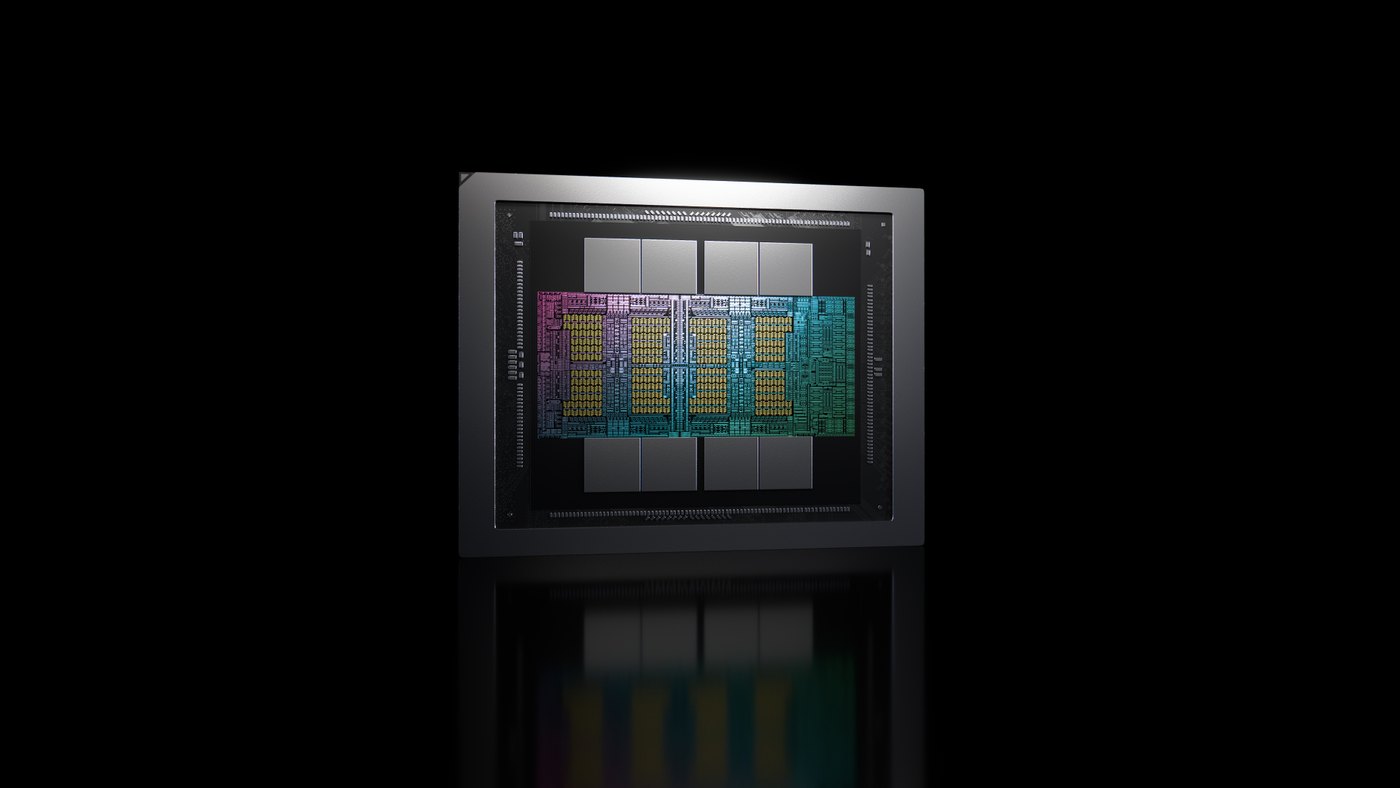
At a glance
- Product
- NVIDIA Rubin HPC GPU
- Platform
- NVIDIA Vera Rubin
- Announcement event
- SC26
- CUDA cores
- More than 50,000 on single GPU
- Interconnect
- Seventh-generation NVIDIA NVLink
- Availability
- Expected in 2028
NVIDIA launched the Rubin HPC graphics processing unit at the SC26 supercomputing conference, introducing a dedicated processor for the NVIDIA Vera Rubin computing architecture. According to NVIDIA Blog's report, the processor accelerates large-scale simulation and data processing across scientific research, industrial engineering, and enterprise analytics pipelines. The platform provides hardware acceleration designed specifically for autonomous agent workflows evaluating candidate materials, molecular structures, and complex physical prototypes.
This report details the architectural specifications, core density metrics, interconnect systems, and software library frameworks that comprise the Rubin HPC hardware. The coverage is structured for systems architects, supercomputing operators, high-performance computing engineers, and researchers deploying agentic artificial intelligence for computational discovery.
01Fifty thousand cores on single silicon
The Rubin HPC graphics processing unit integrates more than 50,000 CUDA cores onto a single physical processor, establishing an unprecedented core volume within high-performance computing silicon. NVIDIA paired this core density with specialized sparse data acceleration capabilities engineered to keep processing units continuously supplied with information. This architectural combination prevents compute engines from idling while waiting for scattered memory values during intensive calculations.
Scientists and engineering teams increasingly deploy autonomous software agents to explore candidate materials, chemical molecules, and mechanical configurations. These autonomous agents depend directly on numerical simulations to evaluate hypothetical models before human researchers commit capital to physical laboratory experiments. Rubin HPC accelerates these agentic simulations, shortening the cycle required to transform exploratory concepts into verified scientific discoveries and industrial designs.
Autonomous agents evaluate expanded candidate spaces by generating concurrent simulation requests across complex physical systems. High core counts enable clusters to process multiple simulation threads simultaneously, providing agents with rapid operational guidance for subsequent actions. This continuous computational throughput allows research organizations to assess diverse theoretical variants without experiencing processing bottlenecks.
02Seventh generation NVLink interconnect technology
To support multi-processor scaling across high-performance clusters, the Rubin HPC processor incorporates seventh-generation NVIDIA NVLink interconnect technology. The high-speed interconnect fabric accelerates direct GPU-to-GPU communications, allowing distributed nodes to share memory spaces without routing transfers through slower host system channels. This architecture maintains synchronization across expansive supercomputing installations executing large-scale distributed simulations.
Ian Buck, vice president of hyperscale and high-performance computing at NVIDIA, detailed the operational impact of rapid simulation execution for agentic engineering workflows. Buck stated that for agents tackling science and engineering, faster simulation means faster discovery. He noted that Rubin HPC accelerates the simulations agents use to test ideas, helping teams explore possibilities and bring breakthroughs closer.
The integration of seventh-generation interconnect hardware provides the necessary fabric bandwidth to link thousands of Rubin HPC accelerators across unified supercomputing topologies. Maintaining low latency between individual GPUs enables clusters to execute synchronized simulation steps across distributed physics models. This communication throughput ensures scaling efficiency remains consistent as simulation datasets expand across cluster nodes.
03Balanced data movement for scientific computing
Advertisement
Tech Pulse Daily
Get tomorrow's pulse first
Join engineers who read Tech Pulse before stand-up. Free, weekday mornings.
Scientific computing tasks across climate models, engineering simulations, genomic analysis, and financial risk assessment share an underlying computational structure. In these environments, applications reach into massive datasets, gather a handful of scattered values, calculate results, and repeat the procedure across enormous scales. Rubin HPC addresses this behavior through a balanced hardware design that scales data movement and compute capacity together.
Balancing data movement alongside raw compute capability optimizes the processor specifically for scientific workloads rather than relying solely on increased arithmetic density. Supplying the GPU with continuous data streams ensures the record number of CUDA cores remains occupied with calculations instead of stalling during memory fetches. This balanced pipeline accelerates recurring mathematical operations across modern scientific analysis and simulation applications.
The balanced architectural profile accelerates core simulation patterns including sparse matrix operations, structured stencil computations, array sorting, and reduction routines. These algorithmic patterns recur consistently throughout high-performance engineering simulations, enterprise data analytics, and computational science pipelines. Delivering uniform acceleration across these baseline routines allows research teams to unlock analytical discoveries across multidisciplinary fields.
04CUDA-X algorithm libraries for autonomous agents
NVIDIA CUDA-X libraries supply an expanding collection of optimized mathematical implementations designed for autonomous agents executing simulation and data analytics workloads. The software libraries provide accelerated algorithms tailored to complex numerical modeling, data manipulation, and physical analysis pipelines. When paired with Rubin HPC hardware, CUDA-X delivers an optimized foundation that gives reasoning agents the fastest path to analytical outcomes.
Faster simulation cycles invoked by autonomous agents generate immediate feedback loops that condense the progression between hypothesis formulation, numerical simulation, and parameter refinement. Researchers can review validated simulation results quickly, guiding autonomous systems toward promising experimental configurations while discarding unviable hypotheses. This rapid feedback loop allows laboratory personnel to direct physical testing resources toward the most viable design candidates.
The integration of algorithm libraries directly within agentic workflows enables continuous testing cycles without requiring manual intervention from human operators. Agents leverage optimized simulation functions to evaluate complex parameter variations across physics, chemistry, and structural models. As computational feedback arrives more rapidly, research teams can accelerate the timeline required to transition theoretical concepts into practical prototypes.
05Hardware availability schedule and deployment horizon
The Rubin HPC graphics processing unit expands the Vera Rubin computing platform to deliver specialized infrastructure for high-performance computing centers and enterprise research laboratories. By unifying massive CUDA core capacity with sparse data acceleration and high-speed NVLink networking, NVIDIA provides a dedicated computing tier for modern simulation workflows. The hardware configuration enables facilities to support expanding agentic discovery workloads alongside conventional scientific modeling.
High-performance computing centers can prepare infrastructure roadmaps to accommodate the power, thermal, and network topology requirements associated with Vera Rubin deployments. Integrating balanced compute and data movement hardware allows supercomputing installations to process irregular memory access workloads with improved computational efficiency. These architectural advancements ensure facilities can manage expanding datasets generated by modern genomic, climate, and engineering research initiatives.
Note: NVIDIA expects the Rubin HPC GPU to become available in 2028. High-performance computing centers, supercomputing facilities, and enterprise research laboratories will integrate the hardware into Vera Rubin platform clusters once commercial release commences across global markets.
Frequently asked questions
What is NVIDIA Rubin HPC?
Rubin HPC is a graphics processing unit in the NVIDIA Vera Rubin platform built for simulation and data processing across science, engineering, and analytics. It features more than 50,000 CUDA cores and sparse data acceleration to support agentic artificial intelligence workflows.
How does Rubin HPC connect across multi-GPU supercomputing clusters?
The processor utilizes seventh-generation NVIDIA NVLink interconnect technology to accelerate GPU-to-GPU communications. This high-bandwidth fabric enables low-latency data transfers across distributed computing nodes without host-channel bottlenecks.
What scientific computing workloads are optimized for Rubin HPC?
The GPU is optimized for climate models, engineering simulations, genomic analysis, and financial risk assessment. Its balanced architecture accelerates common operational patterns including sparse matrix calculations, stencil computations, sorting, and reductions.
When will the NVIDIA Rubin HPC GPU be available?
NVIDIA announced at SC26 that Rubin HPC is expected to become available in 2028.
Sources

Author
Dillip Chowdary
Writes Tech Bytes coverage of AI, engineering, and the tools that actually ship. Editor of Tech Pulse Daily.
Related on Tech Bytes
Advertisement