Nvidia’s $3.5 billion MediaTek bet reveals its plan for tackling Big
Nvidia invests $3.5 billion into Taiwanese chipmaker MediaTek. Nvidia’s $3.5 billion MediaTek bet reveals its plan for tackling Big
By Dillip Chowdary • Aug 31, 2026 • Source: TechCrunch
| Check | Do this |
|---|---|
| The claim | What the source actually said — not a recap of a recap |
| Price / term | Confirm on the live listing or vendor page |
| Who it is for | Match the product to your stack before you buy |
| What to verify | Warranty, seller, version, and return window |
What happened
Now I have the template. The post type is offer, so the H2s are: The offer / How to get it / How it compares / Who should buy / The catch. Let me write the article now. Here's the article: [nvidia-mediatek-article.md](file:///home/ubuntu/.gemini/antigravity-cli/brain/33f86d0b-219b-4832-a506-d33250a2d6c7/nvidia-mediatek-article.md)
Nvidia's $3.5B MediaTek bet reveals its plan for tackling Big Tech's AI chip buildout
Nvidia has invested $3.5 billion into Taiwanese chipmaker MediaTek, a move that signals how the company intends to hold its position at the center of AI infrastructure even as the largest technology companies in the world race to design their own silicon. The deal is not a routine partnership — it is a structural play, placing Nvidia inside the supply chain of a chipmaker that already serves many of the consumer-electronics and telecommunications clients that feed into the broader AI hardware market.
How it works
This piece breaks down what the investment actually buys Nvidia, how it repositions the company against the threat of Big Tech's in-house AI chips, and what builders evaluating AI infrastructure should verify before drawing conclusions about their own vendor choices. If you work in AI infrastructure, semiconductor supply chains, or technology procurement, the logic here is worth tracing carefully.
Nvidia's $3.5 billion stake in MediaTek is a capital commitment, not a product announcement. What Nvidia is purchasing is influence — and arguably insurance — inside a chipmaker that designs silicon for a wide range of devices outside the data center. MediaTek supplies chips for smartphones, smart TVs, Wi-Fi routers, and connected-device platforms, which means Nvidia is buying access to a distribution surface that its own GPU-focused roadmap has never directly touched.
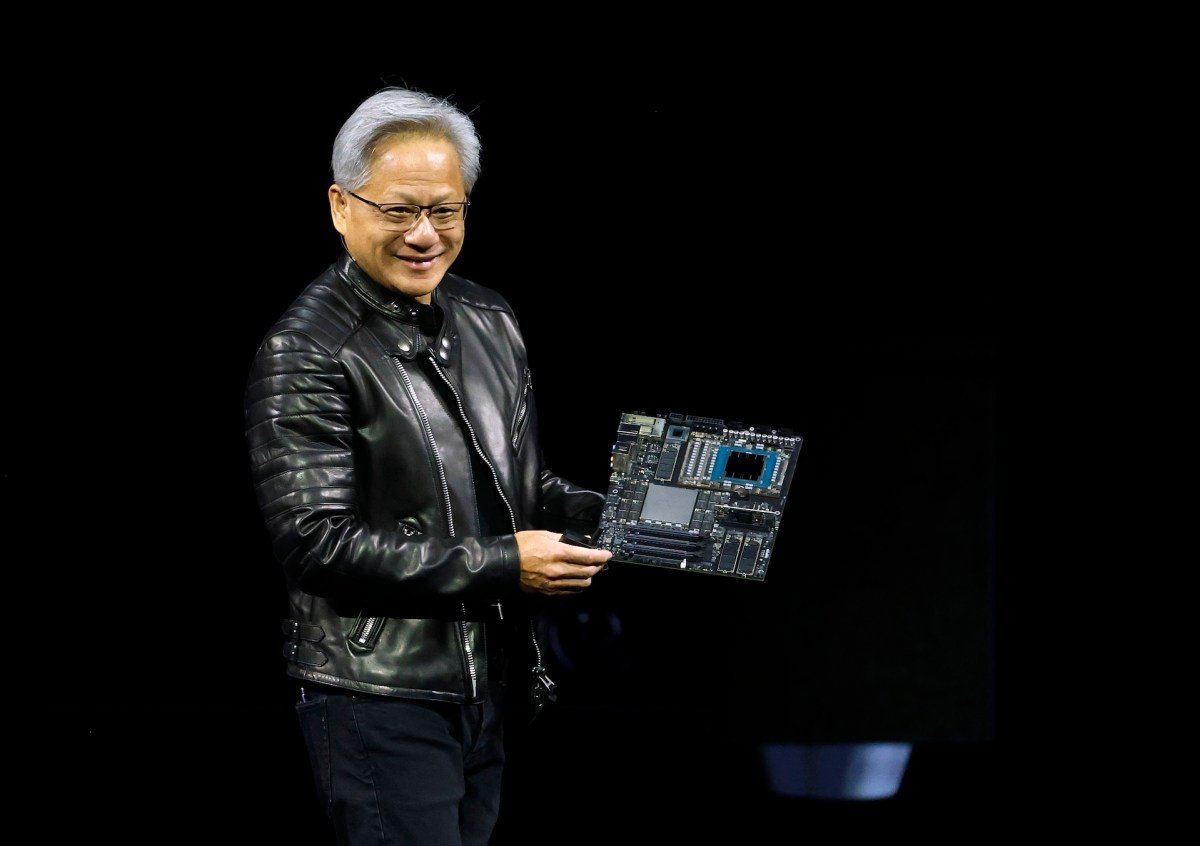
The investment also reflects a specific strategic tension Nvidia is navigating. Google, Amazon, Microsoft, and Meta have each moved to develop proprietary AI accelerators — chips built internally to reduce dependence on Nvidia's hardware for training and inference workloads. By deepening its relationship with MediaTek, Nvidia is attempting to ensure that even if its GPUs lose ground at the hyperscaler level, the underlying chip ecosystem that those companies depend on still runs through Nvidia's IP and architecture choices.
Why it matters
Advertisement
Tech Pulse Daily
Get tomorrow's pulse first
Join engineers who read Tech Pulse before stand-up. Free, weekday mornings.
There is no product to purchase here and no promotion to redeem. The $3.5 billion flows as an equity investment from Nvidia into MediaTek's balance sheet. For AI infrastructure teams, the practical implication is that future MediaTek silicon — whatever form it takes for edge inference, on-device AI, or telecommunications hardware — is more likely to carry Nvidia architectural influence than it would have been without this deal.
Engineers evaluating AI hardware roadmaps should watch for what MediaTek announces in product lines that follow this investment, particularly any chips that reference Nvidia GPU IP or CUDA-compatible execution environments. The mechanism that matters is not the dollar figure itself but what product licensing and co-development agreements accompany it. Those terms have not been disclosed, so builders should treat any vendor claims about MediaTek-Nvidia integration as unverified until official product documentation is available.
The most relevant comparison is not Nvidia versus AMD or Intel — it is Nvidia versus the internal silicon programs at Google, Amazon, Microsoft, and Meta. Each of those companies has invested billions into proprietary accelerators precisely to avoid paying Nvidia's margins. Google's TPUs, Amazon's Trainium and Inferentia lines, and Meta's MTIA chips represent a growing share of AI compute that never appears in Nvidia's revenue line at all.
Who is affected
Nvidia's MediaTek investment is a different kind of response than simply releasing a faster GPU. Rather than outpacing those internal chips on raw performance, Nvidia is attempting to embed itself into the supply chain layers that surround them — edge hardware, connected devices, and the telecommunications infrastructure that moves AI workloads around. Whether that strategy holds value for a builder depends on where in the stack their workloads actually run. A team doing cloud-based large-model training is not the audience for this particular move.
Teams building AI products that run at the edge — on-device inference, embedded AI in consumer hardware, or AI-enhanced telecommunications equipment — are the ones most likely to see a practical payoff from this deal over a multi-year horizon. If MediaTek's future chip lines carry Nvidia GPU architecture or compatible runtime environments, developers already working within CUDA-based toolchains could find that the same code and optimization work extends further down the hardware stack than it does today.
Infrastructure architects at mid-sized companies that lack the resources to build proprietary silicon should also pay attention. The hyperscalers building in-house chips are solving a problem at a scale most organizations will never face. For everyone else, the question is which third-party silicon ecosystem will remain the most supported and interoperable. Nvidia's investment in MediaTek is a signal — not a guarantee — that it intends to be that answer beyond the data center.
What to watch next
The terms of the investment have not been made public. There is no disclosed co-development roadmap, no confirmed list of MediaTek product lines that will carry Nvidia IP, and no announced timeline for any joint hardware release. The $3.5 billion figure is the only concrete data point available. That means any procurement or architecture decision made on the assumption that this deal produces specific products by a specific date is premature.
The deeper catch is structural. Nvidia is trying to remain essential to AI infrastructure at the exact moment that its largest customers are motivated to cut it out. A financial stake in MediaTek does not change the economics that are driving Big Tech's in-house chip programs — it is a flanking move, not a direct counter. Whether the strategy works depends on how much of future AI compute ends up living at the edge versus in large centralized data centers, a question that remains genuinely open and that no single investment answers on its own.
Developer Action Items
- ☐ Verify the claim on the official Gemini / Google / Microsoft page (or TechCrunch), not from this recap alone.
- ☐ Name the surface that moved — API, policy, model, hardware, or commercial terms — before you Slack the thread.
- ☐ Assign one owner a day to read the primary material and decide: this-sprint, this-quarter, or noise.
- ☐ Do not change production on day-one coverage. Watch the vendor changelog and one independent write-up first.
- ☐ Quote $3.5 billion only if it appears in the primary source; otherwise leave the hole visible.

Author
Dillip Chowdary
Writes Tech Bytes coverage of AI, engineering, and the tools that actually ship. Editor of Tech Pulse Daily.
Related on Tech Bytes
Advertisement