OpenAI Codex Helps Fix a Nearly 20 Year Old Radeon Linux Driver Bug
AMD queued Linux 7.5 graphics patches that resolve a two-decade-old Radeon R600 video decoding bug on legacy hardware with help from OpenAI Codex.
By Dillip Chowdary • Nov 15, 2026 • Source: phoronix.com
AMD submitted its latest batch of graphics and compute driver patches targeting the Linux 7.5 merge window opening at the end of the year, incorporating an unexpected fix for legacy ATI and AMD Radeon R600 processors as detailed in phoronix.com's report. While AMD has not officially maintained active software support for the nearly twenty-year-old Radeon HD 2000 and Radeon HD 3000 product line in many years, an open-source contributor named Ted Bullock used OpenAI Codex to investigate, test, and write the driver patch.
This article details the technical mechanics behind the Unified Video Decoding memory corruption fix, the role of AI in resolving legacy kernel regressions, and the broader graphics driver changes queued for the Linux 7.5 merge window. The breakdown is written for Linux kernel developers, systems programmers, and vintage hardware enthusiasts maintaining legacy open-source systems.
01What OpenAI Codex Helps Fix a Nearly 20 Year Old shipped
AMD engineers queued a comprehensive series of graphics and compute driver updates for the upcoming Linux 7.5 kernel merge window. Alongside enablement work for future graphics processors, the pull request unexpectedly resolves an open video playback defect affecting twenty-year-old ATI Radeon hardware. Maintainers accepted the community contribution directly into the core pull request.
The patch was authored by Ted Bullock, an independent open-source contributor seeking to resolve severe video display defects on vintage Apple hardware. Bullock utilized OpenAI Codex to assist during the debugging phase, validating hardware registers, structuring driver logic, and drafting the final patch for the Linux kernel mailing list.
The pull request also packages extensive updates across the amdgpu, amdkfd, and core drm drivers. Changes include DCN 6 DML2 fixes, SMU 15.0.8 updates, GC 11.0.2 repairs, JPEG type4 packet support, and HDMI 2.2 FRL rate handling via EDID parsing.
02What changed for builders in OpenAI Codex Helps Fix a Nearly 20 Year Old
The driver modification repairs the Unified Video Decoding hardware block across legacy R6xx architectures. When the hardware decoder attempted to stream compressed video directly out of main system RAM while the GPU concurrently executed rendering commands, memory contention corrupted decoded frames. Bullock determined that keeping decoder buffers strictly within dedicated VRAM eliminated all frame corruption.
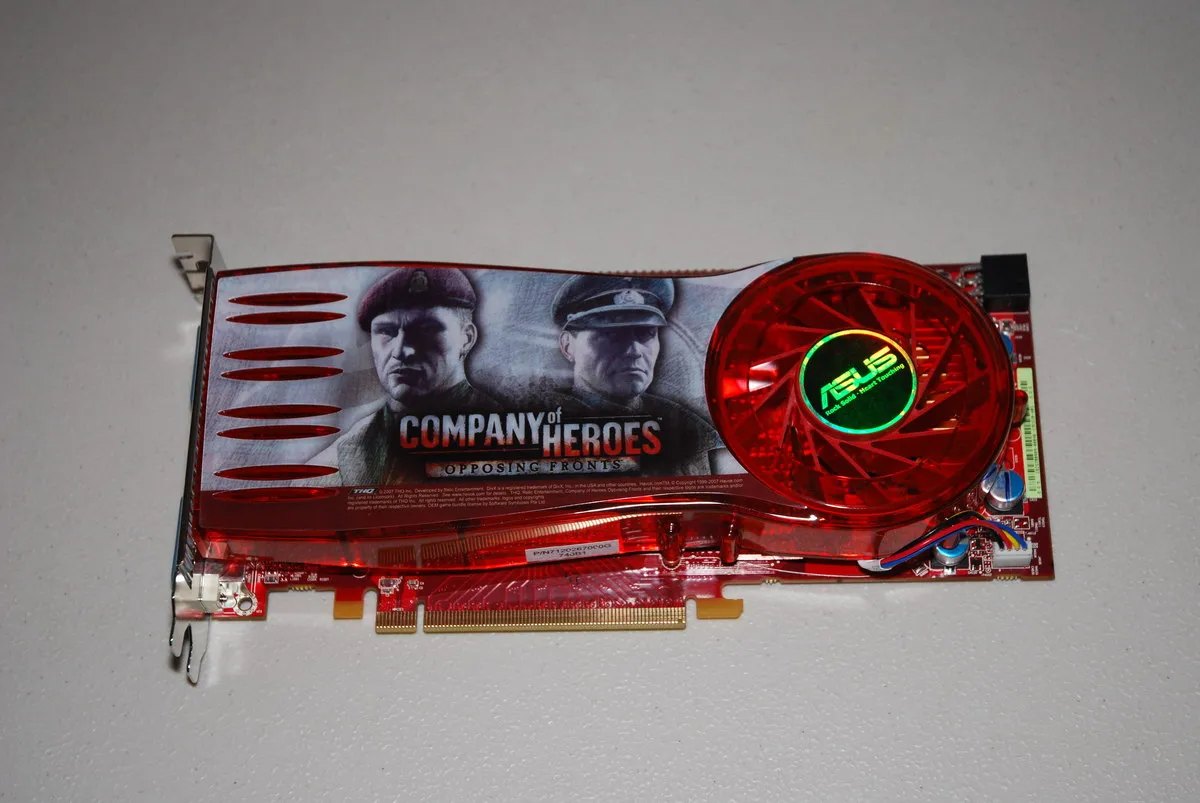
Bullock verified during testing that disabling graphics draw calls entirely resolved frame corruption when using system memory. However, shifting the video decoding buffers into dedicated video memory allowed both video decoding and active desktop rendering to proceed simultaneously without display artifacts. The driver already enforced this VRAM buffer requirement on select newer GPUs, making the change a natural extension to older silicon.
| Component or Parameter | Legacy Driver Behavior (Before) | UVD VRAM Buffer Patch (After) |
|---|---|---|
| Buffer Memory Location | System RAM | Dedicated VRAM |
| Video Decoding Integrity | Corrupted frames during GPU drawing | Clean video decode without corruption |
| GPU Draw Concurrency | Memory contention and frame tearing | Stable playback with active GPU draws |
| Tested Hardware Target | Apple iMac7,1 (RV610/M74) | Apple iMac7,1 (Device ID 1002:94c8) |
Advertisement
Tech Pulse Daily
Get tomorrow's pulse first
Join engineers who read Tech Pulse before stand-up. Free, weekday mornings.
03How to install or upgrade OpenAI Codex Helps Fix a Nearly 20 Year Old
Kernel builders running legacy Radeon hardware can test the driver improvements by pulling the amdgpu and radeon driver branches scheduled for the Linux 7.5 release. The fix applies cleanly across standard kernel build trees on distributions such as Debian. Developers compiling custom kernels can package the patched modules directly for testing against legacy desktop environments.
Developers working with AI assistance can configure developer environments to inspect legacy kernel sources and draft driver modifications. The contributor paired OpenAI Codex with local debugging tools to isolate hardware register constraints and generate valid kernel patch submissions.
git clone --depth 1 https://git.kernel.org/pub/scm/linux/kernel/git/torvalds/linux.git
cd linux
git checkout -b linux-7.5-rc1
make -j$(nproc) bindeb-pkg04Gotchas and compatibility in OpenAI Codex Helps Fix a Nearly 20 Year Old
The patch explicitly targets a family of legacy graphics processors including the RV610, RV620, RV630, RV635, and RV670 chips. Because these devices share the common RV6xx decoder code path and legacy R600 firmware, they likely possess identical memory architecture requirements. The patch updates driver checks to enforce VRAM buffer allocation across all listed chip variants.
Hardware verification remains limited because AMD stopped official engineering support for the R600 series many years ago. Bullock completed verification testing exclusively on an iMac7,1 equipped with an RV610/M74 chip with device ID 1002:94c8 on Debian. Owners of alternate hardware variants must independently verify stability on their systems.
Developers must also track broader subsystem changes bundled into the pull request across the amdkfd compute driver. Maintainers introduced fixes for SVM, CRIU, WPTR buffer object eviction fences, and discontiguous CPU-less NUMA topologies that require validation across production environments.
05What to watch after OpenAI Codex Helps Fix a Nearly 20 Year Old
The patch collection will formally land in the upstream Linux kernel when Linus Torvalds opens the two-week Linux 7.5 merge window at year's end. Systems builders should watch incoming drm subsystem pull requests for supplementary maintenance patches or regressions reported by the broader vintage hardware community.
Notably absent from this AMD submission were driver patches for AMD's next-generation GFX13 architecture, commonly known as RDNA5. Maintainers expect early enablement code for the new GPU family to arrive in subsequent driver drops as Linux 7.5 development continues.
The integration of Bullock's work highlights the viability of AI programming models like OpenAI Codex in maintaining legacy open-source infrastructure. As older computing platforms age beyond official vendor support windows, automated code reasoning tools may increasingly assist open-source developers in solving complex hardware driver bugs.
OpenAI Codex Helps Fix a Nearly 20 Year Old FAQ
What bug did OpenAI Codex help fix in the Linux kernel?
OpenAI Codex helped fix a video corruption bug in the Unified Video Decoding IP block on legacy ATI and AMD Radeon R600 series graphics cards. The bug occurred when the decoder read compressed video from system memory while the GPU was actively drawing.
Which AMD graphics chips are covered by the new Linux 7.5 patch?
The patch covers RV610, RV620, RV630, RV635, and RV670 graphics chips from the Radeon HD 2000 and 3000 era. These chips share the legacy RV6xx decoder path and R600 firmware.
How did the patch resolve the video corruption issue?
The patch resolved the issue by keeping the Unified Video Decoding buffers in dedicated video memory rather than system memory. Moving the input buffers to VRAM prevents memory contention while the GPU performs active drawing operations.
What system was used to test and verify the fix?
The patch was tested and verified on Debian using an Apple iMac7,1 equipped with an RV610/M74 graphics processor bearing device ID 1002:94c8.
Sources

Author
Dillip Chowdary
Writes Tech Bytes coverage of AI, engineering, and the tools that actually ship. Editor of Tech Pulse Daily.
Related on Tech Bytes
Advertisement