OpenAI disbands its robotics team as its general models start running
OpenAI disbanded its robotics team and reassigned staff after its GPT-6 Astra model achieved a 74.8 percent success rate on simulated manipulation tasks.
By Dillip Chowdary • Nov 14, 2026 • Source: fortune.com
OpenAI has disbanded its standalone robotics team, reassigning researchers across internal divisions as general-purpose models demonstrate the capacity to command machines directly. The corporate reorganization, reported by fortune.com's report, disperses specialized hardware and robotics staff into broader foundation research and applied units. Company leadership framed the move not as a retreat from automation, but as an operational consolidation around frontier artificial intelligence architectures.
This report details how OpenAI redistributed its robotics workforce, the technical evaluations motivating the decision, and the competitive implications for hardware startups. It examines whether general multimodal models can replace bespoke robotic brains for engineers, enterprise builders, and technology strategists navigating the field of embodied artificial intelligence.
01Reassignment across research and applied divisions
OpenAI divided the disbanded group between foundational science and commercial product divisions. Core robotics researchers were reassigned to the main research organization led by Chief Research Officer Mark Chen. Meanwhile, staff dedicated to hardware and applied robotics moved to the company's broader Applied organization overseen by OpenAI President Greg Brockman.
Leadership described the realignment as an effort to accelerate automation rather than reduce commitment to physical machines. The restructuring occurred so abruptly that public engagements lagged behind the corporate changes. OpenAI had already registered and paid for booth number 208 at the Conference on Robot Learning in Austin, Texas.
Although the conference mobile application and printed floor plans directed attendees to the reservation, the booth sat empty when the event began. Visitors found bare carpet without company banners, hardware equipment, or scheduled technical presentations. A few former robotics team members mingled informally near the designated space to discuss the transition.
02Historical shifts from Figure to humanoid robots
This consolidation marks the second time OpenAI has dissolved a dedicated robotics group. The company abandoned an earlier robotics project in 2020 after cofounder Wojciech Zaremba cited insufficient physical data and a clearer route to artificial general intelligence through language models. That strategic pivot led directly to the development of ChatGPT in late 2022.
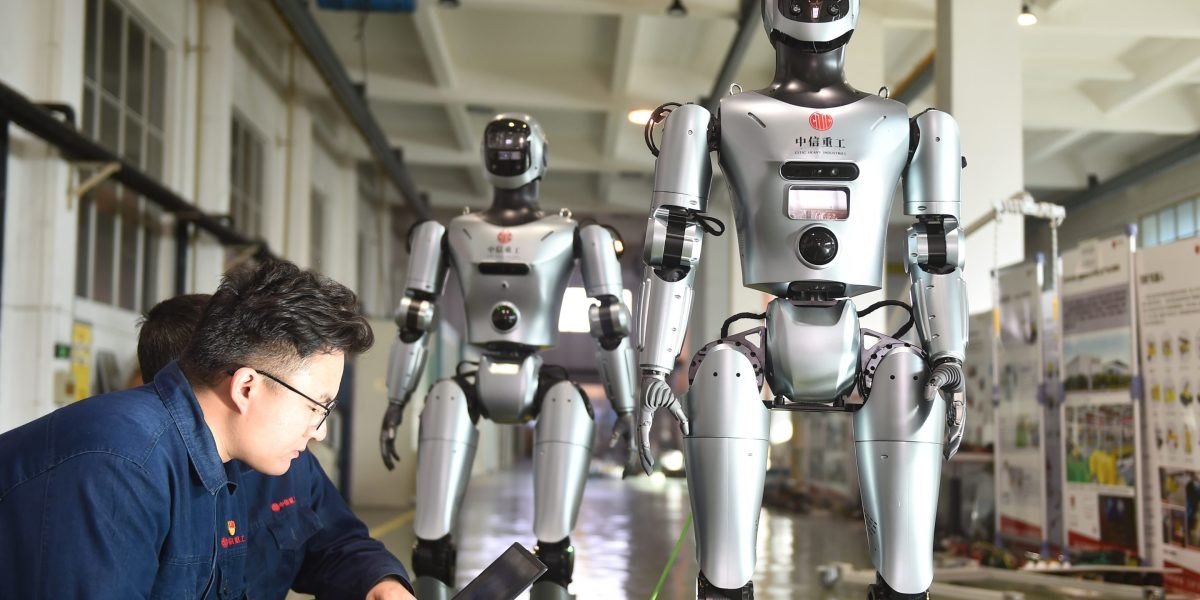
The company reconstituted a robotics unit in 2024, partnering with humanoid startup Figure to develop machine intelligence. That partnership dissolved in February 2025 when Figure opted to build proprietary robotic models in-house. OpenAI then initiated development on its own humanoid robot, with Chief Executive Officer Sam Altman targeting a public demonstration in 2027.
Spokespersons confirmed that the company remains dedicated to producing general-purpose robots despite eliminating the specialized team. The current roadmap relies on standard foundation models rather than customized robotic controllers. OpenAI believes training multimodal models across broad internet data yields sufficient spatial understanding to govern physical machines without dedicated teams.
Advertisement
Tech Pulse Daily
Get tomorrow's pulse first
Join engineers who read Tech Pulse before stand-up. Free, weekday mornings.
03Direct frontier model control and operating deficits
At the beginning of the year, OpenAI researchers assumed physical automation required building upon video generation systems like Sora to provide spatial comprehension. Subsequent internal trials revealed that general-purpose frontier models, including GPT-6 Astra, could command robotic mechanisms directly without video-specific foundations. That realization motivated executives to eliminate the standalone group and reassign specialists to mainstream teams.
The strategic shift challenges the core thesis of venture-backed robotics startups that argue physical machines require bespoke neural architectures. If universal models can parse sensory inputs and issue physical commands natively, dedicated robotic brains become unnecessary. This transition allows OpenAI to redirect computational clusters toward high-priority foundational models rather than fragmented hardware efforts.
Mounting financial pressures also influenced the restructuring decision. Sam Altman previously instructed staff to cut peripheral side quests as the company reported a quarterly operating loss of $10.9 billion. Streamlining research operations helps OpenAI conserve capital while negotiating a new funding round and preparing for an initial public offering in early 2027.
04Simulation benchmark gains against factory floor data
Benchmark evaluations suggest frontier architectures can outperform specialized robotic systems without pretraining on mechanical data. In an Nvidia study, an agent powered by GPT-6 Astra scored a 74.8 percent success rate on a simulated robot manipulation benchmark. That result surpassed the 51.0 percent score recorded by the top specialized robotic neural network on the benchmark leaderboard.
Guanya Shi, an assistant professor at Carnegie Mellon University’s Robotics Institute, noted that OpenAI now treats robotics as an ordinary downstream application. Modern frontier models navigate lighting shifts, repositioned items, and sequential task logic without task-specific training. Shi compared the shift to foundational models replacing bespoke software in legal, financial, and programming domains.
Industry incumbents counter that simulation results cannot replicate real-world commercial environments. Russ Tedrake, an MIT professor and chief executive officer of Walden Robotics, stated that hardware deployments on factory floors generate proprietary telemetry that lab models lack. Tedrake argued that while foundational models digest workplace data faster, physical operating experience remains a decisive advantage for specialized robotics companies.
05Cloud latency limits and edge computing tradeoffs
Deploying general frontier models to physical hardware introduces technical hurdles regarding network connectivity and operational latency. Large language models reside in remote cloud facilities, requiring uninterrupted network links to ingest sensor streams and return motor instructions. Guanya Shi emphasized that many practical industrial machines still require lightweight, specialized models operating locally on onboard computers.
Robotics executives also question whether a single foundational model can master physical manipulation across diverse hardware form factors. Pete Florence, cofounder of robotics startup Generalist, noted that researchers are exploring divergent methodologies to build robotic intelligence. He warned that current frontier language models might not dominate long-term embodied artificial intelligence.
At the Austin robotics conference, former OpenAI researchers drew persistent crowds despite the empty booth display. Roboticists debated how long specialized hardware engineering skills will remain distinct as frontier foundation models absorb spatial reasoning tasks. OpenAI is wagering its corporate strategy on universal cognitive models replacing specialized robotic brains entirely.
OpenAI disbands its robotics team as its FAQ
Why did OpenAI disband its standalone robotics team?
OpenAI disbanded the unit because frontier models like GPT-6 Astra can operate robots directly, reassigning staff to Mark Chen's research group and Greg Brockman's Applied division.
What is the status of OpenAI's humanoid robot?
OpenAI ended its partnership with Figure in February 2025 and is developing an in-house humanoid robot, with CEO Sam Altman targeting a demonstration in 2027.
How did GPT-6 Astra perform on robotics benchmarks?
An agent powered by GPT-6 Astra achieved a 74.8 percent success rate on an Nvidia simulation benchmark, outperforming the top specialized robotic model's 51.0 percent score.
What limitations do general AI models face in robotics?
General models require cloud hosting and continuous connectivity, whereas factory machinery often demands low-latency models that run locally on onboard hardware.
Sources

Author
Dillip Chowdary
Writes Tech Bytes coverage of AI, engineering, and the tools that actually ship. Editor of Tech Pulse Daily.
Related on Tech Bytes
Advertisement