Pixel 11 Pro Fold: Sturdy rectengale in a wide wide world
Google launched the $1,899 Pixel 11 Pro Fold with a 3,600-nit screen, a 19-gram lighter frame, and an updated 48-megapixel camera with 30x Super Res Zoom.
By Dillip Chowdary • Nov 01, 2026 • Source: TechCrunch

Google launched the Pixel 11 Pro Fold at an entry price of $1,899, refining its flagship foldable smartphone with a slimmer chassis, brighter display, and strengthened construction materials. The release keeps Google committed to its established folding format even as global competitors embrace wider passport dimensions. As detailed in TechCrunch's report, the new hardware trims overall thickness and weight while upgrading internal components, yet retains familiar structural characteristics including a prominent inner screen crease and standard two-app multitasking limits.
This technical analysis examines physical dimensions, panel brightness metrics, camera hardware, multitasking software, and market competition defining Google's latest hardware launch. The breakdown is structured for enterprise mobility evaluators, smartphone buyers, and hardware enthusiasts considering whether the $1,899 device justifies an upgrade over earlier folding models or rival flagship phones. Readers will find concrete operational facts detailing display luminance, battery-saving taskbar bubbles, hands-free Gemini interaction tools, and how third-party Android application support compares against competing hardware pushes from Apple and Samsung.
Pixel 11 Pro Fold: what actually changed
The physical profile features modest dimensional reductions compared to the Pixel 10 Pro Fold. Unfolded, the chassis measures 5mm thick, down from 5.2mm on the previous model, while the folded phone measures 10.1mm thick compared to 10.8mm previously. Total mass drops by 19 grams across the frame. While these changes make the device slightly lighter to carry, specialized alternatives like the Honor V6 Magic remain thinner overall. Google also introduced an olive exterior color option, delivering a subtle visual tone.
Durability represents a notable hardware revision, with company claims indicating a threefold increase in overall structural toughness. The exterior incorporates a new glass-ceramic front cover and a glass-fiber composite back cover designed to absorb table and pocket drops without sustaining visible dents or scratches. To protect the interior folding screen, Google preserved a firm hinge assembly that intentionally requires two hands to unfold. Peak display brightness also increased to 3,600 nits, expanding headroom over the 3,000-nit limit of last year's panel for improved outdoor visibility.
Pixel 11 Pro Fold: how it works
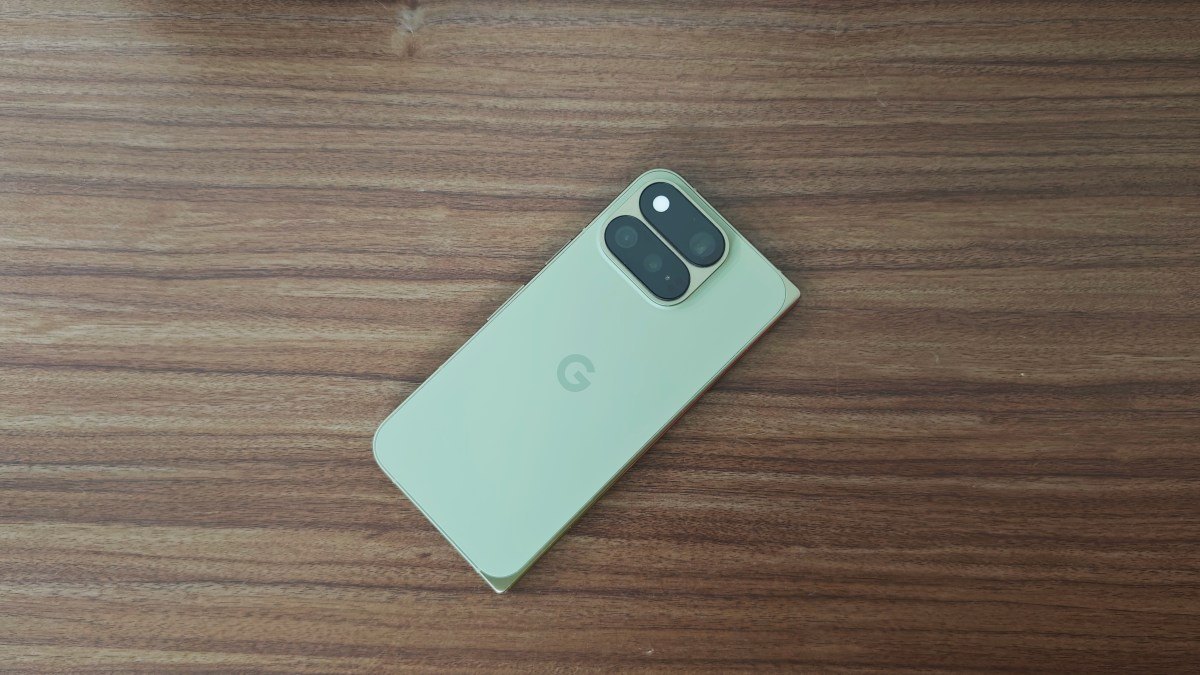
The internal folding mechanism pairs with an upgraded 3,600-nit flexible panel, though the display lacks an anti-reflective coating. Because ambient light bounces off the reflective panel surface, the central display crease remains distinctly visible during daily operation, presenting a noticeable visual indentation in bright light. On the rear casing, Google added the HiLight indicator element. This component operates under restricted automation parameters: it illuminates only when voice calls arrive from designated favorite contacts, or during hands-free conversations with the onboard Gemini artificial intelligence assistant.
Multitasking functions through Android split-screen mechanics that support up to two applications simultaneously across the main interior display. First-party tools like Gmail take advantage of this layout by showing an inbox list on one side and an active email thread on the other. Floating app bubbles permit users to open temporary windows and minimize them into the taskbar without claiming the full display. For text entry, the Gemini assistant integrates Magic Cue suggestions alongside Rambler, enabling fast email replies and notes without the wide keyboard.
Advertisement
Tech Pulse Daily
Get tomorrow's pulse first
Join engineers who read Tech Pulse before stand-up. Free, weekday mornings.
Pixel 11 Pro Fold: why it matters now
The device arrives as competitors pivot toward distinct ergonomic philosophies. Rival companies are focusing on wider form factors such as the passport-sized iPhone Duo, whereas Google maintained its established folding proportions. Crease engineering also separates device manufacturers; brands like Oppo and Honor have significantly reduced crease visibility on their folding panels, whereas Google's pronounced groove remains obvious under direct lighting. While boosting brightness to 3,600 nits aids outdoor legibility, the lack of an anti-reflective display treatment leaves reflections and crease visibility prominent across regular viewing tasks.
Camera performance on folding hardware continues to trail conventional flagship slab phones. Google maintained a 48-megapixel main camera sensor on the Pixel 11 Pro Fold, updating the sensor hardware to capture more light with higher detail. Algorithmic enhancements also raised Super Res Zoom capability from 20x to 30x magnification. However, the secondary ultrawide and telephoto cameras remain largely unchanged from the previous model. As a result, the camera package does not achieve parity with the advanced imaging sensors found on the candybar Pixel 11 Pro or Pixel 11 Pro XL.
Pixel 11 Pro Fold: who is affected
Prospective buyers evaluating their first foldable device face a steep entry barrier at $1,899. Although the 19-gram weight reduction and 10.1mm folded thickness improve pocket comfort, the physical refinements rarely feel dramatic to shoppers upgrading from other folding hardware. Dedicated Pixel enthusiasts seeking Google software integrations and camera processing represent the primary consumer base. Everyday mobile photographers gain software features like Looks, which applies distinct tone presets across captures, alongside Magic Capture, an editing tool that selects optimal action frames from recorded video footage of children and pets.
Professional users and enterprise workers experience uneven productivity benefits across their core applications. While first-party Google productivity software utilizes the expanded screen, prominent workplace tools like Slack do not provide a split-column tablet view, limiting efficiency on the wide canvas. Furthermore, developer velocity on competing operating systems poses an ecosystem challenge. As developers rapidly update third-party software for the unfolded display on the iPhone Duo, Android foldable tablet experiences continue to exhibit slower software adaptation across standard office and communication workflows.
Pixel 11 Pro Fold: what to watch
Pricing dynamics position the Pixel 11 Pro Fold in direct competition with rival premium devices. At $1,899, the phone costs the same as the Samsung Galaxy Z Fold 8, while sitting below the taller Galaxy Z Fold 8 Ultra, which starts at $2,099 in the United States. Apple's new iPhone Duo sits at roughly $100 more than Google's device. In European markets, Chinese brands like Xiaomi and Honor are preparing to release competing foldables, intensifying competition in regions where consumers have multiple thin-profile options.
Software and hardware roadmaps will determine whether future models address current limitations. Industry observers will track whether Android updates permit more than two side-by-side applications on folding screens, and whether major app makers optimize enterprise software like Slack. On the hardware side, attention will center on whether Google incorporates an anti-reflective display to diminish the center crease, and whether future foldables receive the superior camera hardware found on the Pixel 11 Pro XL rather than reserving premium sensors exclusively for non-folding phones.
Developer Action Items
- ☐ Verify the claim on the official Gemini / Google / Apple page (or TechCrunch), not from this recap alone.
- ☐ Name the surface that moved — API, policy, model, hardware, or commercial terms — before you Slack the thread.
- ☐ Assign one owner a day to read the primary material and decide: this-sprint, this-quarter, or noise.
- ☐ Do not change production on day-one coverage. Watch the vendor changelog and one independent write-up first.
Pixel 11 Pro Fold FAQ
How much does the Pixel 11 Pro Fold cost?
The Pixel 11 Pro Fold is priced at $1,899, matching the Samsung Galaxy Z Fold 8 and sitting approximately $100 below the Apple iPhone Duo.
What are the main physical changes on the Pixel 11 Pro Fold?
The phone measures 5mm thick unfolded and 10.1mm folded, shedding 19 grams compared to the Pixel 10 Pro Fold while adding a new olive color option. Google also introduced a glass-ceramic front cover, a glass-fiber composite back, and a 3,600-nit peak display.
How does the camera system compare to the Pixel 11 Pro XL?
The foldable features an updated 48-megapixel main sensor and 30x Super Res Zoom, but retains last year's ultrawide and telephoto sensors, falling short of the imaging hardware found on the Pixel 11 Pro XL.
Can the Pixel 11 Pro Fold be opened with one hand?
No, Google designed the device with a firm hinge assembly engineered for enhanced durability that intentionally requires two hands to unfold.
Sources

Author
Dillip Chowdary
Writes Tech Bytes coverage of AI, engineering, and the tools that actually ship. Editor of Tech Pulse Daily.
Related on Tech Bytes
Advertisement