Police chief unplugs Flock cameras after company ignores contract
Plymouth police unplugged local Flock cameras after the company ignored a unanimous council contract cancellation vote and failed to remove its devices.
By Dillip Chowdary • Nov 01, 2026 • Source: tomshardware.com

Flock Safety ignored official municipal contract cancellation notices in Minnesota, prompting local law enforcement to take immediate physical action against automated surveillance hardware. After council members unanimously voted to end their contract and received no response from company leadership, department personnel disconnected power cords to halt active vehicle monitoring, as detailed in tomshardware.com's report. The incident marks an extraordinary escalation between municipal authorities and private surveillance contractors.
This article reports on the administrative breakdown between municipal leaders and automated license plate reader providers in Plymouth and Dayton, Minnesota. It details the procedural cancellations, hardware deactivations, and regional controversies surrounding vehicle tracking networks, providing essential context for city officials, legal advisors, civil liberties advocates, and suburban residents affected by automated surveillance deployments.
Police chief unplugs Flock cameras after: what actually changed
The operational status of automated surveillance equipment across Plymouth changed abruptly following a decisive council vote and administrative account terminations. The Plymouth City Council voted unanimously during its September 22 meeting to discontinue the use of Flock automated license plate readers. The next morning, city staff suspended all local user accounts on the platform and alerted the company. Municipal officials then reinforced the decision by sending a formal cancellation letter via email and United States Mail after consulting the City Attorney Office to establish an official record.
Corporate silence forced municipal leaders to take manual enforcement steps on public roads. Plymouth Police Chief Eric Fadden reported receiving no reply from corporate or legal representatives for more than a week, experiencing communication only with a local representative. Because the company failed to respond or dispatch personnel to dismantle the network, Chief Fadden directed police staff to disconnect the power cords from the cameras. This direct intervention ensured that the stationary devices ceased functioning and could no longer record passing license plates.
Police chief unplugs Flock cameras after: how it works
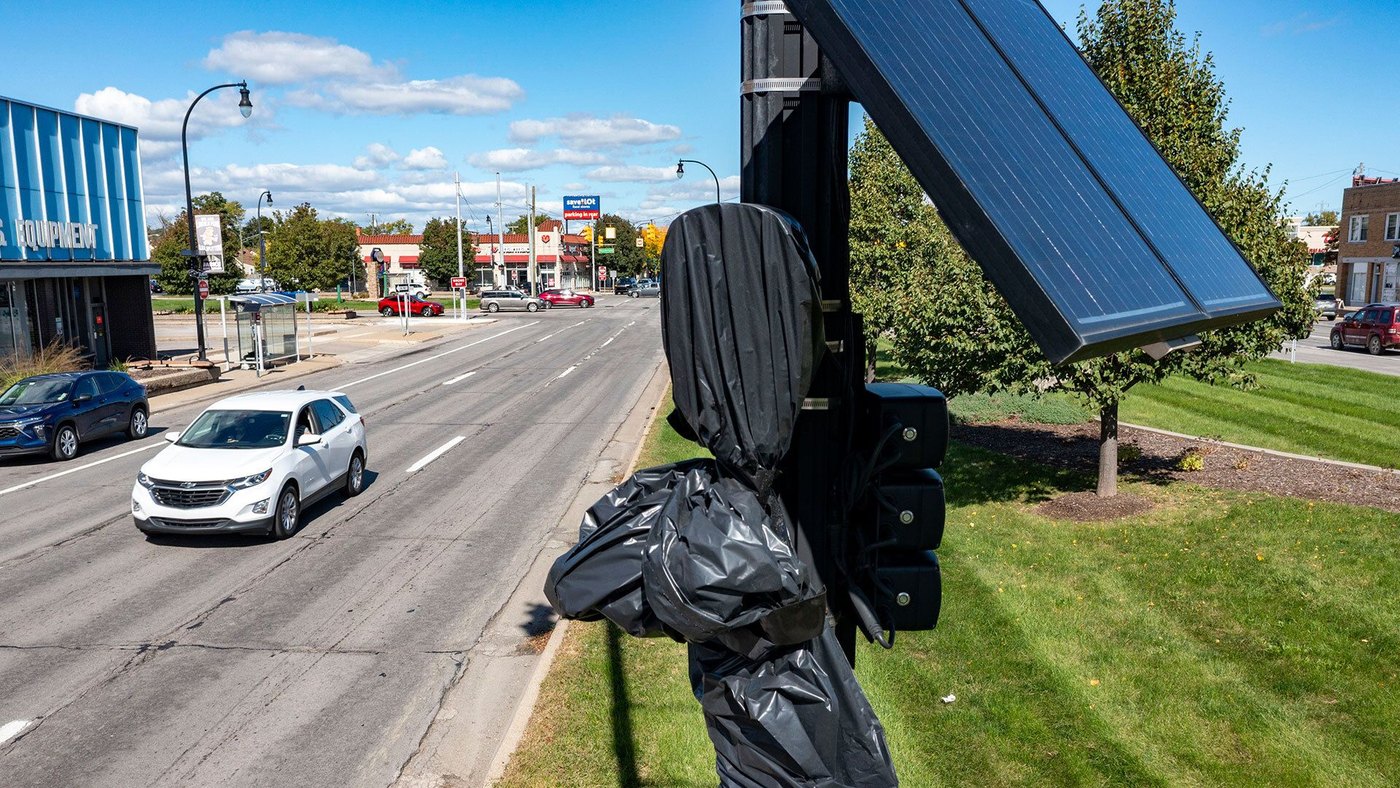
Modern vehicle surveillance networks operate through a combination of roadside optical sensors and machine learning analysis rather than simple plate transcription. Although marketed primarily as automated license plate readers, the camera system captures broader vehicular details to build searchable profiles. Built-in artificial intelligence identifies distinct features across passing vehicles, cataloging vehicle make, model, paint color, and unique exterior markings such as bumper stickers. This automated classification process transforms roadside snapshots into trackable profiles, enabling algorithmic search capabilities across networked camera databases operating nationwide.
Camera hardware requires continuous electrical power to operate internal processing units, capture image frames, and transmit collected telemetry over wireless links. Unplugging the physical power cables cut the electrical supply, rendering the optical lenses and computer vision modules non-functional. Disconnecting the units at street level solved the city immediate tracking concerns without requiring complete physical removal. Decommissioning and removing cameras requires labor and equipment expenses for the vendor, whereas leaving unpowered devices attached to utility poles costs the company nothing while effectively reducing active network coverage.
Advertisement
Tech Pulse Daily
Get tomorrow's pulse first
Join engineers who read Tech Pulse before stand-up. Free, weekday mornings.
Police chief unplugs Flock cameras after: why it matters now
The physical disconnection in Plymouth follows growing national debate and high-profile controversies surrounding automated vehicle surveillance systems. Multiple law enforcement officers have faced arrest in recent months for misusing internal license plate lookup systems for unauthorized tracking. In Minnesota, Plymouth police mistakenly ambushed an automotive reviewer due to an out-of-state administrative error originating in California. Furthermore, motorists across the country have reported traffic stops initiated after automated artificial intelligence algorithms flagged their routine travel history and vehicle routes as suspicious driving patterns.
National scale magnifies these surveillance controversies, as the company operates over 300,000 cameras installed across the United States. This vast network allows widespread tracking of vehicles across municipal boundaries, generating extensive location records without direct human oversight. In response to mounting privacy concerns, civil liberties advocates and concerned citizens are pressing city councils nationwide to terminate vendor contracts and remove roadside cameras. The dispute in Plymouth highlights the practical challenges municipalities face when vendors fail to retrieve hardware after official contracts are canceled.
Police chief unplugs Flock cameras after: who is affected
The decision directly affects Plymouth residents, local law enforcement personnel, and drivers traveling through the suburban Twin Cities area. For local motorists, disconnecting the cameras stops continuous automated data gathering on everyday commutes and eliminates the risk of unwarranted police encounters driven by algorithmic flags. For the Plymouth Police Department, managing the contract exit required dedicated staff hours to suspend software access, draft legal notices, and physically unplug roadside hardware after corporate customer channels failed to handle the cancellation.
Neighboring communities are confronting identical issues with vendor oversight and hardware control. Dayton, Minnesota, situated ten miles north of Plymouth, also paused its automated license plate reader program and disabled two installed devices. When Dayton police discovered that the surveillance company planned to replace those disabled cameras, departmental leaders instructed the firm to cancel the work order. The vendor ignored those explicit instructions and proceeded with the camera replacement anyway, demonstrating a persistent pattern of corporate disregard for local directives.
Police chief unplugs Flock cameras after: what to watch
Attention now turns to whether the vendor will dispatch technicians to retrieve the disconnected hardware or leave dormant units on municipal property indefinitely. Disconnected cameras still hang on roadside poles, presenting unanswered questions regarding physical custody, pole attachments, and equipment liabilities across Plymouth and Dayton. Observers are tracking whether city attorneys will pursue legal remedies to compel physical removal, or whether other suburban municipalities will adopt similar hands-on methods to disable surveillance devices when corporate support channels fail to answer contract cancellations.
Future coverage will also center on legislative scrutiny and procurement standards for algorithmic vehicle tracking systems nationwide. As councils evaluate contracts across a footprint of more than 300,000 operational devices, municipal leaders will demand enforceable removal timelines, stricter usage penalties, and tighter safeguards against unwarranted traffic stops. Plymouth and Dayton show that local officials are willing to halt automated surveillance unilaterally when privacy controversies, administrative blunders, and vendor intransigence outpace the perceived public safety benefits of commercial plate reader systems.
Developer Action Items
- ☐ Verify the claim on the official Police chief unplugs Flock page (or Hacker News Best), not from this recap alone.
- ☐ Name the surface that moved — API, policy, model, hardware, or commercial terms — before you Slack the thread.
- ☐ Assign one owner a day to read the primary material and decide: this-sprint, this-quarter, or noise.
- ☐ Do not change production on day-one coverage. Watch the vendor changelog and one independent write-up first.
Police chief unplugs Flock cameras after FAQ
Why did Plymouth disconnect its Flock cameras?
The Plymouth City Council voted unanimously on September 22 to cancel its contract, but the company failed to respond to formal cancellation notices sent via mail and email. After waiting more than a week without corporate communication, Police Chief Eric Fadden instructed staff to physically unplug the cameras.
What capabilities do Flock cameras have beyond reading license plates?
The cameras use artificial intelligence to identify visual characteristics including vehicle make, model, paint color, and markings like bumper stickers. This enables the system to track and profile vehicles beyond basic registration numbers.
Did another Minnesota city encounter issues with Flock?
Yes, Dayton paused its program and disabled two cameras located ten miles north of Plymouth. Although Dayton police ordered the company not to proceed with a replacement work order, the company replaced the cameras anyway.
How many Flock cameras are operating across the country?
Flock has installed more than 300,000 cameras nationwide, creating an extensive automated tracking network that critics argue raises severe privacy concerns.
Sources

Author
Dillip Chowdary
Writes Tech Bytes coverage of AI, engineering, and the tools that actually ship. Editor of Tech Pulse Daily.
Related on Tech Bytes
Advertisement