Protecting Trade Secrets In The Age Of AI
A federal court in California issued an injunction after a former marketing employee with six months of experience trained an AI agent on stolen trade secrets.
By Dillip Chowdary • Oct 24, 2026 • Source: Crunchbase News
A former senior employee at a marketing agency who possessed six months of industry experience used stolen proprietary data to train an artificial intelligence agent, attempting to build an automated replica of his former executive. In a federal trade secrets dispute in the U.S. District Court for the Northern District of California, partner Seth Kugler of Grellas Shah LLP secured emergency judicial relief, as detailed in Crunchbase News's report on emergent legal hazards surrounding autonomous software tools.
This analysis details how agentic software tools disrupt intellectual property protections, why machine learning model contamination creates permanent evidentiary liabilities, and how personal hardware expands corporate vulnerability. Written for company founders, technology executives, general counsels, and operational leaders, this report examines modern trade secret misappropriation, forensic digital discovery challenges, and enforceable protocols required to safeguard proprietary workflows against recursive algorithmic ingestion.
Protecting Trade Secrets In The Age Of AI: what actually changed
In traditional intellectual property disputes, trade secret misappropriation typically involved departing workers copying database records, downloading client directories, or exporting sensitive files onto thumb drives. Federal litigation in the Northern District of California revealed a fundamental shift in how corporate assets are exploited. Rather than merely copying customer lists to solicit accounts, the defendant utilized stolen agency methodologies as training inputs to construct an automated replica of his former supervisor, enabling an employee with six months of experience to launch a competing enterprise without acquiring domain expertise.
The defense attempted to mitigate the conduct by placing stolen files into a quarantine folder, contending that no harm occurred because no client accounts had been poached. The federal court rejected this quarantine defense entirely, determining that isolating raw source files failed to remediate exposure once algorithmic processing commenced. By granting a temporary restraining order and issuing a preliminary injunction against the defendant, the court classified the competing automated agent as an existential threat, establishing that building an unauthorized derivative model warrants immediate judicial intervention.
Protecting Trade Secrets In The Age Of AI: how it works
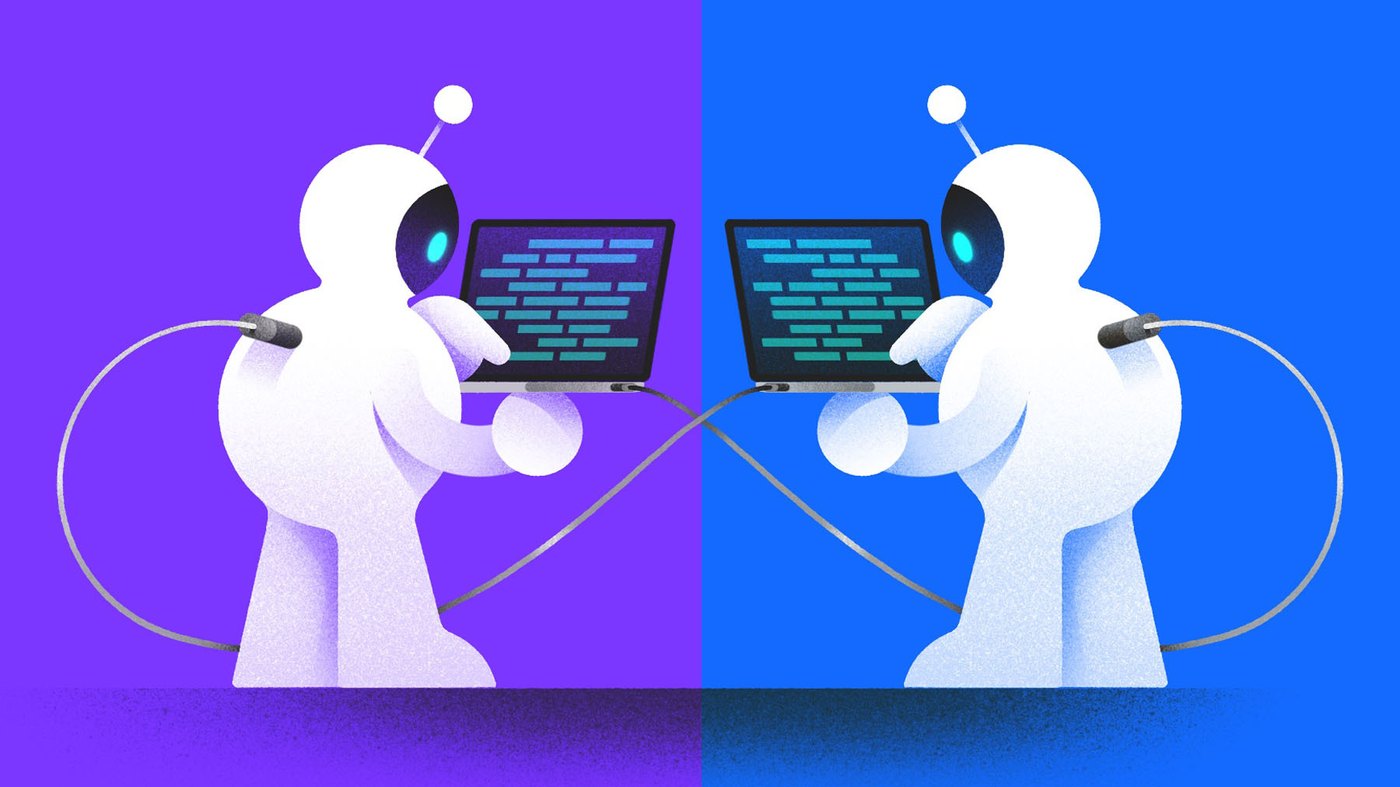
When proprietary records are incorporated into a machine learning model or provided to an agent with recursive capabilities, confidential material contaminates the underlying operational architecture. Unlike conventional storage systems where an offending file can be deleted, machine learning systems absorb training data into complex statistical weightings that resist extraction. Even when an accused party purges raw source documents or scrubs local hard drives, defendants struggle to prove in court that an autonomous agent functions independently of the misappropriated proprietary training inputs that originally shaped its execution logic.
Beyond intentional theft, desktop agents introduce severe passive leak vectors across enterprise environments through automated local access. Unlike cloud web interfaces that restrict analysis to submitted text prompts, desktop agents can continuously index hard drive directories, generate folders, and read local file paths without presenting permission prompts or alerting the user. When employees operate consumer software tools on personal machines containing corporate records, background scraping can feed internal documentation into third-party training pipelines, resulting in the loss of legal trade secret protection due to external dissemination.
Advertisement
Tech Pulse Daily
Get tomorrow's pulse first
Join engineers who read Tech Pulse before stand-up. Free, weekday mornings.
Protecting Trade Secrets In The Age Of AI: why it matters now
Standard corporate information technology audits and traditional digital discovery methodologies are inadequate for identifying modern algorithmic misappropriation. Historical forensic examinations relied on identifying discrete file export logs, unapproved peripheral connections, or forwarded emails containing sensitive customer attachments. Modern autonomous tools eliminate those clear digital breadcrumbs by modifying, dispersing, and recreating proprietary data structures across nonobvious local directory paths. Furthermore, artificial intelligence substantially lowers the friction required to reverse engineer complex products, stripping away conventional stylistic markers or verbatim text sequences that investigators historically relied upon to prove unauthorized copying.
Because automated systems obscure linear evidentiary trails, litigating trade secret theft involving artificial intelligence demands intensive, technical expert analysis that carries significant judicial uncertainty. Actions that once seemed excessive, such as full forensic imaging of personal devices, now represent the bare minimum during investigation. When algorithmic tools ingest confidential data under settings that permit model training, businesses risk forfeiting statutory trade secret protections permanently. Judges may determine that allowing unmanaged applications to access proprietary files constitutes a fatal failure to maintain reasonable confidentiality safeguards.
Protecting Trade Secrets In The Age Of AI: who is affected
High-growth startups and expanding enterprises are especially vulnerable to algorithmic data loss due to their heavy reliance on personal hardware. Fast-scaling organizations routinely permit staff members to conduct business on unmanaged personal laptops, securing assets solely through standard Confidential Information and Invention Assignment Agreements. While these contracts historically protected source code from physical duplication, they rarely restrict background file ingestion by local software agents. When employees deploy consumer productivity applications on laptops storing company files, they expose their employers to unmonitored intellectual property leakage and confidentiality breaches.
Both emerging startups and established providers face destabilizing disruption from departing personnel who leverage automation to compensate for limited experience. Workers possessing only preliminary domain familiarity can launch competing operations by prompting trained agents to execute advanced advisory, engineering, or marketing services previously restricted to seasoned veterans. Meanwhile, corporate founders, directors, and officers face major liability if they fail to modernize employment agreements, as standard covenants lack definitions covering recursive agent training, model weight adjustments, or synthetic outputs generated from proprietary business records.
Protecting Trade Secrets In The Age Of AI: what to watch
To defend against algorithmic exposure, companies must establish strict operational safeguards across three practical operational pillars. First, organizations should implement strict agentic policies that isolate outside software from confidential documents, favoring web tools like Claude with strict privacy terms over desktop programs that crawl local drives. Second, technical leadership must eliminate remote access from unmanaged personal devices, shifting operations to closed cloud environments where data is viewed and manipulated on secure servers, preventing local file downloads from exposing data to indexing desktop agents.
Third, companies must rewrite Confidential Information and Invention Assignment Agreements to include explicit clauses addressing model training inputs and machine learning misappropriation. When management suspects an employee has walked away with data or fed proprietary records into an artificial intelligence tool, leaders must cut off system access and retain legal counsel immediately. Companies cannot afford to wait until client accounts are solicited or revenue declines, because feeding trade secrets into autonomous agents creates an existential threat that requires immediate restraining orders.
Developer Action Items
- ☐ Verify the claim on the official Protecting Trade Secrets Age page (or Crunchbase News), not from this recap alone.
- ☐ Name the surface that moved — API, policy, model, hardware, or commercial terms — before you Slack the thread.
- ☐ Assign one owner a day to read the primary material and decide: this-sprint, this-quarter, or noise.
- ☐ Do not change production on day-one coverage. Watch the vendor changelog and one independent write-up first.
Protecting Trade Secrets In The Age Of AI FAQ
What did the court rule regarding the quarantine folder defense in the Northern District of California trade secrets case?
The federal court rejected the quarantine folder defense, determining that isolating files did not cure exposure once algorithmic training occurred. The judge granted a temporary restraining order and preliminary injunction, recognizing the competing artificial intelligence agent as an existential threat.
Why is model contamination difficult to reverse once trade secrets are ingested?
Training an artificial intelligence agent with recursive capabilities incorporates proprietary information directly into the underlying model architecture. Even if raw source files are subsequently scrubbed, defendants struggle to prove in court that the tool operates independently of the misappropriated training inputs.
How do desktop AI agents create trade secret risks on personal devices?
Unlike web interfaces, desktop artificial intelligence agents can scan hard drives, create folders, and ingest directory paths across unmanaged laptops without alerting users. If consumer settings allow training on ingested files, proprietary corporate information can be disseminated externally, forfeiting statutory trade secret protection.
What operational steps should companies take to defend proprietary data against AI agents?
Companies should mandate agentic policies favoring secured web tools like Claude, transition unmanaged devices to closed cloud environments without local downloads, update confidentiality agreements to cover machine learning inputs, and immediately cut off access upon suspected misuse.
Sources

Author
Dillip Chowdary
Writes Tech Bytes coverage of AI, engineering, and the tools that actually ship. Editor of Tech Pulse Daily.
Related on Tech Bytes
Advertisement