Startup equips genetically enhanced dogs with Palmer Luckey’s military tech
Texas defense startup Warhound secured $200 million to breed gene-edited military working dogs equipped with custom Anduril tactical helmets and sensors.
By Dillip Chowdary • Oct 24, 2026 • Source: The Verge
A Texas-based defense startup named Warhound has launched an initiative to breed genetically modified working dogs outfitted with tactical hardware from defense contractor Anduril. The company, conceived by Anduril founder Palmer Luckey and Colossal Biosciences co-founder Ben Lamm, entered the defense sector backed by 200 million dollars in early investor funding, according to The Verge's report. The venture pairs de-extinction biotechnology with battlefield hardware to produce specialized canines for defense, domestic law enforcement, and emergency response units across the United States.
This report examines Warhound's operating structure, its genetic pipeline, the tactical sensor packages slated for field integration, and the procurement constraints shaping modern canine deployment. The breakdown is targeted at defense procurement analysts, law enforcement handlers, biotechnology observers, and tactical gear specialists tracking unmanned and biological systems integration. Led by chief executive officer and Marine veteran David Spirk, the venture plans to replace fragile overseas procurement models with an engineered domestic supply chain for high-stakes working animals.
Startup equips genetically enhanced dogs: what actually changed
Warhound established its corporate foundation by securing 200 million dollars in venture capital to develop a specialized canine platform combining gene editing with wearable defense electronics. The operation functions through a technical partnership between Ben Lamm's biotechnology firm Colossal Biosciences, known for its work in animal biology and extinct species resurrection, and Palmer Luckey's defense production company Anduril. Marine veteran and former intelligence specialist David Spirk took the role of chief executive officer, tasked with translating the laboratory research into an operational canine program. Although Palmer Luckey participated directly in the venture's conception and coined the initiative's operational motto that man's best friend deserves man's best tech, public filings indicate Luckey retains no equity stake or ongoing managerial duties at the startup.
The operational pipeline alters how working dogs are trained and deployed by combining genetic optimization before birth with tailored sensory hardware after maturation. Under the announced model, Colossal provides the cellular and genetic engineering framework, while Anduril supplies canine-specific hardware including custom eye protection, ear protection, and integrated EagleEye sensory systems. The company also engaged the American Humane Society to review training protocols, inspect handling facilities, and certify welfare standards throughout the development cycle. Rather than purchasing adult animals and adapting existing commercial gear to them, Warhound intends to control the biological line and the electronic systems as a single integrated program.
Startup equips genetically enhanced dogs: how it works
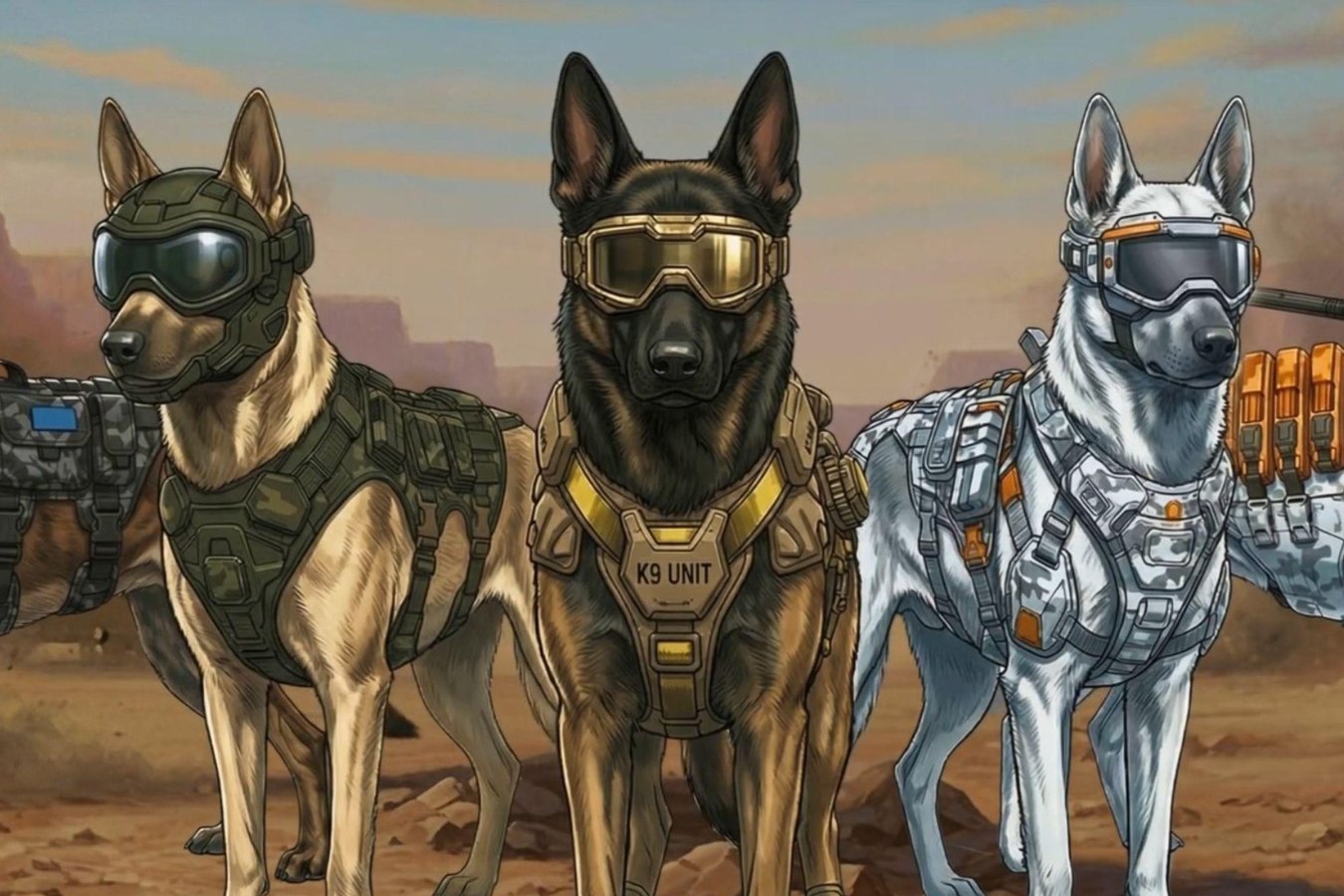
The technical workflow begins in the laboratory, where Colossal Biosciences applies its proprietary research in genetics, cloning, and animal biology to eliminate chronic physiological vulnerabilities in working breeds. Using Belgian Malinois and German Shepherd lineages as the initial genetic baseline, geneticists target sequences linked to hereditary conditions, aiming specifically to reduce cancer incidence and prevent progressive eyesight failure. Beyond disease suppression, the team plans to introduce targeted genetic modifications intended to enhance physical stamina, operational speed, muscular agility, and olfactory sensory density, allowing animals to detect explosive compounds and target odors at significantly lower detection thresholds than unedited dogs.
Once animals mature and enter service pipelines, Anduril equips the dogs with field hardware designated as advanced cybernetic augments. The sensory kit integrates physical headgear that protects the animal's eyes and ears from concussive blasts, shrapnel, and harsh operational environments. The core of the electronics suite is Anduril's EagleEye military technology, adapted to canine dimensions to stream situational data directly between the animal and its human handler. This sensor link provides real-time environmental awareness, helping handlers identify perimeter threats, explosive traces, and structural obstacles during tactical operations before dispatching human personnel into hazardous interiors.
Advertisement
Tech Pulse Daily
Get tomorrow's pulse first
Join engineers who read Tech Pulse before stand-up. Free, weekday mornings.
Startup equips genetically enhanced dogs: why it matters now
The initiative responds directly to chronic bottlenecks in American national security procurement, where military and federal law enforcement agencies remain heavily dependent on foreign breeders. Currently, approximately 80 percent of all military working dogs used by United States armed forces are sourced from European suppliers. This international acquisition pipeline requires roughly three years from initial purchase through completed tactical training. In addition to long logistics timelines, the pipeline suffers from high attrition, with Warhound reporting that less than half of the canines procured from overseas suppliers successfully meet field certification standards upon completing their training regimen.
By establishing an in-house breeding and biological engineering pipeline within Texas, Warhound intends to insulate domestic security agencies from overseas supply disruptions while improving qualification yields. High disqualification rates among standard working breeds regularly cost agencies significant time and financial resources when candidate animals wash out due to behavioral flaws, hidden joint issues, or early medical conditions. Warhound argues that engineering healthier base biology will produce uniform physical attributes and resilience, dramatically raising the proportion of animals that survive rigorous training courses and enter active duty.
Startup equips genetically enhanced dogs: who is affected
The primary groups directly affected by the deployment of Warhound platforms include military handlers, tactical units within the armed forces, special weapons and tactics teams in municipal police forces, and specialized emergency rescue crews. Handlers operating in active conflict zones or counter-terrorism scenarios stand to receive animals equipped with integrated audio-visual relays and protective headgear, altering room-clearing and perimeter-patrol tactics. For tactical teams, having animals with improved olfactory density could change bomb detection protocols in airports, transit hubs, and fortified combat compounds where improvised explosive devices represent primary threats.
The partnership also directly impacts animal welfare regulators and defense oversight panels tasked with reviewing biological modifications in working animals. With the American Humane Society serving as the external certification body for Warhound's training programs, the initiative introduces formal civilian welfare reviews into an engineered military platform. Furthermore, European working dog kennels and brokers that have historically dominated NATO and United States government canine contracts face potential contract displacement if the Pentagon shifts procurement quotas toward domestic engineered alternatives over the coming decade.
Startup equips genetically enhanced dogs: what to watch
Critical milestones ahead center on whether Warhound and Colossal can successfully bring a genetically edited litter to term and demonstrate measurable performance gains outside simulation. The startup acknowledges that these engineered canines do not exist yet, meaning the technical plan remains dependent on complex gene-editing and cloning milestones that have not been validated in large working animals. Observers are monitoring whether the combined genetic edits to Belgian Malinois and German Shepherd DNA will produce viable, stable animals without introducing unexpected physical defects, neurological instability, or behavioral complications during intense field tasks.
Procurement observers must also watch for formal test evaluations from federal defense branches and certification reports from the American Humane Society. Once initial litters reach training age, the startup must demonstrate that its custom EagleEye canine augments withstand rough tactical handling, water exposure, and concussive shock during training exercises. How defense procurement committees categorize modified biological assets, alongside long-term performance data comparing Warhound litters against traditional European-sourced working breeds, will determine whether the Pentagon awards initial pilot purchase contracts.
Developer Action Items
- ☐ Verify the claim on the official Framework page (or The Verge), not from this recap alone.
- ☐ Name the surface that moved — API, policy, model, hardware, or commercial terms — before you Slack the thread.
- ☐ Assign one owner a day to read the primary material and decide: this-sprint, this-quarter, or noise.
- ☐ Do not change production on day-one coverage. Watch the vendor changelog and one independent write-up first.
Startup equips genetically enhanced dogs FAQ
What is Warhound and who founded the company?
Warhound is a Texas-based defense startup founded through collaboration between Anduril founder Palmer Luckey and Colossal Biosciences co-founder Ben Lamm, with former intelligence specialist David Spirk serving as chief executive officer. The startup has raised 200 million dollars to develop genetically modified working dogs equipped with tactical hardware.
Which dog breeds is Warhound using for its genetic program?
The company uses high-performance working breeds including the Belgian Malinois and German Shepherd as the foundation for its studies, with the ultimate goal of developing a new type of working dog with lower cancer risks, improved eyesight, and enhanced olfactory senses.
What military technology will be installed on the dogs?
The animals will be equipped with Anduril hardware referred to as advanced cybernetic augments, which include eye and ear protection alongside EagleEye sensor technology designed to provide tactical awareness for handlers in the field.
Why is the United States military seeking alternative sources for working dogs?
The United States military currently procures 80 percent of its working dogs from Europe through a three-year pipeline where less than half of the candidate animals ultimately qualify for active service, creating supply chain dependencies and high training attrition.
Sources

Author
Dillip Chowdary
Writes Tech Bytes coverage of AI, engineering, and the tools that actually ship. Editor of Tech Pulse Daily.
Related on Tech Bytes
Advertisement