Review: Satechi’s Thunderbolt 5 CubeDock pairs perfectly with the new M6
Apple just released a new Mac mini late last month, equipped with the new M6 and M5 Pro chips. Review: Satechi’s Thunderbolt 5 CubeDock pairs perfectly.
By Dillip Chowdary • Oct 03, 2026 • Source: 9to5Mac
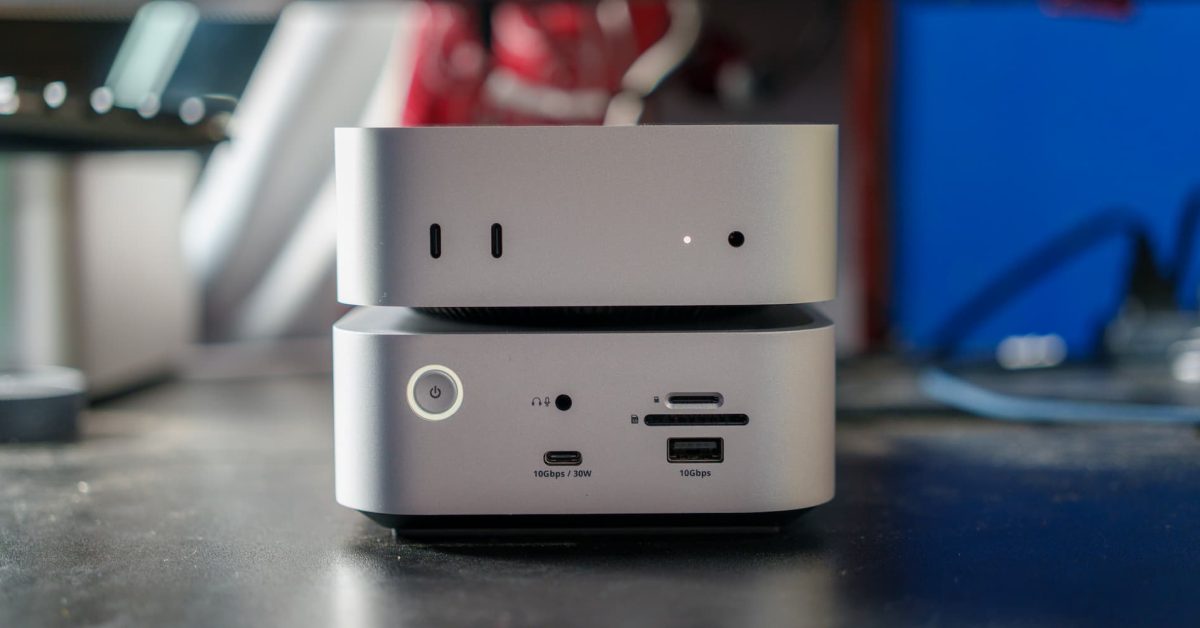
Satechi launched a Thunderbolt 5 CubeDock designed to sit alongside the new Mac mini, tapping into the bandwidth headroom that Apple's M6 and M5 Pro chips unlock on the latest compact desktop. The dock addresses a gap that has existed since Apple moved the Mac mini to Thunderbolt 5 ports: finding a compact hub that can saturate those connections without a tangle of adapters on the desk.
This piece covers what the CubeDock offers, how it fits into a Mac mini setup, and what buyers upgrading from an M4 or M4 Pro Mac mini should verify before purchasing. It is written for builders, home-lab users, and creative professionals who want to consolidate peripherals through a single high-bandwidth connection rather than managing multiple dongles.
What Satechi's Thunderbolt 5 CubeDock pairs shipped
Satechi paired the CubeDock's launch timing with Apple's Mac mini refresh, positioning it as a first-party-quality accessory for a machine that has no built-in SD card slot, limited front-facing ports, and a port cluster tucked at the back. The dock is designed to sit alongside the compact footprint of the Mac mini rather than beneath a monitor arm or behind a stack of gear.
The Thunderbolt 5 standard at the core of the product supports up to 120 Gbps of bidirectional bandwidth in bandwidth-boost mode, which is a meaningful step over the 40 Gbps ceiling that Thunderbolt 4 docks imposed. Connecting a single CubeDock gives M6 and M5 Pro Mac mini owners a way to route high-resolution displays, fast external storage, and USB peripherals through one cable without bottlenecking the host chip's I/O capabilities.
What changed for builders in Satechi's Thunderbolt 5 CubeDock pairs
Compared with the Thunderbolt 4 generation of docks, Thunderbolt 5 connectivity changes the practical ceiling for attached storage and display configurations. Builders running NVMe enclosures over Thunderbolt previously had to share 40 Gbps across every connected device; Thunderbolt 5 triples that headroom and adds asymmetric bandwidth for display-heavy workloads.
| Metric | Thunderbolt 4 generation | Thunderbolt 5 generation |
|---|---|---|
| Maximum bidirectional bandwidth | 40 Gbps | 80 Gbps (120 Gbps boost) |
| PCIe bandwidth to host | 32 Gbps | 64 Gbps |
| DisplayPort version | DP 1.4 | DP 2.1 |
| Mac mini compatibility | M4 / M4 Pro | M6 / M5 Pro (also M4 / M4 Pro) |
Advertisement
Tech Pulse Daily
Get tomorrow's pulse first
Join engineers who read Tech Pulse before stand-up. Free, weekday mornings.
The compatibility note matters for owners of the previous Mac mini generation: the 9to5Mac review explicitly confirms the CubeDock works with M4 and M4 Pro models, meaning buyers who have not upgraded to the M6 machine are not locked out.
How to install or upgrade Satechi's Thunderbolt 5 CubeDock pairs
Physical setup follows the same single-cable workflow common to all Thunderbolt docks. The CubeDock connects to one of the Thunderbolt 5 ports on the back of the Mac mini using the included Thunderbolt 5 cable. macOS recognises the dock automatically; no driver installation or system restart is required under current macOS releases.
For builders moving from an older Thunderbolt 4 dock, the upgrade path is a cable swap at the Mac mini end — the downstream USB-A, USB-C, display, and audio connections on the dock side remain the same physical interfaces. Users upgrading to an M6 Mac mini from an M4 model should check that each peripheral was confirmed on the previous host before assuming compatibility carries forward through the dock; Thunderbolt 5's higher bus speed occasionally surfaces timing differences in older external NVMe firmware.
Gotchas and compatibility in Satechi's Thunderbolt 5 CubeDock pairs
The M6 Mac mini ships with Thunderbolt 5 ports, but the M4 Mac mini's Thunderbolt ports are rated at Thunderbolt 4. Connecting a Thunderbolt 5 dock to a Thunderbolt 4 host is electrically safe and fully functional, but the link will negotiate down to 40 Gbps — meaning M4 owners will not see the headline bandwidth figures and should weigh whether the premium over a quality Thunderbolt 4 dock makes sense for their specific workload.
Display compatibility is the other variable to verify. Thunderbolt 5 docks can drive DisplayPort 2.1 monitors at resolutions and refresh rates that Thunderbolt 4 could not support, but the Mac mini's own GPU and the specific monitor's upstream port both need to agree on the mode. Builders targeting 8K output or high-refresh 4K with HDR should confirm that the attached display accepts DP 2.1 input and that macOS's display settings reflect the correct mode rather than silently downgrading.
What to watch after Satechi's Thunderbolt 5 CubeDock pairs
The CubeDock's timing against the M6 Mac mini launch means Satechi is early in what will likely be a competitive Thunderbolt 5 accessory cycle. As competing manufacturers release their own TB5 hubs, pricing and feature differentiation — power delivery wattage, the number of downstream Thunderbolt ports, and integrated Ethernet speed — will become clearer comparison points for buyers who are not in a rush.
For M6 Mac mini owners who also run MacBook Pro or MacBook Air alongside their desktop, the more useful long-term question is whether a single TB5 dock can serve both machines from the same desk without reconfiguring peripheral connections. Satechi's compact form factor positions the CubeDock for exactly that shared-desk use case, but verifying that the power delivery output covers a MacBook's charging needs during sustained workloads is worth checking in extended use before committing the dock to a permanent role in a multi-machine setup.
Developer Action Items
- ☐ Diff the official changelog for Apple 1.4 before you bump — APIs, defaults, and removed flags only.
- ☐ Install through the vendor's documented channel in staging; keep a one-command rollback and time-box the canary.
- ☐ Grep your repo for old flag names, lockfile pins, and plugin versions that the notes mark as breaking.
- ☐ Prefer the first patch cut over the day-zero tag unless you have a reason to be on the leading edge.
- ☐ If 9to5Mac did not name a region, plan, or SKU, screenshot the official availability line before you promise it to users.

Author
Dillip Chowdary
Writes Tech Bytes coverage of AI, engineering, and the tools that actually ship. Editor of Tech Pulse Daily.
Related on Tech Bytes
UsageBar – Claude Code and Codex rate limits in the macOS menu bar
Read →
Jev – System-1 Agent Architecture Radar (open-source)
Read →
Moneypenny: Build Grok bot like bots in Claude or codex
Read →
Bun Rewrites 535K Lines of Zig into Rust in Four Months, Eliminates Numerous Memory Leaks
Read →
Today's Tech Pulse briefing
Full briefing →
Advertisement