Sodium-ion batteries approach cost parity with LFP
Sodium-ion batteries reached 70 GWh in global supply agreements as cell costs near LFP parity, offering a 21% lower total cost of ownership over 20 years.
By Dillip Chowdary • Nov 07, 2026 • Source: pv-magazine.com
Worldwide supply agreements for sodium-ion energy storage have passed 70 GWh as manufacturers prepare to hit cell-level cost parity with lithium iron phosphate chemistry by late 2026. The milestone, documented in pv-magazine.com's report, signals that alternative battery chemistry is crossing from lab trials into high-volume commercial production. While initial unit prices remain higher than incumbent lithium options, operational lifespans and supply-chain insulation are accelerating commitments across China, the United States, and Europe.
This analysis details the cost structures, manufacturing rollouts, and regulatory mechanisms shifting grid-scale storage toward sodium chemistries. Utility planners, energy storage developers, and grid operators evaluating multi-hour stationary installations will find the comparative lifetime economics and policy drivers shaping procurement across key regional power markets.
Sodium-ion batteries approach cost parity: what actually changed
Commercial adoption of sodium-ion battery technology has advanced from pilot demonstrations to utility commitments backed by multi-gigawatt volume contracts. Leading battery producers expect cell-level manufacturing costs to reach parity with standard lithium iron phosphate cells before the close of 2026. Although cell parity arrives this year, module and full-system cost parity with LFP installations will require additional manufacturing scaling, which industry projections place beyond 2030.
Global manufacturing capacity currently outpaces near-term market demand, creating an environment where suppliers must compete aggressively on long-term procurement terms. China remains the center of industrial commercialization, supported by an estimated 18% to 20% learning rate through 2035 as assembly processes mature. Meanwhile, commercial validation continues to expand across North America and Europe, while Indian energy storage developers remain in earlier qualification stages.
Sodium-ion batteries approach cost parity: how it works
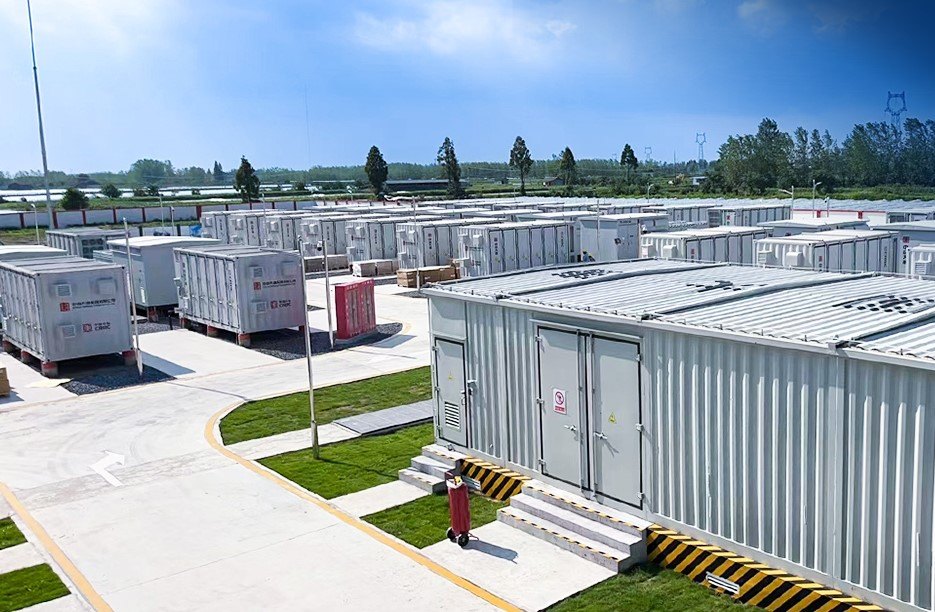
Capital expenditures for sodium-ion systems average $229 per kilowatt-hour globally, compared to roughly $200 per kilowatt-hour for standard LFP battery systems. Despite this upfront premium of approximately $29 per kilowatt-hour, sodium-ion technology can deliver a 21% reduction in total cost of ownership across a typical 20-year operational life cycle. These project-level savings stem directly from eliminating mid-life cell augmentation cycles and running lower routine operating maintenance.
The underlying operational economics remain consistent across standard stationary storage durations ranging between two and four hours. Sodium-ion cells deliver reliable performance across broader ambient temperature ranges without requiring the energy-intensive thermal management infrastructure that lithium-based setups demand in freezing environments. This temperature tolerance reduces auxiliary power drain during extreme winter weather, preserving usable capacity and minimizing system wear over decades of field service.
Advertisement
Tech Pulse Daily
Get tomorrow's pulse first
Join engineers who read Tech Pulse before stand-up. Free, weekday mornings.
Sodium-ion batteries approach cost parity: why it matters
Targeted industrial taxation and regional trade tariffs are reshaping the economic comparison between competing chemistries. In China, authorities reinstated a consumption tax on lithium-ion batteries in July 2026 while granting sodium-ion cells an explicit tax exemption running through late 2028. LFP batteries incurred an initial 2% tax levy in September 2026, a penalty scheduled to climb to 4% in September 2027.
International trade barriers are providing similar domestic tailwinds outside Asia. United States energy storage developers face import tariffs of roughly 58% on Chinese-manufactured cells, prompting firms to leverage domestic production credits available under Section 45X of the Inflation Reduction Act. Across the European Union, carbon footprint reporting mandates established under the EU Battery Regulation favor manufacturing supply chains that avoid critical mineral bottlenecks, while India supports localized production through a $1.25 billion incentive initiative paired with equipment tariff exemptions.
Sodium-ion batteries approach cost parity: who is affected
Major Chinese battery manufacturers are committing substantial capital to lock down initial sodium-ion market share. BYD has outlined industrial plans to scale sodium-ion production capacity to 30 GWh, establishing dedicated high-volume cell lines. Concurrently, CATL has targeted shipping more than 1 GWh of sodium-ion battery capacity before the conclusion of 2026, integrating the chemistry into diversified commercial energy storage portfolios.
Utility developers operating stationary projects in freezing climates stand to benefit immediately from sodium-ion deployment. Eliminating parasitic heating loads from thermal control enclosures lowers balance-of-plant operating budgets, making remote installations economically viable. For projects deploying today, LFP technology retains the advantage in immediate commercial availability and mature integration practices, leaving sodium-ion developers to build project track records through signed multi-gigawatt supply agreements.
Sodium-ion batteries approach cost parity: what to watch
The operational window between 2030 and 2035 will decide whether sodium-ion systems achieve full commercial cost parity at the pack and balance-of-system levels. While cell production approaches cost equivalence, module enclosures, power conversion systems, and field balance-of-plant integration require continuous volume deployment to compress remaining system-level cost premiums against entrenched LFP infrastructure.
Market observers should track execution milestones against the 70 GWh in announced supply pacts alongside regional tax adjustments. Watching China implement its scheduled 4% LFP tax increase in September 2027, monitoring American manufacturing uptake under Section 45X, and evaluating factory deployment in India under its $1.25 billion program will reveal how quickly non-lithium storage secures durable market share.
Developer Action Items
- ☐ Verify the claim on the official Sodium-ion batteries approach cost page (or Hacker News Best), not from this recap alone.
- ☐ Name the surface that moved — API, policy, model, hardware, or commercial terms — before you Slack the thread.
- ☐ Assign one owner a day to read the primary material and decide: this-sprint, this-quarter, or noise.
- ☐ Do not change production on day-one coverage. Watch the vendor changelog and one independent write-up first.
Sodium-ion batteries approach cost parity FAQ
When will sodium-ion batteries reach cost parity with LFP?
Cell-level cost parity is expected by late 2026, though module and system-level parity is not anticipated until after 2030.
Why do sodium-ion batteries offer a lower total cost of ownership?
They reduce 20-year project costs by 21% by eliminating capacity expansion cycles and lowering maintenance overhead despite higher initial capital costs.
How do sodium-ion battery prices compare to LFP?
Sodium-ion systems currently average $229 per kilowatt-hour globally, compared to approximately $200 per kilowatt-hour for LFP systems.
What regulatory advantages support sodium-ion adoption?
China exempted sodium-ion cells from battery taxes through 2028, the United States offers Section 45X tax credits while taxing Chinese imports at 58%, and India provides a $1.25 billion manufacturing incentive program.
Sources

Author
Dillip Chowdary
Writes Tech Bytes coverage of AI, engineering, and the tools that actually ship. Editor of Tech Pulse Daily.
Related on Tech Bytes
Advertisement