T-Mobile owner on Elon Musk launching a wireless carrier: ‘Welcome
Deutsche Telekom CEO Tim Höttges estimates SpaceX will need at least $200 billion to turn Starlink Mobile into a major cellular carrier in the US.
By Dillip Chowdary • Nov 07, 2026 • Source: The Verge
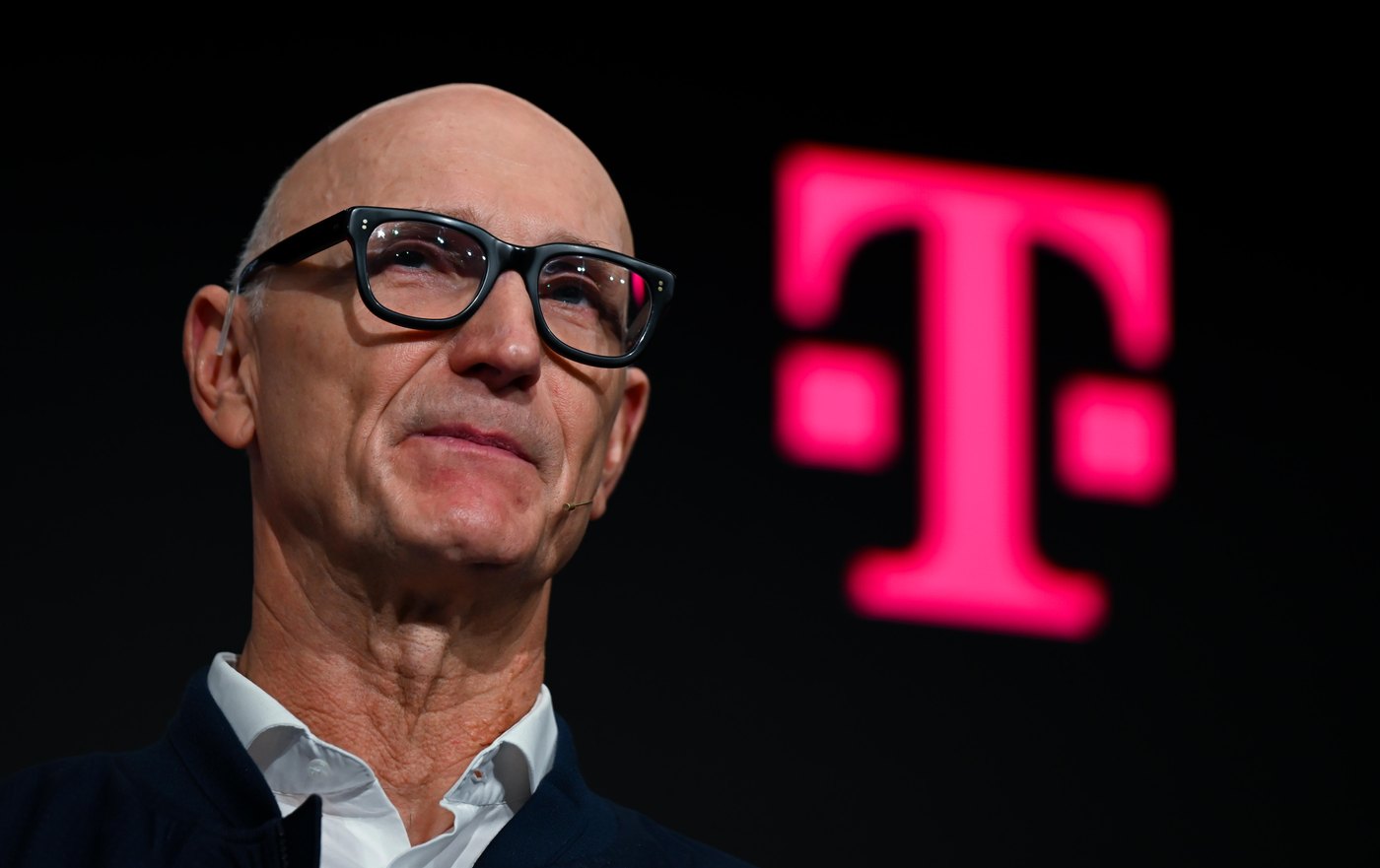
Deutsche Telekom chief executive officer Tim Höttges addressed SpaceX's ambitions to turn Starlink Mobile into a major cellular carrier in the United States, projecting that Elon Musk will need to invest at least $200 billion to compete directly with incumbent telecom networks. During an earnings call on Thursday, November 5, 2026, the leader of T-Mobile's parent organization directly analyzed SpaceX's current resource deficits across wireless spectrum, physical cell tower footprints, and base antenna hardware, as detailed in The Verge's report. Höttges emphasized that while established telecom operators treat the venture with absolute seriousness, the capital barrier required to mirror national scale remains extraordinarily high.
This analysis breaks down the specific technical assets, capital expenditure calculations, and infrastructure hurdles confronting Starlink Mobile as SpaceX attempts to transition from satellite direct-to-cell services into a standalone national wireless provider. The piece examines how Deutsche Telekom evaluates SpaceX's 76 megahertz spectrum footprint against commercial benchmarks, the economics of leasing roughly 80,000 ground towers, and the competitive threat posed by Musk's integration of satellite arrays, computing chipsets, AI agent architectures, and Qualcomm network hardware.
T-Mobile owner on Elon Musk: the announcement
Deutsche Telekom chief executive officer Tim Höttges responded publicly to SpaceX's plans to turn Starlink Mobile into a primary US wireless carrier by issuing a direct economic breakdown of the endeavor. Speaking to investors during Deutsche Telekom's quarterly earnings call, Höttges calculated that establishing a nationwide carrier would require a minimum capital expenditure of $200 billion. The executive compared SpaceX's existing holdings against established cellular operations, noting that while Musk currently holds 76 megahertz of spectrum, an operator like T-Mobile commands 400 megahertz. Reaching parity would demand triple-digit billions of dollars simply to secure equivalent prospective frequencies.
Beyond acquiring radio frequencies, Höttges detailed the immense logistical and real-estate spending necessary to field an active terrestrial cellular service across the country. T-Mobile operates 85,000 cell towers, whereas SpaceX would need to rent or construct access to roughly 80,000 tower sites across the United States. Even assuming SpaceX rents rather than builds these sites, Höttges estimated that site leases would demand an additional $20 billion to $30 billion. Purchasing and mounting physical antennas across those thousands of structures adds another heavy capital expense, prompting Höttges to summarize the commercial challenge with the phrase welcome to the party.
What actually changed with T-Mobile owner on Elon Musk
The operational landscape shifted last month when SpaceX formally detailed its strategic roadmap for Starlink Mobile, outlining an architecture designed to compete directly against T-Mobile, AT&T, and Verizon. Rather than functioning strictly as an emergency backhaul service, the Starlink Mobile plan combines low Earth orbit direct-to-cell satellites with a dedicated terrestrial tower grid. Infrastructure partners are already aligning with the deployment schedule; Qualcomm announced that SpaceX will integrate Qualcomm cellular infrastructure technology to assist in deploying the ground-based elements of the Starlink Mobile network.
Industry reporting reveals that SpaceX has explored multiple paths to rapidly bootstrap its ground presence, including entering discussions to acquire Boost Mobile and examining options to lease 80,000 cell towers nationwide. Höttges highlighted that Musk brings unique technological leverage that traditional telecom operators lack, citing integrated data centers, specialized silicon chipsets, commercial artificial intelligence agent models, low Earth orbit satellite constellations, and social media platforms. By synthesizing these elements, SpaceX is constructing a distinct communications delivery model rather than merely copying existing legacy cellular hardware designs.
Advertisement
Tech Pulse Daily
Get tomorrow's pulse first
Join engineers who read Tech Pulse before stand-up. Free, weekday mornings.
Who should care about T-Mobile owner on Elon Musk
Incumbent cellular network operators, enterprise telecom strategists, and wireless subscribers should closely follow this competitive collision between traditional telecommunications conglomerates and SpaceX's vertically integrated hardware ecosystem. Höttges warned legacy operators not to repeat the structural errors committed by the automotive industry when automakers initially ignored Tesla's emergence. The Deutsche Telekom executive stressed that incumbent carriers have spent two decades professionalizing their network operations, but Musk's control over satellite links, internal compute, artificial intelligence frameworks, and consumer platforms introduces an unconventional threat that the telecom sector must confront immediately.
Mobile network engineers and spectrum policy observers also face significant market consequences as SpaceX attempts to deploy commercial service on a 76 megahertz allocation. Delivering high-throughput cellular access on a restricted frequency footprint necessitates innovative radio frequency configurations and dense antenna deployments. Users seeking unified coverage in remote geographies stand to see altered market pricing and broader coverage alternatives if Starlink Mobile successfully ties Qualcomm infrastructure equipment to satellite nodes, even as Deutsche Telekom cautions that building such a nationwide cellular business carries immense costs.
How to try T-Mobile owner on Elon Musk
Prospective consumers and corporate clients interested in Starlink Mobile currently depend on the phased rollout of SpaceX's direct-to-cell satellite constellations and its emerging terrestrial infrastructure partnerships. Access to the network will rely on hardware integrated with Qualcomm cellular technology alongside direct satellite connectivity. Because commercial ground network access remains under active construction, end users currently interface with SpaceX services primarily through existing satellite terminals while awaiting commercial consumer cellular provisioning and retail onboarding details from the company.
Market developments suggest that user access could also materialize through strategic corporate acquisitions or regional network leasing agreements. Industry reports detailing Musk's talks to acquire Boost Mobile indicate that an acquisition would immediately hand SpaceX an active consumer subscriber base and existing retail channels. Until direct-to-cell retail services activate for standard smartphone handsets, wireless subscribers must monitor upcoming carrier roaming arrangements and commercial spectrum authorizations as SpaceX expands beyond its 76 megahertz position.
What to watch after T-Mobile owner on Elon Musk
Monitoring Starlink Mobile requires tracking SpaceX's spectrum acquisition moves and potential corporate transactions involving established carriers. Industry analysts will observe whether SpaceX attempts to expand its spectrum portfolio beyond its current 76 megahertz footprint through federal auctions or private acquisitions to close the gap with T-Mobile's 400 megahertz holdings. Any finalized negotiations surrounding Boost Mobile or commercial lease agreements for 80,000 US cell towers will serve as key indicators of how rapidly SpaceX can assemble an operational ground network.
Attention must also focus on the technical execution of Qualcomm's cellular infrastructure integration and the deployment of Musk's artificial intelligence agent models within Starlink Mobile. Observers will track whether SpaceX attempts to offset Höttges's projected $200 billion capital threshold by engineering lower-cost proprietary antenna designs or novel satellite-to-terrestrial routing software. The reaction of incumbent carriers will also prove critical as T-Mobile, AT&T, and Verizon evaluate pricing structures and network investments to defend their retail market shares against an integrated aerospace and compute rival.
Developer Action Items
- ☐ Map where SpaceX sits in your stack (SDK, API key, billing, data-processing addendum).
- ☐ Hold the $200 billion figure to the primary report; do not brief a number that is not on the record.
- ☐ Hold non-urgent migrations until the integration or use-of-proceeds roadmap is public — day-one coverage is not a ship signal.
- ☐ If you are mid-contract or mid-POC, ask the vendor what changes for existing customers this quarter.
- ☐ Write the single decision this forces: stay, dual-source, or exit.
T-Mobile owner on Elon Musk FAQ
How much does Deutsche Telekom estimate Starlink Mobile will cost SpaceX?
Deutsche Telekom CEO Tim Höttges projects that launching Starlink Mobile as a major US wireless carrier will cost SpaceX a minimum of $200 billion.
How much wireless spectrum does SpaceX hold compared to T-Mobile?
SpaceX has acquired 76 megahertz of spectrum, whereas T-Mobile holds 400 megahertz across its operational network.
What cellular infrastructure partners is SpaceX working with for Starlink Mobile?
Qualcomm announced that SpaceX will utilize Qualcomm cellular infrastructure technology to support the buildout of the Starlink Mobile network.
How many cell towers does Deutsche Telekom operate, and what are SpaceX's ground tower plans?
Deutsche Telekom operates 85,000 towers through T-Mobile, while reports suggest SpaceX could tap into roughly 80,000 cell towers across the US at an estimated leasing cost of $20 billion to $30 billion.
Sources

Author
Dillip Chowdary
Writes Tech Bytes coverage of AI, engineering, and the tools that actually ship. Editor of Tech Pulse Daily.
Related on Tech Bytes
Advertisement