Teaching AI to build scientific models news update
For a standard Hodgkin-Huxley circuit, the pipeline runs the simulator roughly 100,000 times, while larger networks require millions of forward executions.
By Dillip Chowdary • Nov 07, 2026 • Source: Anthropic Research
Anthropic released a research report on AI-driven scientific modeling authored by AI for Science grantees Jakob Macke, Daniel Gedon, and Stefan Wahl from the ELLIS Institute Tübingen and the University of Tübingen. As documented in Anthropic Research's report, the researchers evaluate how artificial intelligence is altering the three foundational stages of scientific model development: building mathematical representations, constraining parameters against empirical measurements, and interpreting physical mechanisms.
This analysis examines the shift from hand-calculated biophysical equations toward simulation-based inference powered by deep neural networks. It is written for computational neuroscientists, machine learning engineers, and scientific researchers seeking to understand how automated parameter tuning and simulator-driven workflows replace manual curve-fitting without sacrificing biological interpretability.
01Teaching AI to build scientific models news: what actually changed
Scientific modeling historically required manual derivation and hand-tuned parameter fitting, exemplified by Andrew Huxley and Alan Hodgkin solving squid nerve cell action potential equations on a hand-cranked mechanical calculator over three weeks in 1951 after Cambridge University’s computer failed for six months. In that original model, Hodgkin and Huxley raised a gating variable to the fourth power strictly to fit observational data, cautiously guessing that four charged particles had to move before the membrane gate opened. Decades after their 1963 Nobel Prize in Physiology or Medicine, structural biologists confirmed that potassium channel proteins indeed possess four identical pieces arranged around a central pore, proving the predictive utility of structural constraints.
Today, machine learning systems alter this dynamic by automating model formulation and parameter extraction in an afternoon, but raw optimization alone does not deliver genuine scientific understanding. While an automated system can quickly fit curves or find mathematical equations, reproducing observational data is insufficient because numerous distinct parameter combinations can yield identical electrical outputs. The technical baseline has shifted from finding one isolated numerical fit by intuition to mapping full parameter landscapes, determining which features are shared across successful models and identifying why simpler variants fail.
02Teaching AI to build scientific models news: how it works
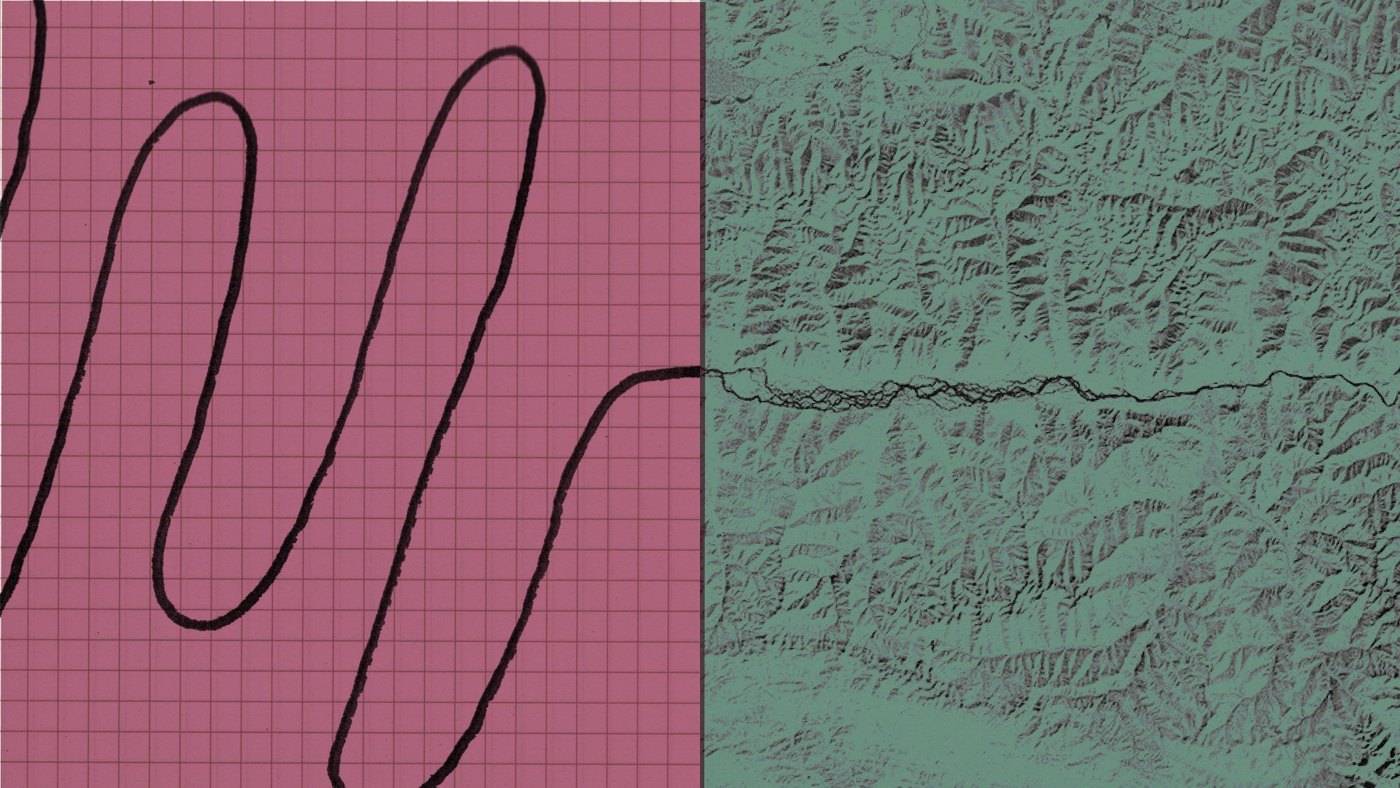
The workflow centers on a three-step cycle comprising building the equations, constraining parameters to real measurements, and interpreting what those parameters reveal about physical systems. Constraining parameters has seen the fastest technical automation through a method called simulation-based inference, or SBI. Traditional Bayesian inference calculates exact probability distributions of parameters given observed data, but it requires evaluating the explicit likelihood of measurements across every potential numerical combination. In multi-channel neurons where thousands of ion gates open and close randomly, computing that likelihood function analytically becomes computationally intractable.
Simulation-based inference bypasses intractable likelihood functions by running forward simulators repeatedly with randomized parameter inputs. For a standard Hodgkin-Huxley circuit, the pipeline runs the simulator roughly 100,000 times, while larger networks require millions of forward executions. A deep neural network is then trained directly on the paired inputs and simulated outputs. Once trained on these forward simulations, the neural network inverts the problem: when presented with new experimental measurements, it outputs the full probability distribution of plausible underlying parameters within seconds without requiring additional simulations.
Advertisement
Tech Pulse Daily
Get tomorrow's pulse first
Join engineers who read Tech Pulse before stand-up. Free, weekday mornings.
03Teaching AI to build scientific models news: why it matters
Inverting complex simulators resolves the fundamental ambiguity where different combinations of physical variables produce indistinguishable physiological outputs. The researchers compare this challenge to settling a collective 120-dollar dinner bill without itemized receipts, where a single total could result from uniform mid-priced burgers or one lobster dinner paired with inexpensive soups. By deploying simulation-based inference, researchers no longer settle for a single arbitrary setting that conceals alternative biological configurations. The resulting posterior distribution curves explicitly surface all parameter sets that match the data alongside their relative likelihoods.
Furthermore, simulation-based inference extends computational modeling to physical phenomena that cannot be captured in closed-form analytical equations. Many complex natural processes, spanning multi-neuron networks and colliding galaxies, exist only as algorithmic rule-based computer programs rather than neat algebraic expressions. Because SBI treats the underlying simulator purely as a forward-generating engine that maps parameters to expected data, scientists can fit complex computational simulators to empirical observations without needing to formulate explicit mathematical likelihood functions.
04Teaching AI to build scientific models news: who is affected
Computational neuroscientists and biological modelers are the primary practitioners impacted by these simulator-driven workflows. Researchers at institutions such as the ELLIS Institute Tübingen and the University of Tübingen are utilizing these tools to model nerve cell dynamics across species. The underlying Hodgkin-Huxley mathematical structures, adapted with different constants, remain the baseline standard for describing electrical spikes across the animal kingdom from squids to humans, despite lineages diverging more than 500 million years ago.
Machine learning researchers working on scientific foundation models and automated discovery platforms are also affected. The transition shifts development priorities away from pure black-box curve fitting toward systems that explicitly surface mechanistic constraints. Practitioners must design architectures that preserve scientific interpretability, ensuring that algorithmic outputs distinguish between superficially working equations and models that reflect underlying physical realities.
05Teaching AI to build scientific models news: what to watch
The primary operational constraint remains the high computational expense required to generate training data for forward simulators. Generating hundreds of thousands or millions of simulation runs across complex biophysical systems often requires weeks of continuous computing cluster time before neural network training can commence. Monitoring improvements in sample-efficient simulation and amortized inference algorithms will determine how practical SBI becomes for massive multi-scale biological systems.
The broader objective is expanding AI assistance across the remaining two stages of the modeling cycle: autonomous model construction and automated scientific interpretation. While simulation-based inference addresses parameter constraint, automated discovery must advance toward generating candidate hypotheses and explaining physical mechanisms. Success will be measured not by how fast an algorithm minimizes curve-fitting error, but by whether machine-guided models generate testable predictions regarding unseen biological structures, fulfilling Richard Hamming’s 1962 maxim that the true purpose of computing is insight rather than numbers.
Teaching AI to build scientific models news FAQ
What is simulation-based inference in scientific modeling?
Simulation-based inference is a statistical approach that runs forward simulators hundreds of thousands or millions of times with randomized parameters to train a neural network. The trained network can then infer the distribution of plausible parameters for newly observed experimental data in seconds without evaluating explicit likelihood formulas.
Who conducted this scientific modeling research published by Anthropic?
The research was authored by AI for Science grantees Jakob Macke, Daniel Gedon, and Stefan Wahl, who conduct research at the ELLIS Institute Tübingen and the University of Tübingen.
What historical discovery validated the Hodgkin-Huxley model's mathematical assumptions?
In 1951, Alan Hodgkin and Andrew Huxley raised a gating variable to the fourth power to fit squid nerve cell electrical pulses, suggesting four particles moved to open the membrane gate. Decades later, structural biologists confirmed that the related potassium channel protein contains four identical subunits arranged around a central pore.
Sources

Author
Dillip Chowdary
Writes Tech Bytes coverage of AI, engineering, and the tools that actually ship. Editor of Tech Pulse Daily.
Related on Tech Bytes
Advertisement