TechCrunch Mobility: A new, bigger AV boom is here
Trucks VC evaluated 81 autonomous driving startups in 2026 as low-cost foundation models and commercial robotaxi deals spark a major second wave of mobility.
By Dillip Chowdary • Nov 01, 2026 • Source: TechCrunch
Autonomous vehicle development has surged past the levels of the 2016 boom, driven by foundation artificial intelligence models. According to TechCrunch's report, venture firm Trucks VC evaluated pitches from 81 autonomous driving startups in 2026, two-thirds more than last year. Rather than limiting operations to industrial sites, new founders are building pure-play robotaxis to rival Waymo.
This report examines how end-to-end foundation models lower deployment costs, alongside major venture rounds, commercial trucking contracts, and global manufacturing alliances. It is written for automotive engineers, fleet executives, and venture investors tracking verifiable technology deployments and regulatory settlements.
TechCrunch Mobility: what actually changed
The financial barrier to launching an autonomous vehicle startup has dropped significantly across the mobility sector. Trucks VC partner Puneeth Meruva revealed that the firm consistently sees early-stage autonomy startups deploy operating vehicles on roads within a few months while raising less than $1 million. During the initial autonomous vehicle boom a decade ago, deploying road-ready test vehicles required hundreds of millions of dollars, bespoke physical sensors, and massive engineering organizations. Trucks VC has already invested in several startups operating under this rapid deployment model.
Large-scale capital is also concentrating in hard-tech manufacturing infrastructure and industrial robotics. Manufacturing accelerator Re:Build, co-founded by former Amazon commercial chief executive Jeff Wilke, raised $2.1 billion in financing co-led by General Catalyst and JPMorganChase's Strategic Investment Group to expand domestic industrial production capacity. Concurrently, autonomous vehicle technology startup Bedrock Robotics completed a $600 million Series C funding round co-led by CapitalG and Emergence Capital at a $4.1 billion valuation, supported by Temasek, Bessemer Venture Partners, Nvidia, and the US Innovative Technology Fund.
TechCrunch Mobility: how it works
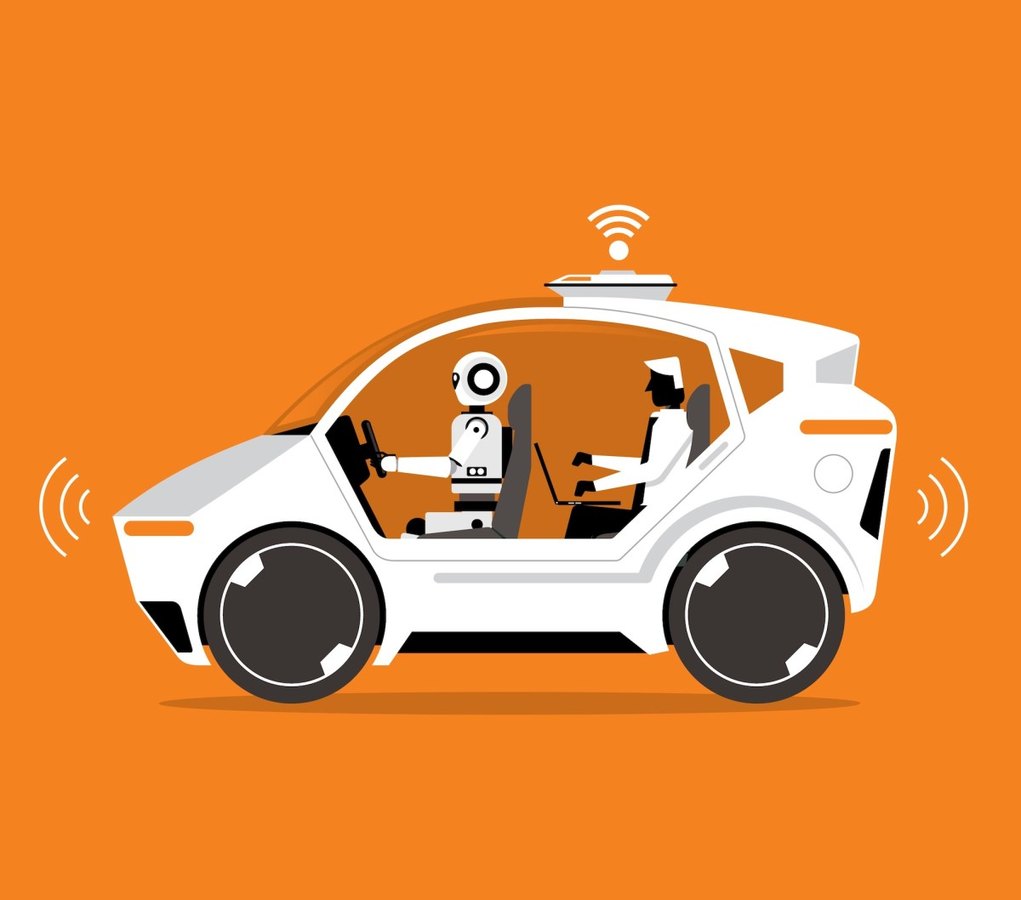
The technological catalyst behind this rapid acceleration is the transition from legacy AV 1.0 software stacks to AV 2.0 architectures. In AV 1.0 systems, vehicles relied on separate, hand-crafted algorithmic modules for perception, motion prediction, and trajectory planning. As Puneeth Meruva noted, foundation models now provide the technical architecture required to realize end-to-end autonomous driving systems. These integrated neural architectures directly map incoming sensor data to vehicle steering, braking, and throttle control, eliminating integration errors and compounding engineering friction across hand-engineered software subsystems.
Modern foundational models possess strong generalization capabilities across diverse operating environments and unmapped edge scenarios, lowering the total cost and time required to deploy driverless fleets. Startups are building functional autonomy on top of accessible open source models, including Nvidia's Alpamayo and Qwen's general-purpose vision-language-action architectures. By building upon existing multi-modal foundation models, small engineering teams avoid spending millions of dollars on proprietary neural network pre-training. Developers adapt these foundational models with focused driving data to achieve closed-loop vehicle actuation without maintaining large machine learning research groups.
Advertisement
Tech Pulse Daily
Get tomorrow's pulse first
Join engineers who read Tech Pulse before stand-up. Free, weekday mornings.
TechCrunch Mobility: why it matters now
The availability of accessible foundation models allows early-stage companies to bypass niche industrial sandboxes and challenge established robotaxi operators directly. While observers initially expected new autonomous startups to focus on construction, warehouse logistics, agriculture, or mining, an increasing share of founders are pitching passenger robotaxi services designed to rival Waymo. Trucks VC indicated that smaller, specialized autonomy companies can compete effectively against global incumbents by focusing on specific geographic regions or dedicated route corridors where tailored operational constraints and regional route density create viable, profitable unit economics.
At the same time, commercial alliances between software developers and established automakers are unlocking production-scale vehicle manufacturing. Waymo and Toyota formalized their partnership, agreeing that Toyota will build autonomous-ready bZ4X electric vehicles integrated with Waymo's autonomous driving system at its factory in Japan. The purpose-built vehicles will enter commercial robotaxi service across Japan, the United Kingdom, and select international markets. Furthermore, both companies signaled that the arrangement could expand into licensing agreements that place Waymo's self-driving technology directly into personally owned consumer passenger vehicles.
TechCrunch Mobility: who is affected
Legacy automakers and freight logistics operators are adjusting their operational strategies and addressing regulatory compliance challenges. General Motors entered into a $220 million legal settlement across 36 states following allegations that it illegally sold private driver behavior and vehicle location data to third-party data brokers, while simultaneously shifting vehicle manufacturing toward hybrid powertrains. In commercial freight, trucking carrier DTL Transport entered a binding agreement with Kodiak AI to acquire 75 autonomous Class 8 trucks starting in 2028, marking Kodiak's initial commercial contract for driverless trucks operating on public highways.
Electric vehicle manufacturers and enterprise suppliers are also experiencing strategic realignments. Rivian raised the minimum threshold of its 2026 delivery guidance to 67,000 vehicles, up from an earlier range of 65,000 to 70,000 units, citing momentum for its R2 model while expanding its $5.8 billion joint venture with Volkswagen Group to build artificial intelligence assistants. Additionally, Tesla partnered with peer-to-peer car rental network Turo to increase consumer adoption of Full Self-Driving Supervised. In factory testing, startup PreScalar secured $7 million in seed funding from Dynamo Ventures and BMW i Ventures.
TechCrunch Mobility: what to watch
Market watchers must track whether massive commercial acquisitions and initial public offerings can justify rising valuations in autonomous logistics. In consumer delivery, DoorDash agreed to acquire Instacart for $17 billion, though DoorDash noted in third-quarter financial earnings that automated artificial intelligence agents have placed only several hundred retail orders so far. In autonomous aviation, cargo drone developer Elroy Air hired Jeremy Hux as chief financial officer as it prepares for an initial public offering to support its heavy-lift autonomous aircraft designed for defense logistics and commercial rapid response missions.
Automotive power infrastructure and regional venture activity will signal the broader health of the mobility sector. Ford announced two bi-directional electric vehicle chargers designed to allow its forthcoming Fathom pickup truck to supply power to homes and electrical grids. Trucks VC expects venture pitch volumes from autonomy startups to increase further in 2027. Early-stage mobility founders, roboticists, and venture capital investors will convene to discuss these commercial developments at the Founder Summit in Boston on November 4, where venture-backed founders will examine the next phase of deployment.
Developer Action Items
- ☐ Map where Amazon / Nvidia sits in your stack (SDK, API key, billing, data-processing addendum).
- ☐ Hold the $1 million figure to the primary report; do not brief a number that is not on the record.
- ☐ Hold non-urgent migrations until the integration or use-of-proceeds roadmap is public — day-one coverage is not a ship signal.
- ☐ If you are mid-contract or mid-POC, ask the vendor what changes for existing customers this quarter.
- ☐ Write the single decision this forces: stay, dual-source, or exit.
TechCrunch Mobility FAQ
How many autonomous vehicle startups pitched Trucks VC in 2026?
Trucks VC received pitches from 81 autonomous vehicle startups so far in 2026, which is two-thirds more than the previous year and surpasses deal activity from 2016 and 2017.
What technical breakthrough is enabling AV 2.0 architectures?
Foundation models provide an integrated architecture that maps sensor inputs directly to vehicle actuation. Open source models like Nvidia's Alpamayo and Qwen's vision-language-action architectures allow startups to deploy functional systems in months with under $1 million raised.
What are the terms of the Waymo and Toyota manufacturing partnership?
Toyota will manufacture autonomous-ready bZ4X electric vehicles equipped with Waymo's self-driving technology at its plant in Japan for robotaxi fleets in Japan, the United Kingdom, and international markets. Both companies also hinted at future licensing for personally owned vehicles.
What major funding rounds were completed across mobility and manufacturing?
Re:Build raised $2.1 billion led by General Catalyst and JPMorganChase's Strategic Investment Group, Bedrock Robotics secured $600 million at a $4.1 billion valuation, and PreScalar raised a $7 million seed round.
Sources

Author
Dillip Chowdary
Writes Tech Bytes coverage of AI, engineering, and the tools that actually ship. Editor of Tech Pulse Daily.
Related on Tech Bytes
Advertisement