Tesla Hasn't Had a Successful New Product Launch Since JB Straubel Stepped
Tesla is ending Cybertruck production after selling 70,000 units against a 125,000-vehicle capacity, accumulating a $1.9 billion loss since 2019.
By Dillip Chowdary • Nov 08, 2026 • Source: cleantechnica.com
Tesla is preparing to halt production of the Cybertruck following severe financial losses and manufacturing targets that missed internal projections, according to cleantechnica.com's report. Analysis of project metrics indicates that Tesla installed manufacturing tooling capable of producing 125,000 Cybertrucks annually but sold roughly 70,000 units across three years of commercial availability. The program required an estimated $2 billion in research and development expenditures while returning approximately $100 million in gross profits from customer deliveries, resulting in a net project loss of $1.9 billion.
This technical breakdown examines the operational changes across Tesla's vehicle programs since former Chief Technology Officer JB Straubel stepped down in July 2019. It traces the engineering trajectories, production commitments, and financial realities of the company's vehicle portfolio, contrasting the rapid rollout of earlier models like the Model 3 and Model Y against the prolonged development and commercial struggles of post-2019 programs.
Tesla Hasn't Had a Successful New Product: what actually changed
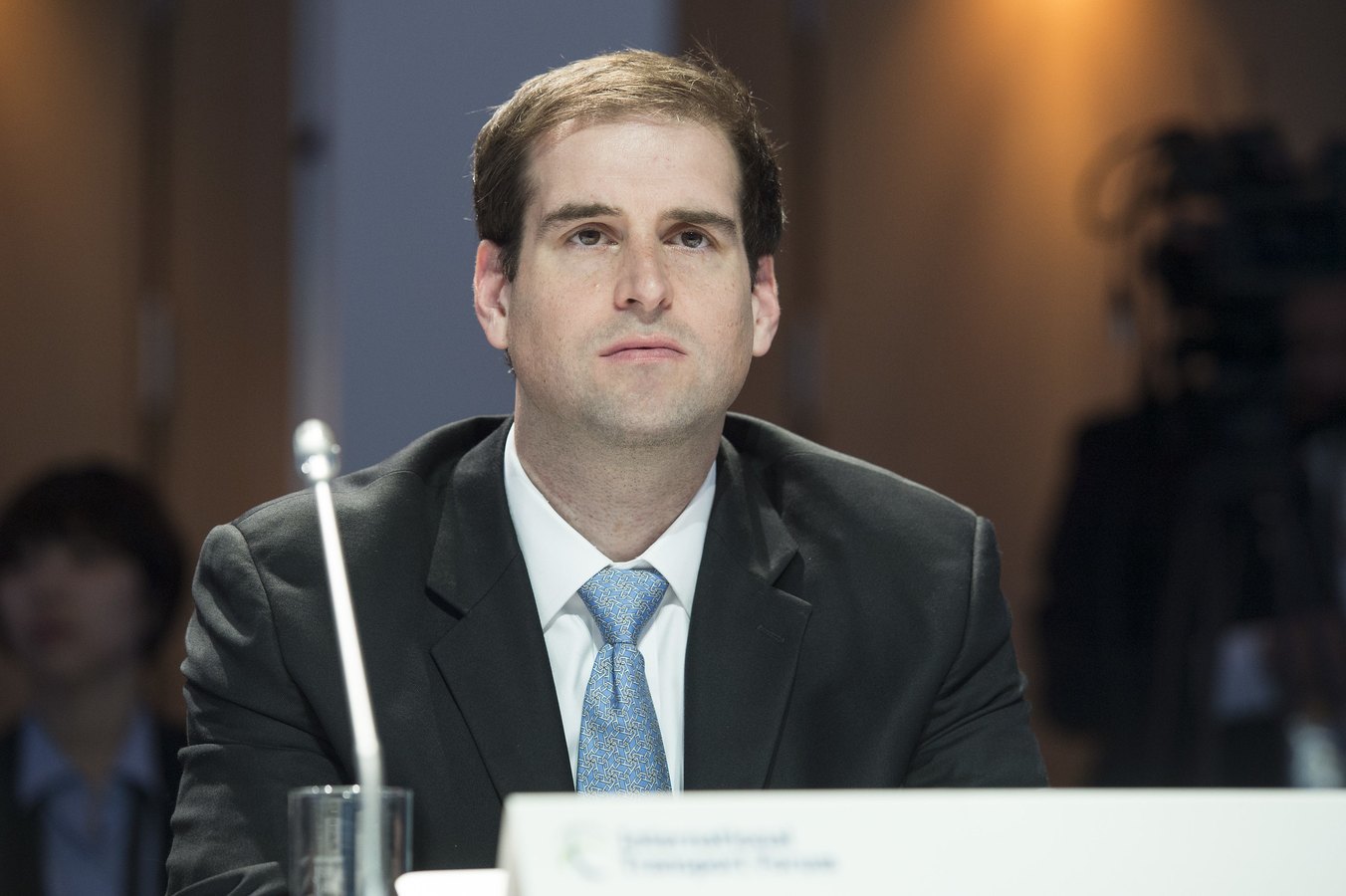
The departure of JB Straubel in July 2019 marked a structural turning point in Tesla's hardware execution. Straubel, who originally met Elon Musk to discuss electric aviation before steering focus toward passenger vehicles alongside founders Marc Tarpenning and Martin Eberhard, oversaw the development cadence of the Model S, Model X, Model 3, Model Y, and the industrial Megapack battery. The Model Y, unveiled in March 2019 sharing roughly two-thirds of its architecture with the Model 3, entered customer deliveries in January 2020 within ten months of its debut, serving as Straubel's final major engineering undertaking before his transition to battery recycling firm Redwood Materials.
Following Straubel's exit as CTO, Tesla's vehicle roadmap diverged sharply from rapid consumer vehicle delivery toward high-risk, extended-timeline concept vehicles. The Cybertruck was unveiled in November 2019, four months after Straubel stepped down, but required more than four years to begin initial deliveries. Aside from incremental refreshes, decontented Model 3 variants, and the recently unveiled Cybercab moving into production, Tesla did not bring a smaller, lower-cost consumer passenger car to market, leaving the post-2019 portfolio without a commercially profitable ground-up vehicle line.
Tesla Hasn't Had a Successful New Product: how it works
Tesla's commercial scaling mechanism historically relied on shared architectures, targeted market segments, and rapid capital-to-production cycles. The Model S targeted luxury sedans led by the BMW 7 Series and Mercedes S-Class, the Model X repurposed that skateboard platform with utility features like falcon-wing doors, and the Model 3 created high-volume electric manufacturing that translated directly into the Model Y crossover. Energy operations followed a similar modular pattern, culminating in the utility-scale Megapack system launched in July 2019 as a containerized grid-storage solution.
In contrast, the Cybertruck introduced custom manufacturing tooling scaled for an annual capacity of 125,000 units, operating against stated executive targets of 250,000 to 500,000 units per year. Demand signals were driven by $100 refundable deposits coupled with an incentive allowing reservation holders to lock in Full Self Driving pricing at $6,000. When customer deliveries materialized, the vehicle arrived at approximately twice its projected retail price and delivered roughly half of its initially claimed driving range, yielding an effective range-per-dollar metric one-fourth of original marketing specifications.
Advertisement
Tech Pulse Daily
Get tomorrow's pulse first
Join engineers who read Tech Pulse before stand-up. Free, weekday mornings.
Tesla Hasn't Had a Successful New Product: why it matters
The financial drag of stalled post-2019 programs impacts Tesla's broader capital efficiency and manufacturing margins. Absorbing a $1.9 billion net loss on the Cybertruck highlights the vulnerability of straying from the mass-market cost curves that propelled the Model Y into becoming the highest-selling vehicle globally across multiple years. Diverting substantial engineering resources into custom tooling for low-volume lines limited Tesla's ability to introduce a dedicated compact vehicle below the Model 3 price tier.
Engineering execution also suffered substantial timeline slippage across non-passenger platforms. The Tesla Semi, originally unveiled in November 2017, faced repeated multi-year commercial delays that management attributed to internal battery cell supply bottlenecks. While Tesla's revenue remains anchored by the high-volume Model 3 and Model Y architectures, the lack of a high-margin replacement or adjacent commercial hit leaves the company dependent on legacy engineering platforms developed prior to the 2019 executive transition.
Tesla Hasn't Had a Successful New Product: who is affected
Automotive assembly teams, fleet customers, and early reservation holders bear the direct operational effects of these product shifts. Early adopters who deposited $100 reservations to lock in $6,000 lifetime Full Self Driving packages encountered steep final MSRP increases and restricted range performance upon delivery. Plant operators and line workers assigned to dedicated Cybertruck production tooling now face the impending conclusion of vehicle assembly after producing only 70,000 units over three full years.
Tesla's investor base and corporate leadership are similarly constrained by the performance gap between projected and actual vehicle unit volumes. While Straubel retains a seat on Tesla's board of directors, the day-to-day product development apparatus operates without the technical counterweight that balanced earlier development cycles. The broader electric vehicle sector, which once faced intense disruption from Tesla's expanding product portfolio, now contends with a narrower lineup as competitor models address traditional truck, van, and entry-level consumer tiers.
Tesla Hasn't Had a Successful New Product: what to watch
Industry attention now shifts to the Cybercab as Tesla attempts to prove it can commercialize a new physical vehicle platform. With Cybercab entering production without an intervening compact consumer car release, market adoption and manufacturing yield will indicate whether Tesla can scale a ground-up platform without repeating the prolonged development cycles and margin losses that characterized the Cybertruck.
Observers are also monitoring how Tesla allocates the idled manufacturing floor space and capital equipment previously dedicated to Cybertruck assembly. Observers will track whether engineering teams redirect factory capacity toward commercial Semi output, updated Megapack utility storage deployments, or lower-cost variations of the existing Model 3 and Model Y architectures. Straubel's ongoing presence on the board of directors remains a point of observation regarding corporate oversight as Tesla attempts to operationalize its subsequent product generation.
Developer Action Items
- ☐ Verify the claim on the official Tesla page (or Hacker News Front Page), not from this recap alone.
- ☐ Name the surface that moved — API, policy, model, hardware, or commercial terms — before you Slack the thread.
- ☐ Assign one owner a day to read the primary material and decide: this-sprint, this-quarter, or noise.
- ☐ Do not change production on day-one coverage. Watch the vendor changelog and one independent write-up first.
- ☐ Quote $2 billion only if it appears in the primary source; otherwise leave the hole visible.
Tesla Hasn't Had a Successful New Product FAQ
What were the total financial losses on the Tesla Cybertruck program?
Tesla spent $2 billion on research and development for the Cybertruck and generated $100 million in gross profits, resulting in an estimated net project loss of $1.9 billion.
How many Cybertrucks did Tesla produce compared to its tooling capacity?
Tesla installed tooling to manufacture 125,000 Cybertrucks annually against internal targets of 250,000 to 500,000 units, but sold only 70,000 vehicles across three years.
When did JB Straubel leave his role as Chief Technology Officer at Tesla?
JB Straubel stepped down as Tesla's CTO in July 2019, shortly after the Model Y unveiling in March 2019 and the commercial launch of the Megapack storage system.
How did the final Cybertruck specifications compare to initial announcements?
The production vehicle cost roughly twice as much as originally announced and provided about half the expected range, resulting in about one-fourth of the promised range-per-dollar value.
Sources

Author
Dillip Chowdary
Writes Tech Bytes coverage of AI, engineering, and the tools that actually ship. Editor of Tech Pulse Daily.
Related on Tech Bytes
Advertisement