The American Dream Wasn’t Built for Climate Change
This analysis details how localized disasters, valuation gaps, and destabilized insurance markets reshape housing economics in presumed safe havens.
By Dillip Chowdary • Nov 07, 2026 • Source: Wired
A comprehensive analysis published in Wired's report reveals that American homeownership is fracturing under accelerating climate disasters, severe property devaluation, and escalating insurance premiums. While home purchases have long served as the primary engine for generational wealth, environmental hazards are turning real estate into financial traps across the country. First Street projects that climate risks could erase nearly $1.5 trillion in residential property value by 2055, breaking the assumption that homes consistently appreciate.
This analysis details how localized disasters, valuation gaps, and destabilized insurance markets reshape housing economics in presumed safe havens. It draws upon findings from the London School of Economics, Data for Progress polling, and Federal Emergency Management Agency flood data to explain climate-driven equity loss. The piece is written for prospective homebuyers, mortgage holders, and regional planners assessing hazard exposure, surging carrying costs, and the viability of long-term real estate investments.
American Dream Wasn’t Built for Climate Change: what actually changed
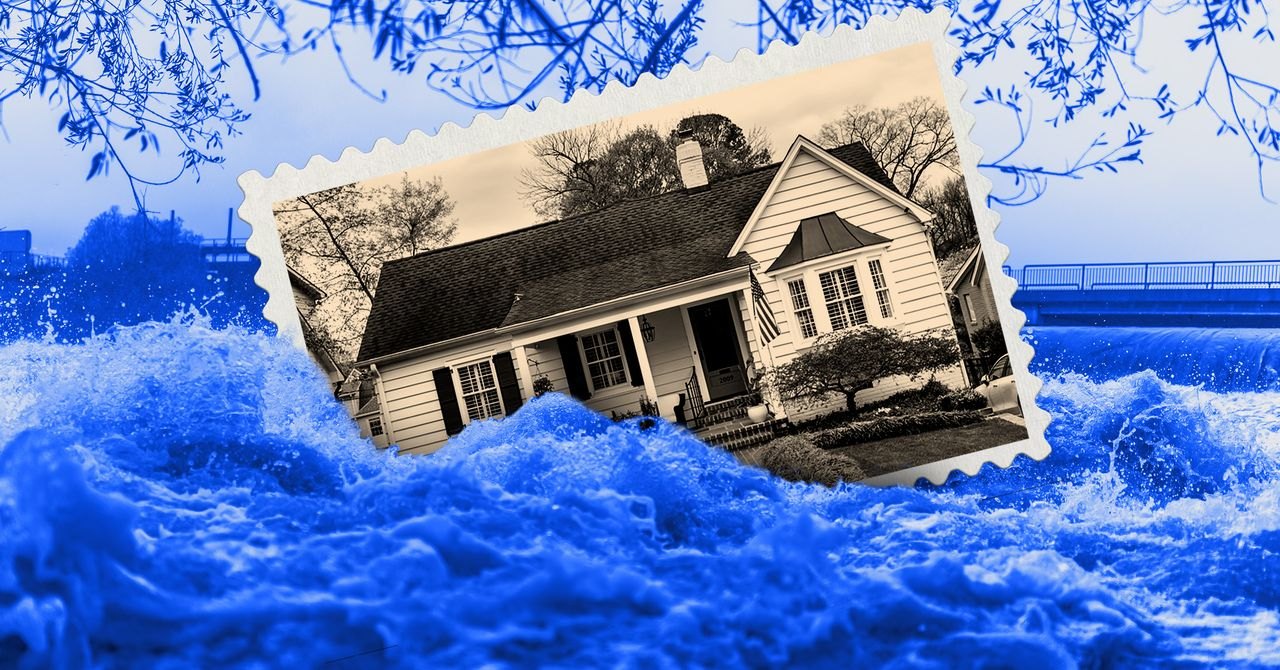
The expectation that residential real estate reliably shelters household wealth has collided with severe weather across inland communities once considered secure. In western North Carolina, Hurricane Helene dumped nearly 14 inches of rain on Asheville over three days in September 2024, flooding surrounding neighborhoods. The storm damaged over 74,000 homes in the region, where only 4 percent carried flood insurance, producing $9.5 billion in uninsured residential losses. Residents like 26-year-old Sierra Isley endured contaminated water systems after a title lien blocked her from buying an encumbered house.
The physical destruction triggered a measurable downturn in local residential property values. Average home prices in Asheville fell 5 percent over the following year, contrasting with a national average increase of 1.2 percent across the United States. Long promoted as an insulated mountain sanctuary, the city experienced an abrupt reassessment by buyers and lenders. This localized contraction echoes Superstorm Sandy in 2012 along New York and New Jersey, where damaged properties could not sell for enough to clear existing mortgages, leaving owners stranded in devalued assets.
American Dream Wasn’t Built for Climate Change: how it works
The devaluation of residential real estate operates through mispriced environmental risks and lagging market appraisals. A 2023 study published in Nature Climate Change revealed that while homes in FEMA high-risk flood zones sell for 2.8 percent less on average, exposed properties remain overvalued nationwide by $121 billion to $237 billion. Researchers identified Appalachia as an overvaluation hot spot a year before Helene struck. When storms hit, the gap between market valuation and physical vulnerability collapses abruptly, destroying homeowner equity before municipalities can build protective infrastructure.
Simultaneously, the private insurance framework that underpins residential mortgage lending is buckling under rising disaster claims. Douglas Heller, insurance director at the Consumer Federation of America, observed that insurance serves as the safety net for the American Dream, yet average premiums climbed almost 80 percent since 2020. Typical single-family mortgage holders now pay $209 per month for coverage, with carriers dropping homeowners across California and raising rates fastest in the Midwest. Advocates argue carriers have become climate opportunists, using storm volatility to push through excessive, destabilizing premium increases.
Advertisement
Tech Pulse Daily
Get tomorrow's pulse first
Join engineers who read Tech Pulse before stand-up. Free, weekday mornings.
American Dream Wasn’t Built for Climate Change: why it matters
The erosion of property equity threatens the primary mechanism of intergenerational wealth creation in the United States. For decades, families relied on accrued housing equity to finance college tuition and fund retirement. Rebecca Elliott, a sociology professor at the London School of Economics and Political Science, noted that homeownership risks turning into an enduring nightmare as hazards multiply. Elliott explained that vulnerable properties could become economically worthless before becoming physically uninhabitable, as prospective buyers avoid floodplains and wildfire zones, leaving owners unable to liquidate their life savings.
This wealth destruction directly contradicts traditional political messaging that links fossil fuel consumption to domestic prosperity. While Donald Trump's administration framed repealing vehicle emission standards and dismantling Environmental Protection Agency climate authority as restoring the American Dream, emissions have intensified severe weather events. Scientific assessments confirm that changing climate patterns imperil American living standards and community stability. By driving up emergency repairs, municipal expenses, and homeowner insurance premiums, reliance on fossil energy actively undermines the financial security that suburban property ownership was promised to provide.
American Dream Wasn’t Built for Climate Change: who is affected
Broad cross-sections of the American electorate now recognize the direct financial hazards posed by weather extremes. Polling conducted by Data for Progress for Grist revealed that 58 percent of likely United States voters believe climate change will impede their ability to achieve the American Dream over the next 20 years, including 42 percent of Republicans. First-time buyers like Sierra Isley and her girlfriend Jamie must evaluate prospective neighborhoods through disaster metrics, eliminating riverfront parcels and crossing wildfire-prone California off relocation lists despite seeking protective social policies.
Retirees and fixed-income condominium owners face compounding liabilities from collective insurance structures. Andrew Engler, founder and chief executive officer of Rock Rose Risk, reported that Social Security recipients owning units around Lake Tahoe face ballooning homeowners association dues to cover collective fire insurance. Because master policies must protect communal structures in forested interfaces, rising premiums are divided among residents. When monthly association fees surge beyond fixed pension incomes, elderly homeowners can neither afford the rising assessments nor sell their units to buyers wary of overhead costs.
American Dream Wasn’t Built for Climate Change: what to watch
Industry analysts are monitoring whether property markets will correct overvaluation through gradual appraisal reforms or disorderly market drops. With First Street estimating that climate hazards could strip nearly $1.5 trillion from residential real estate by 2055, mortgage lenders and digital platforms face pressure to reflect actual exposure in property listings. If the estimated $121 billion to $237 billion in flood-zone overvaluation unwinds suddenly after disasters, mortgage defaults could climb, straining regional banking institutions and shrinking municipal tax revenues that fund basic public services.
State and federal regulation of property insurance markets will also dictate the stability of vulnerable housing sectors. With the Consumer Federation of America warning that personal insurance is nearing dysfunction, state regulators must decide how much rate relief carriers can extract from consumers. Observers are watching whether Midwest premium spikes accelerate and if other states experience insurer withdrawals similar to California. Ultimately, the willingness of policymakers to overhaul insurance safety nets will determine whether homeownership remains a viable path toward long-term financial household security.
Developer Action Items
- ☐ Map where Framework sits in your stack (SDK, API key, billing, data-processing addendum).
- ☐ Hold the $1.5 trillion figure to the primary report; do not brief a number that is not on the record.
- ☐ Hold non-urgent migrations until the integration or use-of-proceeds roadmap is public — day-one coverage is not a ship signal.
- ☐ If you are mid-contract or mid-POC, ask the vendor what changes for existing customers this quarter.
- ☐ Write the single decision this forces: stay, dual-source, or exit.
American Dream Wasn’t Built for Climate Change FAQ
How much property value could climate change erase from American homes?
Modeling from research firm First Street projects that climate risks could knock nearly $1.5 trillion off the value of American residential homes by 2055. Additionally, a study in Nature Climate Change estimated that flood-exposed homes across the United States remain currently overvalued by between $121 billion and $237 billion.
How much did Hurricane Helene impact home prices and property losses in North Carolina?
Hurricane Helene caused $9.5 billion in uninsured residential property losses across western North Carolina, where more than 74,000 homes were damaged and only about 4 percent carried flood insurance. Following the storm, Asheville's average home price dropped 5 percent over the year, while the national average rose 1.2 percent.
Why are home insurance rates rising so rapidly across the United States?
Property insurance premiums have climbed nearly 80 percent since 2020, bringing the average single-family mortgage holder's monthly payment to $209. Rates are rising fastest in the Midwest due to severe storm costs, while carriers have dropped coverage across California and leveraged climate uncertainty to justify broader rate hikes.
Do voters believe climate change threatens the American Dream of homeownership?
According to polling conducted by Data for Progress for Grist, 58 percent of likely United States voters believe climate change will hinder their ability to achieve the American Dream over the next 20 years. That concern spans political parties, including 42 percent of self-identified Republicans who worry about climate-driven increases to the cost of living.
Sources

Author
Dillip Chowdary
Writes Tech Bytes coverage of AI, engineering, and the tools that actually ship. Editor of Tech Pulse Daily.
Related on Tech Bytes
Advertisement