The UV-tracking Gem made me rethink how sunlight affects my health, not
The90 launched the $249 Gem wearable necklace to track UVA and UVB rays independently, delivering real-time sun metrics without a subscription fee.
By Dillip Chowdary • Nov 07, 2026 • Source: The Verge
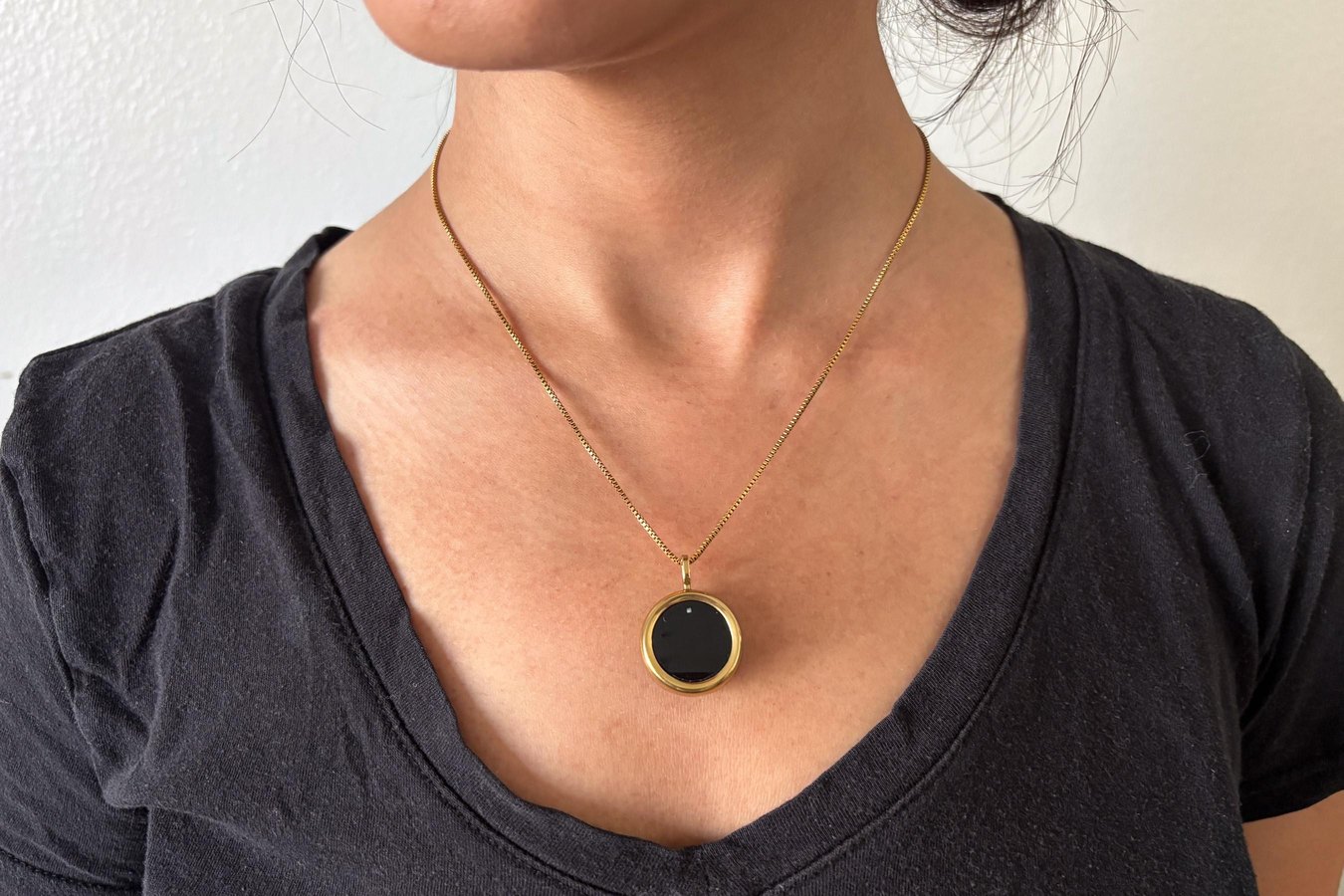
Hardware maker The90 launched the Gem, a $249 wearable necklace designed to measure individual ultraviolet radiation exposure in real time, as detailed in The Verge's report. The circular pendant, offered at a promotional $149 price point without an ongoing subscription fee, tracks UVA and UVB wavelengths independently rather than relying on regional weather forecasts. Built with a modular casing paired with a titanium chain in gold or silver finishes, the device delivers localized environmental data directly to an accompanying smartphone application while promising a seven-day battery lifespan on a single charge.
This analysis examines how the Gem performs during real-world sun exposure, assessing the reliability of its specialized radiation sensors, its software metrics, and its physical usability. The assessment is aimed at wearable technology enthusiasts, individuals managing heat sensitivity or sun-related health conditions, and users seeking objective tracking beyond aesthetic sunburn prevention. By evaluating the companion application, background synchronization requirements, and algorithmic calculations for vitamin D and skin aging, this report outlines what the hardware delivers and where its technical limitations become apparent during daily use.
UV-tracking Gem made me rethink how sunlight: what actually changed
Traditional wearable health trackers primarily monitor internal physiological signals like heart rate, daily step counts, and sleep stages, leaving environmental radiation monitoring to broad municipal weather reports. The Gem alters that dynamic by mounting dedicated UVA and UVB photodiodes directly onto a lightweight circular pendant that rests on the chest. This localized sensing captures the precise radiation reaching the wearer across varying microclimates, documenting immediate spikes in exposure even when a user sits beneath protective structures like patio umbrellas where indirect scattered rays continue to strike the body.
The physical execution of the hardware reflects a pivot toward subtle, jewelry-grade form factors that avoid the bulky silicone aesthetic common to fitness bands. The detachable pendant connects to a thin titanium chain finished in gold or silver tones, allowing the sensor module to blend into everyday wardrobes while preserving unobstructed exposure to ambient light. Recharging is handled through a bundled custom dock, and the internal battery reliably achieves its advertised seven-day operational cycle, minimizing the maintenance friction typical of daily-recharge biometric devices.
UV-tracking Gem made me rethink how sunlight: how it works
Inside the pendant, independent hardware sensors distinguish between long-wave UVA rays, which penetrate deep into skin layers to accelerate premature aging, and medium-wave UVB rays, which stimulate vitamin D synthesis while driving sunburn. Rather than caching collected exposure logs internally, the sensor continuously broadcasts data via Bluetooth directly to the host smartphone. As a result, the companion mobile application must continuously operate in the background on platforms like iOS, because terminating the mobile process halts all data ingestion and leaves gaps in exposure tracking.
The companion software processes incoming radiation readings through an optional personal profile that accounts for baseline skin type, sunscreen usage, clothing coverage, and known personal sensitivities. These variables feed an analytical dashboard that displays cumulative UVA intake, recent exposure spikes, circadian light metrics, and nitric oxide estimates. The app synthesizes these factors into a composite Sun Score, encouraging wearers to target a balanced daily rating of 90, while running dynamic countdown timers that estimate remaining safe sun exposure before burning occurs.
Advertisement
Tech Pulse Daily
Get tomorrow's pulse first
Join engineers who read Tech Pulse before stand-up. Free, weekday mornings.
UV-tracking Gem made me rethink how sunlight: why it matters
Direct exposure monitoring exposes the common misconception that shade structures and ambient fans provide complete protection against solar radiation and ambient thermal stress. Environmental surfaces routinely reflect and scatter ultraviolet rays beneath canopies, meaning users can accumulate considerable UVA and UVB loads without realizing they remain exposed. Furthermore, while ultraviolet exposure and core body overheating represent distinct physiological challenges, ambient radiation monitoring provides a tangible indicator of outdoor exposure when environmental conditions threaten to induce heat exhaustion during high-temperature periods.
The metric separation between UVA and UVB also highlights the complex biological balance required for healthy sun habits. While cosmetic skincare often prioritizes total sun avoidance to prevent photoaging, complete deprivation restricts natural UVB exposure required for endogenously synthesized vitamin D. By quantifying both spectral components simultaneously, the platform reveals how modern indoor routines frequently cause users to fall far short of biological synthesis thresholds, replacing generalized sun avoidance with targeted, measured exposure schedules throughout regular workweeks.
UV-tracking Gem made me rethink how sunlight: who is affected
The device provides meaningful diagnostic awareness for individuals taking medications that induce photosensitivity or impair the body's natural heat regulation mechanisms. Because pharmacological heat sensitivity often mimics generic fatigue, objective radiation spikes notify wearers to seek indoor cooling, hydrate, and evaluate potential heat illness symptoms before physiological distress escalates. Users who previously dismissed recurring episodes of dizziness or nausea in warm settings gain an environmental trail that connects physical discomfort with ambient conditions.
The technology equally impacts people with elevated melanin levels who rarely experience visible erythema or sunburns. Higher melanin concentrations provide innate protection against superficial burns but simultaneously slow down sunlight-derived vitamin D production, creating hidden nutritional deficits despite residence in sunny climates. For these wearers, the sensor provides empirical evidence of insufficient UVB accumulation, demonstrating that naturally darker skin tones require deliberate outdoor planning rather than passive reliance on living in sunny regions.
UV-tracking Gem made me rethink how sunlight: what to watch
Prospective adopters must navigate noticeable software volatility within the predictive algorithm countdowns. During rapid transitions in outdoor lighting, the application's estimated countdown for vitamin D production can fluctuate wildly, dropping from several hours to under an hour before abruptly surging past six hours within minutes. The sunburn countdown exhibits similar instability during variable cloud cover, indicating that the mathematical models struggle to generate stable time estimates under fluctuating UVB intensity.
Operational limitations also demand consideration, notably the lack of onboard storage memory on the circular sensor. If the smartphone shuts down or the operating system terminates the background application, exposure logging ceases entirely until manual reconnection. Looking ahead, The90 intends to broaden physical mounting options beyond the neck pendant by releasing an accessory hat clip and bag tag early next year, which could improve adoption among users reluctant to wear a metallic chain while active outdoors.
Developer Action Items
- ☐ Verify the claim on the official iOS page (or The Verge), not from this recap alone.
- ☐ Name the surface that moved — API, policy, model, hardware, or commercial terms — before you Slack the thread.
- ☐ Assign one owner a day to read the primary material and decide: this-sprint, this-quarter, or noise.
- ☐ Do not change production on day-one coverage. Watch the vendor changelog and one independent write-up first.
UV-tracking Gem made me rethink how sunlight FAQ
How much does the The90 Gem cost and is there a subscription?
The Gem retails for $249, was discounted to $149 at launch, and operates without any required monthly subscription fees.
How long does the Gem battery last on a single charge?
The internal battery provides almost exactly one week of continuous operation and recharges through an included custom dock.
Does the Gem store UV data if disconnected from a phone?
No, the sensor lacks onboard memory, so the companion mobile app must remain active in the background to log exposure.
What accessories is The90 releasing for the Gem?
The company plans to release a dedicated hat clip and bag tag early next year for users who prefer not to wear the necklace.
Sources

Author
Dillip Chowdary
Writes Tech Bytes coverage of AI, engineering, and the tools that actually ship. Editor of Tech Pulse Daily.
Related on Tech Bytes
Advertisement