Warhound raises $200 million to engineer war dogs and arm them
Warhound raised $200 million at a $1.2 billion valuation from Sequoia and In-Q-Tel to clone and genetically engineer military working dogs with Anduril gear.
By Dillip Chowdary • Oct 24, 2026 • Source: TechCrunch
Colossal Biosciences founder Ben Lamm and Anduril founder Palmer Luckey brought defense startup Warhound out of stealth with $200 million in funding to genetically engineer working dogs equipped with tactical hardware. The round values the venture at $1.2 billion, with backing from Sequoia, 8VC, Corner Ventures, and CIA-backed In-Q-Tel. According to TechCrunch's report, Warhound will engineer canines for hazardous operations including bomb detection and tactical search missions.
This report details Warhound's corporate structure, biotechnology pipeline, defense hardware integrations, and operational questions. It is written for defense procurement officers, biotechnology investors, and public safety personnel evaluating canine support capabilities. The analysis outlines how Colossal Biosciences, cloning subsidiary Viagen, and defense contractor Anduril will produce cloned litters, equip them with situational sensors, and deliver working dogs to federal and local agencies over the next two years.
The deal behind Warhound $200 million to engineer war dogs
The initiative originated when Ben Lamm and Palmer Luckey met at an industry conference roughly a year ago to discuss operational gaps in military working dogs. Under their arrangement, Warhound secured $200 million in primary capital at a $1.2 billion valuation, backed by venture capital firms Sequoia, 8VC, Corner Ventures, and In-Q-Tel, which is backed by the Central Intelligence Agency and other intelligence bodies. Luckey participates as a partner guiding technical integration but holds no equity. Colossal Biosciences holds equity in Warhound and licenses its proprietary gene-editing technology to support the business.
Colossal Biosciences provides the underlying scientific infrastructure, leveraging artificial intelligence and gene-cloning systems developed through its projects to de-extinct species like the mammoth and dodo. Viagen, a Colossal-owned cloning firm with high success rates in endangered species programs, will partner with Warhound to clone and incubate the dogs. Rather than serving civilian pet owners, Warhound structured its commercial strategy to sell working dogs to the Department of Defense, domestic military service branches, police departments, and emergency first responders.
Why Warhound $200 million to engineer war dogs raised now
The financing directly targets an acute domestic supply crisis, where more than 80 percent of working dogs used by the United States military originate from European kennels. Defense data disclosed by the company reveals that fewer than half of these imported animals are fit for active service. This declining supply has forced national security agencies to rely heavily on foreign suppliers for critical duties like explosive detection and security patrols, exposing operational vulnerabilities across military commands and local law enforcement agencies.
Lamm investigated canine breeding practices and found that many candidate dogs fail operational training due to inherited health flaws. Genetic predispositions to hip dysplasia, muscle atrophy, cancer, and defective eyesight routinely remove animals from service preparation. Warhound raised capital to resolve these vulnerabilities before training begins. By applying gene editing rather than conventional breeding selection, the venture seeks to eliminate inherited illnesses while enhancing biological characteristics such as speed, agility, physical stamina, and olfactory sensitivity for bomb-sniffing operations.
Advertisement
Tech Pulse Daily
Get tomorrow's pulse first
Join engineers who read Tech Pulse before stand-up. Free, weekday mornings.
What the Warhound $200 million to engineer war dogs money
Proceeds from the $200 million round will fund the cloning, gene-editing, and laboratory incubation pipelines required to produce Warhound's first litters. The scientific team established a biobank using cell lines harvested from elite Belgian Malinois and German Shepherd working dogs. Researchers will edit these genomes to add traits that improve olfactory sensitivity for bomb sniffing, speed, and agility, while removing genetic markers responsible for debilitating hereditary diseases. Warhound expects its first cloned dogs to be born early next year and deploy into active service within two years.
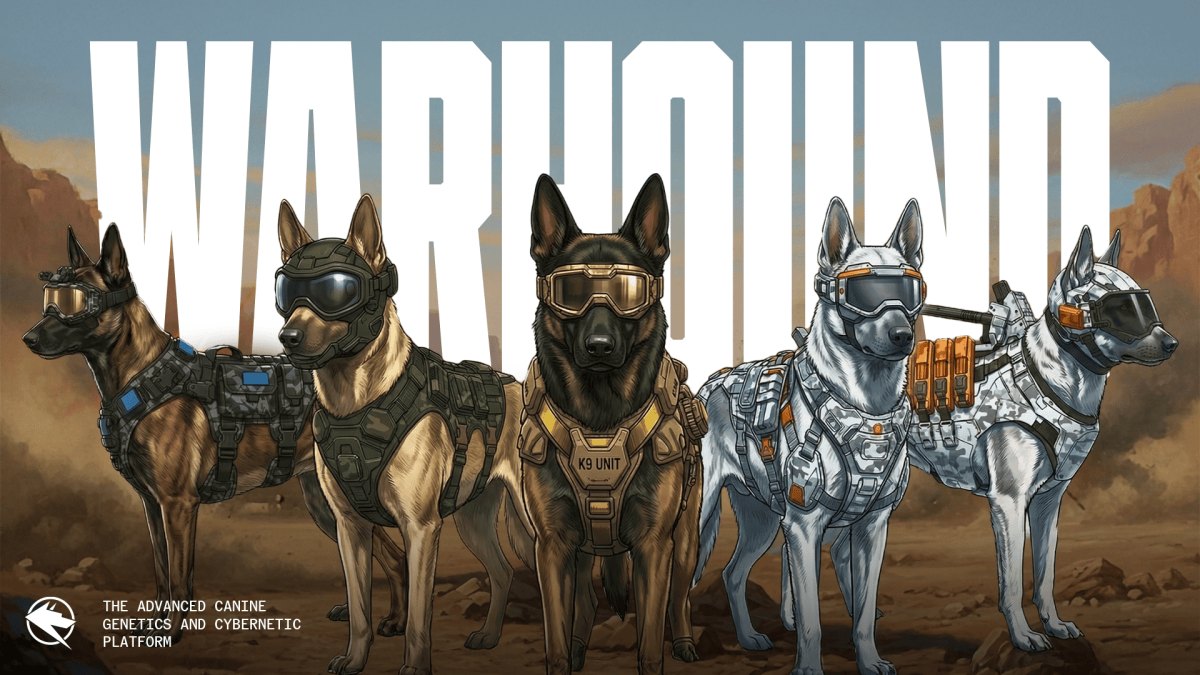
Capital will also support hardware and software engineering managed by defense manufacturer Anduril to assist dogs and handlers in the field. Anduril is designing protective vests and goggles equipped with data sensors that transmit real-time situational telemetry back to human operators. Lamm noted that these systems function on top of the animal rather than inside its biology, improving situational awareness and operational coordination. The hardware enhancements are intended to keep the working dogs safer and protect handlers during high-risk tactical missions.
Competitive context for Warhound $200 million to engineer war dogs
Warhound enters a specialized market historically served by European breeding kennels and standard defense procurement pipelines. While defense robotics developers have introduced mechanical quadrupeds for site patrols, robotic systems cannot yet match canine agility across rough terrain or replicate biological olfactory sensing for chemical and explosive detection. Traditional breeding, however, suffers from multi-year training delays and high failure rates. Warhound introduces an industrial biotechnology approach designed to supply consistent canine baselines that reduce procurement risks for defense and emergency agencies.
The enterprise integrates proprietary capabilities that conventional breeders and defense contractors cannot provide together. Colossal brings gene editing, computational biology tools, and living cell biobanking, while Viagen contributes proven mammalian cloning workflows with high documented success rates. Anduril adds defense-grade software, sensor vests, and tactical telemetry that connect animals to military networks. This collaboration between an advanced genetics laboratory, a commercial cloning specialist, and a defense technology manufacturer gives Warhound an integrated technical platform that conventional canine suppliers cannot match.
Open questions on Warhound $200 million to engineer war dogs
Several commercial, regulatory, and procurement questions remain as Warhound develops its engineering pipeline. The startup has not revealed pricing for its engineered dogs, creating budget uncertainty for police forces, emergency responders, and military purchasers. Although Lamm confirmed that company leadership has briefed numerous government departments about the business, formal federal contracts and deployment approvals remain unfinalized. Market adoption will depend on how military and law enforcement acquisition programs evaluate genetically modified animals compared to conventionally procured working dogs.
Civilian safety protocols, operational oversight, and post-service animal welfare also face examination. Lamm stated that civilian safety will depend on traditional training standards managed by whichever agency purchases each dog. To ensure humane practices, Warhound partnered with the American Humane Society to certify its training program. The organization applauded Warhound for including scientific and ethical oversight and plans to transition retired dogs into its Military Working Dog Reunification Program, ensuring that animals receive structured housing and care after their active service ends.
Developer Action Items
- ☐ Map where Warhound raises million engineer sits in your stack (SDK, API key, billing, data-processing addendum).
- ☐ Hold the $200 million figure to the primary report; do not brief a number that is not on the record.
- ☐ Hold non-urgent migrations until the integration or use-of-proceeds roadmap is public — day-one coverage is not a ship signal.
- ☐ If you are mid-contract or mid-POC, ask the vendor what changes for existing customers this quarter.
- ☐ Write the single decision this forces: stay, dual-source, or exit.
Warhound $200 million to engineer war dogs FAQ
What is Warhound and who founded the company?
Warhound is a defense biotechnology startup founded by Colossal Biosciences CEO Ben Lamm and Anduril founder Palmer Luckey. The company emerged from stealth with $200 million in funding at a $1.2 billion valuation to genetically engineer and technologically equip working dogs for military and emergency response missions.
Who invested in Warhound's $200 million funding round?
The $200 million financing was backed by venture capital firms Sequoia, 8VC, Corner Ventures, and In-Q-Tel, the strategic venture firm backed by the CIA and other U.S. intelligence agencies.
When will Warhound's genetically engineered working dogs be born and enter service?
Warhound expects its first batch of cloned dogs to be born early next year, with the animals entering operational service within two years. Colossal-owned cloning firm Viagen will partner with Warhound to clone and incubate the dogs.
What role does Anduril play in Warhound's working dog program?
Anduril supplies hardware and software, including protective vests and goggles equipped with data sensors that feed situational awareness telemetry back to human handlers.
Sources

Author
Dillip Chowdary
Writes Tech Bytes coverage of AI, engineering, and the tools that actually ship. Editor of Tech Pulse Daily.
Related on Tech Bytes
Advertisement