Apple has a secret list of banned autocomplete phrases including ‘dictator
Apple embedded a secret list of over 100,000 words in iOS that blocks political phrases and insults from keyboard autocomplete and swipe suggestions.
By Dillip Chowdary • Nov 07, 2026 • Source: The Verge
Security researcher Derik Kauffman uncovered a hidden repository inside iOS containing more than 100,000 words and phrases blocked from keyboard autocomplete and swipe-typing across every major language, according to details shared in The Verge's report. Apple maintained the catalog as an internal hash table that quietly prevents specific strings from populating predictive suggestion fields or resolving through swipe gestures. While the bulk of the restricted database covers slurs, sexual references, drug terminology, and generally offensive material, the index also suppresses partisan political slogans, healthcare claims, and common operational phrases. Apple confirmed that the keyboard system suppresses potentially inappropriate or offensive suggestions, clarifying that hardware owners retain the technical capability to manually type any term character by character or manually override the keyboard engine.
This report documents how Apple constructed its mobile text-filtering framework, detailing the exact phrase categories identified in the system index, how automated input alters user entries, and the reverse-engineering methods used to parse the operating system files. The breakdown serves software developers, mobile administrators, and enterprise device managers tracking how operating system vendors enforce speech guardrails within default input systems. By examining the mechanics of iOS text prediction and the specific exceptions cataloged in the dataset, readers can evaluate how internal platform dictionaries mediate everyday communication across global consumer devices.
Apple has a secret list of banned: what actually changed
The discovery documents the specific contents of a preinstalled phrase restriction index that Apple embeds across localized keyboard distributions for every major language. Analysis by Kauffman revealed that the blocked catalog exceeds 100,000 entries, spanning severe insults, slurs, explicit sexual terms, narcotics terminology, and contemporary political phrases. Specific entries barred from standard autocomplete recommendations include political labels and slogans like "dictator Trump," "sleepy Joe," "illegal immigrant," and "left wing conspiracy." Medical and pandemic statements such as "covid was a hoax" also populate the restricted database, alongside consumer complaints like "iMessage isn’t working" and cultural expressions like "Santa isn’t real."
The compiled inventory exposed notable structural discrepancies within paired language entries across the dictionary. For example, the software marks the phrase "bad girl" as a restricted autocomplete entry while leaving the matching phrase "bad boy" entirely unrestricted. Kauffman published the full collection of extracted terms online, cataloging separate language-specific files for public review. Following the initial disclosure by Reuters, a second independent researcher verified the findings by extracting the identical blocklist file directly from the operating system, confirming that the catalog operates as a standardized system asset.
Apple has a secret list of banned: how it works
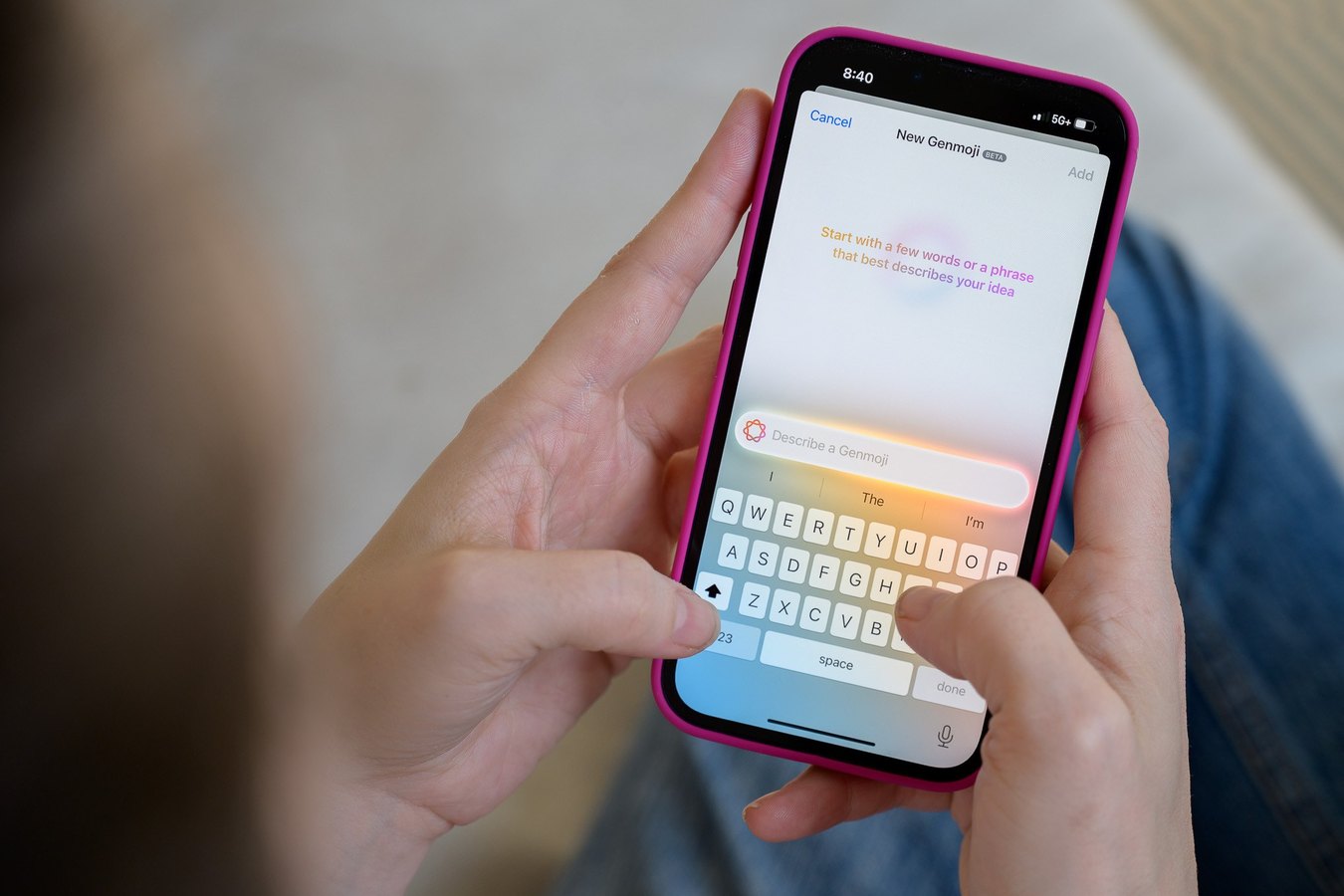
Apple stored the restricted phrase directory deep inside the iOS operating system architecture, structuring the terms inside an indexed hash table rather than plaintext strings. To uncover the index, Kauffman used AI programming tools, specifically Anthropic Claude Code and OpenAI Codex, to inspect the inner system directories and convert the hash table data back into human-readable text. The resulting text database governs predictive entry rules at runtime, preventing the specified terms from appearing in the quick-type banner or matching dynamic swipe-type trajectories.
When an iPhone owner uses one-finger swipe-typing, the iOS system dictionary actively intercepts and redirects patterns mapped to restricted phrases. Instead of completing the banned string, the keyboard substitutes an alternative word combination, such as swapping the swiped phrase "left wing conspiracy" into "left wrong conspiracy." However, Apple designed the restriction specifically around automated predictive text heuristics and gesture-typing passes. Device users can still assemble every blocked phrase on the screen by tapping individual letters sequentially, and users maintain the option to override the software when manually inputting vocabulary.
Advertisement
Tech Pulse Daily
Get tomorrow's pulse first
Join engineers who read Tech Pulse before stand-up. Free, weekday mornings.
Apple has a secret list of banned: why it matters
The extraction highlights the editorial boundaries tech manufacturers construct inside mobile hardware to regulate conversational output across consumer devices. By embedding over 100,000 language-specific bans into default input methods, Apple acts as a quiet arbiter of phrasing for millions of users typing daily messages. The inclusion of political commentary such as "dictator Trump" or "sleepy Joe" alongside standard profanity blurs the distinction between platform safety moderation and political speech curation. Because these filters run silently without surface-level indicators, device owners routinely experience unexpected word substitutions without realizing an internal dictionary rule triggered the alteration.
The architecture also reveals how platform filtering can misfire during basic text entry, leading to awkward substitutions during time-sensitive tasks. Phrases like "iMessage isn’t working" fall into the same algorithmic exclusion bin as malicious slurs, hindering standard customer troubleshooting and communication about device performance. Apple stated to Reuters that the keyboard functions to prevent inappropriate or offensive output rather than eliminate user choice, emphasizing that individual key selections remain accessible. Nevertheless, the presence of asymmetrical rules like filtering "bad girl" while permitting "bad boy" underscores how automated rule curation creates arbitrary speech restrictions.
Apple has a secret list of banned: who is affected
The blocked dictionary directly alters the typing experience for iPhone and iPad users who rely on predictive text bars and gesture-based swipe typing in any primary language. Individuals drafting messages on political topics, social controversies, or public health discussions will observe missing suggestions whenever their sentences incorporate flagged terms. Users swiping quickly across the virtual keyboard encounter automatic corrections that replace their intended vocabulary with unintended words, altering the tone or factual meaning of outgoing messages without explicit warning.
Conversely, users who type strictly through discrete, single-character tapping encounter no direct interruption from the blocklist. Because Apple restricted only the predictive generation and swipe-interpolation models, character-by-character entry continues to register exactly what the user inputs. Enterprise device managers, political organizations, and international communications teams operating under Apple ecosystems are particularly affected, as standard platform tools silently modify specific discussion topics unless staff deliberately enter terms letter by letter or adjust predictive keyboard configurations.
Apple has a secret list of banned: what to watch
Industry observers are monitoring whether Apple will update the contents of the hash table or modify how iOS handles swipe-typing corrections in future operating system revisions. While Apple acknowledged the underlying design objective to curb offensive text recommendations, the company did not specify whether it plans to prune non-offensive phrases, technical service complaints, or political statements from the file. The public release of the entire catalog online places ongoing scrutiny on Apple's localization teams, who manage the distinct dictionaries deployed across different international territories.
Developers and digital rights researchers are also looking at third-party verification efforts across older and newer mobile builds. With a second researcher already duplicating Kauffman's extraction process through independent testing, technical scrutiny is expanding toward other vendor input engines across the broader mobile hardware industry. Observers are tracking whether regulatory inquiries or platform updates will force operating system developers to disclose internal keyboard blocklists, provide granular user toggles for phrase filtering, or stop substituting unintended words during standard gesture typing.
Developer Action Items
- ☐ Verify the claim on the official OpenAI / Anthropic / Claude page (or The Verge), not from this recap alone.
- ☐ Name the surface that moved — API, policy, model, hardware, or commercial terms — before you Slack the thread.
- ☐ Assign one owner a day to read the primary material and decide: this-sprint, this-quarter, or noise.
- ☐ Do not change production on day-one coverage. Watch the vendor changelog and one independent write-up first.
Apple has a secret list of banned FAQ
Can iPhone users still type words that appear on the blocked list?
Yes, Apple allows users to type any blocked word or phrase by tapping letters one at a time on the virtual keyboard.
How did researchers extract the secret phrase directory from iOS?
Derik Kauffman located the hash table inside iOS system files and converted it to text using Anthropic Claude Code and OpenAI Codex.
What happens when you swipe-type a blocked political phrase?
The iOS keyboard avoids the restricted phrase and can automatically alter the input, such as turning "left wing conspiracy" into "left wrong conspiracy."
Does the blocklist contain phrases other than profanity and slurs?
Yes, the 100,000-phrase catalog includes political terms like "dictator Trump" and "sleepy Joe," claims like "covid was a hoax," and everyday phrases like "Santa isn’t real."
Sources

Author
Dillip Chowdary
Writes Tech Bytes coverage of AI, engineering, and the tools that actually ship. Editor of Tech Pulse Daily.
Related on Tech Bytes
Advertisement