Camera-equipped AirPods reportedly won’t launch in 2026, despite demo
Apple has delayed its camera-equipped AirPods until 2027 to resolve technical challenges despite a macOS 26.7 leak showing Visual Intelligence features.
By Dillip Chowdary • Oct 10, 2026 • Source: 9to5Mac
Apple’s internal wearable roadmap hit an unexpected public snag after code leaks pointed to an imminent launch of camera-infused audio hardware. According to 9to5Mac's report, Apple accidentally included a demonstration video showcasing Visual Intelligence running on AirPods within the macOS 26.7 Release Candidate build. The slip fueled speculation that the tech giant was preparing to unveil its camera-equipped earbuds at next month's iPhone hardware event, but internal timeline revisions indicate the hardware remains firmly scheduled for a 2027 debut.
This deep dive breaks down the technical details behind the B790 and B798 hardware revisions, explaining how Apple intends to combine low-resolution environmental sensors with Siri to power contextual artificial intelligence. Designed for privacy-conscious consumers, wearable tech enthusiasts, and mobile developers, the analysis tracks Apple's dual-track development process, how macOS 26.7 RC and iOS 27 code references exposed the project, and why lingering product challenges pushed commercial availability back despite functional software builds circulating internally.
Camera-equipped AirPods reportedly won’t: what actually changed
Apple altered its near-term launch schedule after evaluating technical hurdles, pushing the release of camera-enabled AirPods out to 2027. The company had originally pursued two parallel hardware designs under different internal code names. The B790 iteration was designed as a modified variant of the existing AirPods Pro 3, adding environmental sensors and AI processing directly to last year's earbud architecture. This specific modified model appeared in the leaked macOS 26.7 Release Candidate video, leading industry observers to believe an announcement was imminent alongside the upcoming iPhone event.
Despite references to the B790 device appearing inside iOS 27 code and holding a slot on Apple’s internal 2026 roadmap until recently, Bloomberg reporter Mark Gurman confirmed that commercial sales remain targeted for 2027. The secondary track, code-named B798, represents a completely new generation of AirPods Pro built from the ground up to integrate camera arrays. Although software integration has progressed far enough to produce working demonstration assets inside macOS builds, Apple elected to keep the product in development to resolve ongoing hardware and system integration challenges.
Camera-equipped AirPods reportedly won’t: how it works
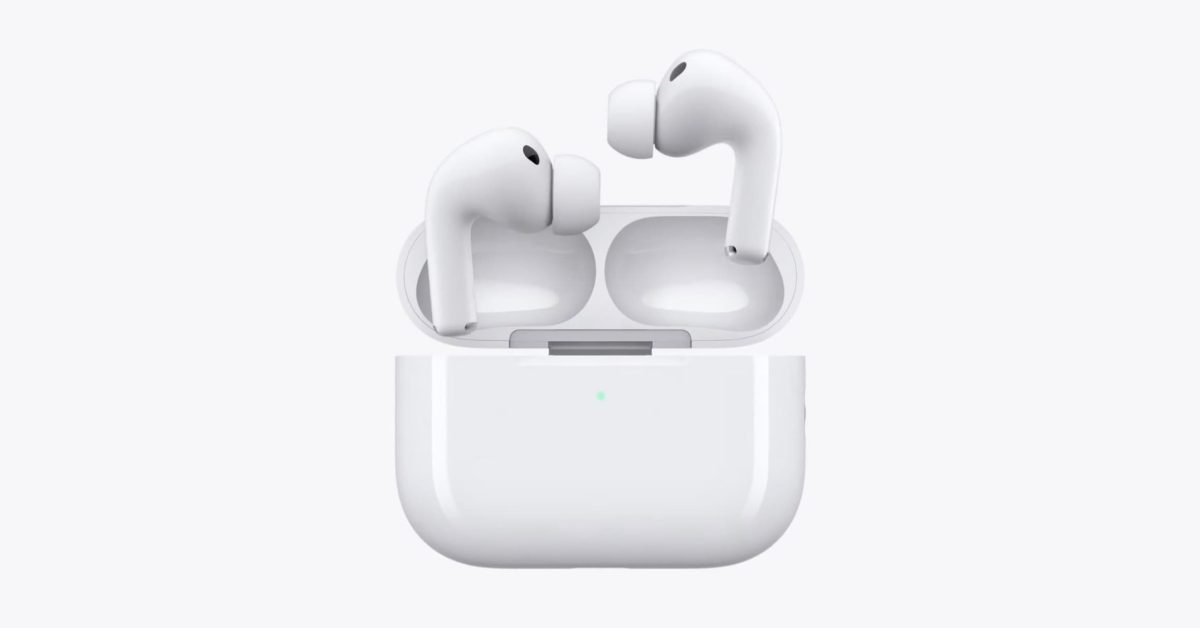
The underlying architecture relies on low-resolution optical sensors rather than standard high-definition photo sensors. Built specifically to gather spatial awareness data without recording traditional media, these camera modules scan a user's surrounding environment in real time. The resulting visual data feeds directly into Apple's Visual Intelligence engine, translating spatial cues into actionable context for digital assistant processing without storing personal image files or video streams locally.
By pairing environmental perception with Siri, the system allows the assistant to answer questions about objects, text, or locations within the user's line of sight. Rather than functioning like standard consumer cameras meant for capture, the hardware acts strictly as an input method for artificial intelligence models. This setup relies on low-power sensor arrays integrated into the earbud casing, passing lightweight telemetry to paired host devices running iOS 27 and macOS builds to execute context-aware computing tasks.
Advertisement
Tech Pulse Daily
Get tomorrow's pulse first
Join engineers who read Tech Pulse before stand-up. Free, weekday mornings.
Camera-equipped AirPods reportedly won’t: why it matters now
The accidental distribution of the demonstration video in macOS 26.7 RC provided the first concrete verification of Apple's visual AI wearable interface. Occurring just days ahead of Apple's annual autumn hardware event, the file exposure confirmed that functional prototypes are running internal software builds. The leak proved that spatial multimodal interaction is a core pillar of Apple's long-term wearable strategy, bridging the gap between audio-only Siri interactions and full visual context processing.
At the same time, the public appearance of the video highlighted growing industry scrutiny around wearable optical sensors. The reveal triggered immediate pushback from privacy advocates and potential users concerned about persistent visual capture in personal audio accessories. By clarifying that the hardware relies on non-recording, low-resolution sensors for contextual Siri feeds, Apple is attempting to address privacy objections before the B790 or B798 hardware iterations reach store shelves in 2027.
Camera-equipped AirPods reportedly won’t: who is affected
Mobile developers and hardware competitors monitoring Apple's spatial computing ecosystem are directly impacted by the revised timeline. Software engineers anticipating immediate access to Visual Intelligence APIs for audio accessories during the iOS 27 release cycle will now need to wait until the 2027 hardware release window. Current AirPods Pro 3 owners are also affected, as the leaked B790 variant confirms that existing form factors are being used to test sensor integration without invalidating current flagship audio purchases.
Consumers evaluating privacy implications in public spaces gain additional time as Apple refines its wearable sensor policies. Critics who labeled the camera-integrated concepts with derogatory terms have focused on potential surveillance risks inherent in head-mounted cameras. The extended delay allows Apple to refine both the physical sensor masking and public messaging regarding low-resolution data handling before exposing mainstream buyers to environmental computer vision tools.
Camera-equipped AirPods reportedly won’t: what to watch
Key indicators over the coming months include further code references within upcoming iOS 27 updates and macOS maintenance builds. Developers will be watching to see if Apple completely strips B790 telemetry from public release candidates or continues leaving developer frameworks intact. Progress on the B798 next-generation AirPods Pro design will also serve as a benchmark for whether Apple resolves its underlying product challenges ahead of the revised 2027 launch window.
Additionally, attention shifts to Apple's early autumn hardware event to see how executive messaging addresses Visual Intelligence without the companion AirPods hardware. Observers will monitor whether Apple introduces software-level Visual Intelligence features across iPhone lineups while keeping the B790 and B798 audio prototypes constrained to internal test tracks. Tracked metrics include sensor efficiency improvements, thermal management in small form factors, and official privacy documentation surrounding computer vision peripherals.
Developer Action Items
- ☐ Verify the claim on the official Apple / macOS / iOS page (or 9to5Mac), not from this recap alone.
- ☐ Name the surface that moved — API, policy, model, hardware, or commercial terms — before you Slack the thread.
- ☐ Assign one owner a day to read the primary material and decide: this-sprint, this-quarter, or noise.
- ☐ Do not change production on day-one coverage. Watch the vendor changelog and one independent write-up first.
Camera-equipped AirPods reportedly won’t FAQ
When will Apple launch camera-equipped AirPods?
Apple's camera-equipped AirPods remain on track for a release in 2027 despite code leaks suggesting an earlier launch.
What are the internal code names for the camera AirPods?
Apple has developed prototypes under two internal code names: B790, a modified version of AirPods Pro 3, and B798, a new generation of AirPods Pro.
Do the cameras on AirPods take regular photos and videos?
No, the AirPods use low-resolution sensors designed to scan the surrounding environment and provide visual context to Siri rather than taking photos or videos.
Sources

Author
Dillip Chowdary
Writes Tech Bytes coverage of AI, engineering, and the tools that actually ship. Editor of Tech Pulse Daily.
Related on Tech Bytes
Unlocking hidden revenue streams with market models
Read →
Astropad Workbench 1.3 adds faster streaming, privacy curtain, and more
Read →
The Open-Sourcing of DeepSeek Harness Opens the Door to Modular, Unbundled AI Agent…
Read →
Hacking SAML with Claude Code
Read →
Today's Tech Pulse briefing
Full briefing →
Advertisement