How To Challenge A Monopoly In The AI Age
Tensordyne is targeting Nvidia by designing specialized AI inference silicon as cloud giants commit over $700 billion to datacenter infrastructure this year.
By Dillip Chowdary • Nov 07, 2026 • Source: Crunchbase News

AI inference hardware startup Tensordyne is positioning its architecture against Nvidia's dominance in accelerator silicon, drawing direct parallels to how networking challengers broke monopolies during the dot-com era. As detailed in Crunchbase News's report, Tensordyne co-founder R K Anand outlined an engineering playbook for challenging semiconductor leaders. Anand, previously a founding engineer at Juniper Networks, pointed to the shift from model training to inference as the key opening for specialized chipmakers. The four largest United States cloud providers are deploying over $700 billion this year, feeding an infrastructure buildout projected to reach $3 trillion to $4 trillion by 2030.
This analysis details the technical and operational strategies required for emerging semiconductor teams to capture enterprise workloads from incumbents, examining silicon architecture, software migration friction, and organizational agility. It is designed for system architects, datacenter operators, and technology executives evaluating compute infrastructure for production generative workloads. With frontier model generations turning over across weeks rather than years, hardware incumbents face structural inertia, providing smaller and more agile engineering organizations a defined opening to optimize from first principles specifically for high-throughput token delivery.
To Challenge A Monopoly In The AI Age: what actually changed
The artificial intelligence hardware sector is undergoing a structural transition as capital spending pivots from foundational model training toward active operational inference. When Nvidia chief executive Jensen Huang hand-delivered the DGX-1 supercomputer to OpenAI in 2016, the system established an early lead that evolved into near-exclusive supply arrangements and investment pacts across the industry. That early era focused heavily on massive training clusters designed to ingest raw data. Today, enterprise adoption requires deploying those completed models into live production environments where they execute continuous user tasks and generate output tokens at scale.
The volume of live generation is straining datacenter infrastructure in ways that mirror the internet traffic explosion of 1998 and 1999, when traffic doubled every six to nine months. Google recently disclosed that its systems process over 3.2 quadrillion tokens monthly, surging from 480 trillion a year earlier. This rapid increase reflects a shift from chat interfaces to autonomous software agents that plan and act independently. Serving continuous tokens introduces acute constraints across memory, electrical power, and operating expenses that training architectures were not designed to optimize.
To Challenge A Monopoly In The AI Age: how it works
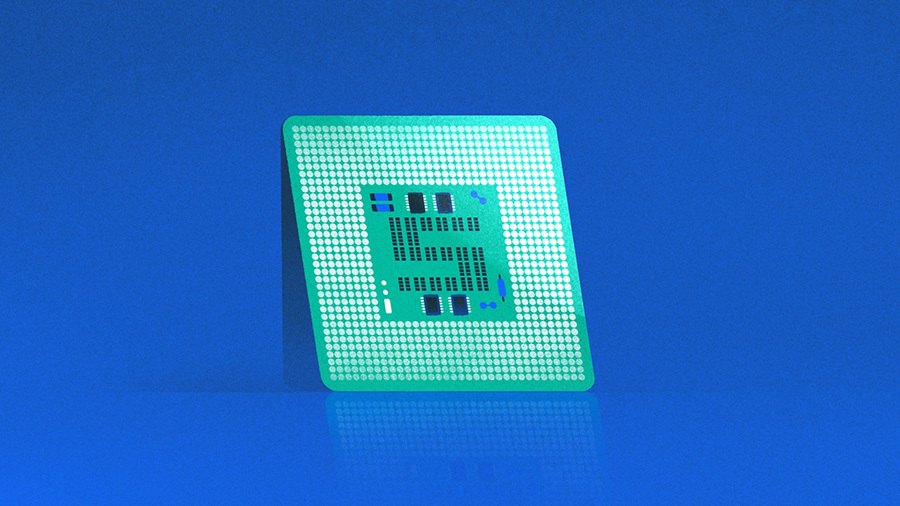
Challenging an established semiconductor leader requires designing entirely novel silicon architectures from first principles rather than building cheaper derivatives of incumbent products. During the late 1990s, Cisco dominated internet routing, becoming the world's highest market capitalization company in March 2000. When Juniper Networks shipped its first core router in 1998, it focused on an architectural approach designed for higher throughput and reliability. That design choice propelled Juniper from an anonymous upstart to 17 percent of the core router market by late 1999, expanding to 38 percent in early 2001.
Silicon startups must replicate this approach by targeting the operational requirements of future workloads rather than competing for training pipelines that incumbents already dominate. Because model architectures evolve across brief multi-week windows, accelerator hardware must deliver distinct throughput gains on enterprise inference tasks. However, superior performance alone cannot overcome buyer inertia unless the migration path removes software integration friction. Enterprise buyers treat established suppliers as the safe default. To dismantle that moat, challenger architectures must provide seamless migration, eliminating technical friction so datacenters can capture lower costs without disrupting active deployments.
Advertisement
Tech Pulse Daily
Get tomorrow's pulse first
Join engineers who read Tech Pulse before stand-up. Free, weekday mornings.
To Challenge A Monopoly In The AI Age: why it matters
The commercial urgency behind alternative silicon designs stems from massive capital expenditure commitments flowing into datacenter infrastructure. With cumulative spending on artificial intelligence infrastructure projected to reach between $3 trillion and $4 trillion by 2030, compute expenses represent the primary ceiling on enterprise software margins. When a single hardware vendor maintains near-monopolistic control over accelerator silicon, cloud providers face restricted allocations, fixed pricing, and margin compression. Developing competitive secondary silicon sources is the primary mechanism capable of lowering the unit economics of token generation across global networks.
Monopolistic positions in frontier technology appear insurmountable until the fundamental nature of the underlying technical workload changes. Cisco appeared dominant until the early internet demanded routing throughput that exceeded legacy architectures, creating the opening that Juniper filled. In the current cycle, inference represents the phase where artificial intelligence productivity gains must actually materialize across commercial applications. If incumbent hardware designs remain anchored to training, datacenter operators will hit thermodynamic and budgetary limits, making architectural diversification an operational necessity rather than a secondary procurement choice.
To Challenge A Monopoly In The AI Age: who is affected
Hyperscale cloud operators and enterprise infrastructure leaders bear the direct financial impact of current hardware allocations. The four largest United States cloud providers are projecting over $700 billion in capital spending this year, much of it tied to incumbent chip platforms and exclusive supply agreements. These operators face pressure to deliver profitable enterprise applications while managing severe power and thermal footprints. As enterprise demand pivots toward production agentic systems processing quadrillions of tokens, infrastructure teams must find hardware configurations that drastically lower per-token operational costs.
The shifting landscape also reshapes the competitive dynamics for venture-backed semiconductor startups attempting to breach established supply chains. Incumbent suppliers operate with massive balance sheets and customer relationships that make vendor switching risky for corporate buyers. For startup teams, competing successfully does not require matching the workforce size of massive corporations. Juniper challenged Cisco's thousands of employees with only a few hundred people. Today, Tensordyne operates with around 120 employees, demonstrating that agile teams can iterate faster than massive incumbents burdened by organizational overhead and legacy architectural commitments.
To Challenge A Monopoly In The AI Age: what to watch
Industry analysts and infrastructure buyers must monitor how effectively alternative silicon vendors validate real-world performance benchmarks across live inference clusters. Because incumbents possess entrenched reputations that provide buyers with safety, startups cannot rely on theoretical speedup claims. Every technological advantage must be demonstrated through verifiable production metrics that prove lower latency and power efficiency under heavy concurrency. As startups establish concrete operational track records, verified case studies will begin to replace the institutional trust that incumbents have spent decades accumulating across enterprise purchasing departments.
The critical metric to track across the next development cycle is whether software migration tools can eliminate the friction of transitioning away from incumbent accelerator platforms. If hardware challengers force developers to rewrite application code, adoption will stall regardless of raw silicon performance. Observers should also track whether rapid model turnover continues to outpace incumbent roadmaps, creating openings for specialized architectures. As monthly token volumes expand past quadrillions across enterprise ecosystems, chipmakers that successfully solve memory, power, and cost constraints will determine how sustainable the global infrastructure buildout remains.
Developer Action Items
- ☐ Diff the official changelog for OpenAI / Google / Nvidia 3.2 before you bump — APIs, defaults, and removed flags only.
- ☐ Install through the vendor's documented channel in staging; keep a one-command rollback and time-box the canary.
- ☐ Grep your repo for old flag names, lockfile pins, and plugin versions that the notes mark as breaking.
- ☐ Prefer the first patch cut over the day-zero tag unless you have a reason to be on the leading edge.
- ☐ If Crunchbase News did not name a region, plan, or SKU, screenshot the official availability line before you promise it to users.
To Challenge A Monopoly In The AI Age FAQ
How does Tensordyne plan to compete against Nvidia in AI hardware?
Tensordyne aims to compete by designing specialized architectures tailored specifically for AI inference rather than training. The company focuses on solving memory, power, and cost constraints while making software migration frictionless for enterprise datacenters.
What historical precedent did Juniper Networks set against Cisco in routing?
Juniper Networks challenged Cisco's networking dominance in 1998 by introducing a novel core router architecture built for higher internet throughput. Operating with a few hundred employees, Juniper expanded its core router market share from an anonymous start to 17 percent in 1999 and 38 percent in 2001.
How much are cloud providers spending on AI infrastructure?
The four largest United States cloud companies are projected to spend more than $700 billion in capital expenditures this year. Cumulative global artificial intelligence infrastructure investments are expected to reach between $3 trillion and $4 trillion by 2030.
Why is AI inference surpassing model training in compute demand?
Compute demand is shifting because enterprises are moving from training models to deploying them in production, with Google alone processing over 3.2 quadrillion tokens monthly. Serving continuous tokens for autonomous agents introduces distinct memory, power, and operational cost pressures that training architectures do not efficiently address.
Sources

Author
Dillip Chowdary
Writes Tech Bytes coverage of AI, engineering, and the tools that actually ship. Editor of Tech Pulse Daily.
Related on Tech Bytes
Advertisement