Meta announces camera-free glasses, dedicated Muse AI gadget, more
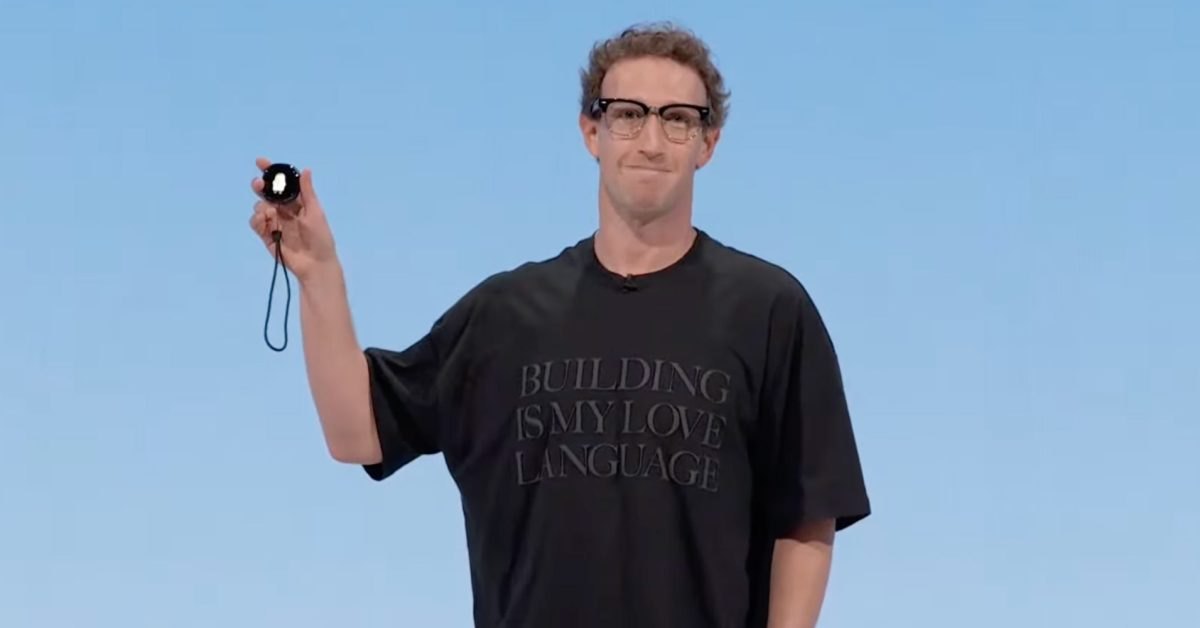
Meta announced today a series of AI-powered devices, including the Muse Charm, a palm-sized gadget designed specifically for its new Muse AI assistant.
By Dillip Chowdary • Sep 24, 2026 • Source: 9to5Mac
Meta revealed a lineup of AI-powered hardware on September 24, 2026, anchored by camera-free glasses and the Muse Charm, a palm-sized device built exclusively around its new Muse AI assistant. The announcements signal a deliberate push by the company to extend its wearable and AI ambitions beyond the camera-equipped Ray-Ban Meta glasses that have defined its consumer hardware story for the past two years.
This piece breaks down what Meta actually announced, how each product differs from its predecessors, who the intended audience is, and what developers and early adopters should verify before committing. It is aimed at anyone tracking the consumer AI hardware space or considering Meta's wearable ecosystem.
Meta camera-free glasses: the announcement
Meta introduced a new pair of smart glasses that strip out the embedded cameras present in its existing Ray-Ban Meta line while keeping onboard audio, microphones, and AI connectivity intact. Alongside the glasses, Meta announced the Muse Charm — a compact, hand-sized gadget purpose-built for the company's Muse AI assistant, which appears to be a dedicated companion system rather than a rebranded version of Meta AI. The dual announcement frames a deliberate product segmentation: one device for users who want audio and AI on their face without the privacy implications of a camera, and a separate pocket-able unit for AI-first interactions at rest.
Meta did not bundle these into a single product family with shared branding. The Muse Charm is positioned as a standalone gadget, suggesting the company sees the AI-assistant hardware category as distinct from the wearable audio category, even as both feed into the same AI services infrastructure.
What actually changed with Meta camera-free glasses
Removing the camera is not a minor spec reduction — it changes the regulatory and social calculus around wearing the device in sensitive environments such as locker rooms, offices with photography policies, and certain international jurisdictions where camera wearables face legal scrutiny. Users who declined the Ray-Ban Meta glasses specifically because of recording capability now have a sanctioned, first-party alternative that still delivers voice-based AI queries, real-time audio, and presumably the same assistant integrations.
The Muse Charm represents a different kind of change. Rather than adapting an existing phone or wearable to run Muse AI, Meta built a dedicated form factor from scratch, following a hardware-first philosophy that positions Muse as a distinct assistant with its own interaction model. What sensors, connectivity options, or battery specifications the Charm carries has not been fully disclosed, so the practical difference between using Muse on a phone versus on the Charm remains to be demonstrated in hands-on settings.
Advertisement
Tech Pulse Daily
Get tomorrow's pulse first
Join engineers who read Tech Pulse before stand-up. Free, weekday mornings.
Who should care about Meta camera-free glasses
Privacy-conscious consumers who have been interested in AI audio glasses but unwilling to wear a camera are the most direct audience. That group includes professionals in healthcare and legal environments, frequent travelers entering venues with no-photography rules, and users in markets where wearable cameras attract regulatory attention. For them, the camera-free variant removes the single biggest barrier to adoption without sacrificing the core audio and AI feature set.
Developers building voice-first experiences on Meta's AI platform should also pay attention. A camera-free SKU that reaches users who previously self-excluded from the ecosystem expands the addressable base for any application that runs on these glasses. If Meta opens Muse AI to third-party integrations — which has not been confirmed — the Charm's dedicated hardware could become a meaningful new deployment target for conversational AI products.
How to try Meta camera-free glasses
Meta has not announced a public release date, retail price, or availability window for either the camera-free glasses or the Muse Charm as of this writing. The announcements appear to be early-stage reveals rather than immediate ship notices, which means prospective buyers should monitor Meta's hardware site and authorized retail partners such as Ray-Ban's parent EssilorLuxottica for pre-order or waitlist information.
For developers interested in Muse AI access, the path to the platform is similarly undefined at this stage. Meta has not published an SDK, API documentation, or a developer preview program for Muse specifically. Anyone looking to build for this hardware should watch Meta's developer portal for announcements tied to this product family, as access programs typically follow within weeks of a hardware reveal if Meta follows its prior launch cadence with Ray-Ban Meta.
What to watch after Meta camera-free glasses
The two metrics worth tracking are camera-free adoption relative to the camera-equipped line, and whether Muse AI earns distribution beyond Meta's own hardware. If the camera-free glasses outsell or meaningfully expand the user base, it will pressure competitors in the audio glasses space — notably those from Amazon and Google — to offer similar optionality. It will also tell Meta something important about whether the camera is a feature or a friction point for mainstream wearable AI.
The Muse Charm is the longer-term signal to watch. Dedicated AI gadgets have had a difficult run commercially, and whether Meta's version finds sustainable demand will depend heavily on what Muse AI can do that a phone cannot. Specific capability disclosures, third-party integration announcements, and real-world battery and latency figures will be the deciding data points once the devices move from announcement to availability.
Developer Action Items
- ☐ Verify the claim on the official Meta page (or 9to5Mac), not from this recap alone.
- ☐ Name the surface that moved — API, policy, model, hardware, or commercial terms — before you Slack the thread.
- ☐ Assign one owner a day to read the primary material and decide: this-sprint, this-quarter, or noise.
- ☐ Do not change production on day-one coverage. Watch the vendor changelog and one independent write-up first.

Author
Dillip Chowdary
Writes Tech Bytes coverage of AI, engineering, and the tools that actually ship. Editor of Tech Pulse Daily.
Related on Tech Bytes
Gemini 3.8 text-to-speech models now available on AI Gateway
Read →
Claude Opus 5.5 now available on AI Gateway
Read →
GPT-6 Astra, Sol, and Luna: For production agents in Microsoft Foundry
Read →
OpenAI says Apple Intelligence users showed little interest in ChatGPT integration
Read →
Today's Tech Pulse briefing
Full briefing →
Advertisement