OpenAI says Apple Intelligence users showed little interest in ChatGPT
As reported by The Financial Times , new court filings show that OpenAI was disappointed by the adoption of ChatGPT through Apple Intelligence, which it says.
By Dillip Chowdary • Sep 24, 2026 • Source: 9to5Mac
Court filings surfaced in late 2024 revealed that OpenAI was privately disappointed with how few Apple users chose to interact with ChatGPT through the Apple Intelligence integration, describing the rollout as having "dramatically underperformed" relative to internal expectations. The disclosure came via documents cited by The Financial Times, adding a notable tension to what had been publicly framed as a milestone partnership between two of the most prominent companies in consumer technology.
This piece breaks down what the court filings actually say, why the adoption gap matters for the developer and product communities watching both platforms, and what the numbers suggest about how users behave when AI features arrive pre-bundled into an operating system rather than sought out directly.
OpenAI Apple Intelligence users showed little: the announcement
The core claim emerging from the court filings is that ChatGPT's presence inside Apple Intelligence failed to generate the user engagement OpenAI anticipated when the integration launched in 2024. OpenAI characterized the performance as dramatic underperformance, a phrase that signals the gap between projected and actual adoption was not marginal. The Financial Times first reported on the filings, which appear to have surfaced through ongoing litigation rather than a voluntary disclosure from either company.
Apple Intelligence launched as a suite of on-device and cloud-powered AI features built into iOS, iPadOS, and macOS, with ChatGPT positioned as an opt-in extension for queries the system could not handle natively. The framing at launch emphasized user choice and privacy — Siri would ask before routing a query to OpenAI — but that opt-in friction appears to have directly influenced how rarely users actually crossed into ChatGPT territory.
What actually changed with OpenAI Apple Intelligence users showed little
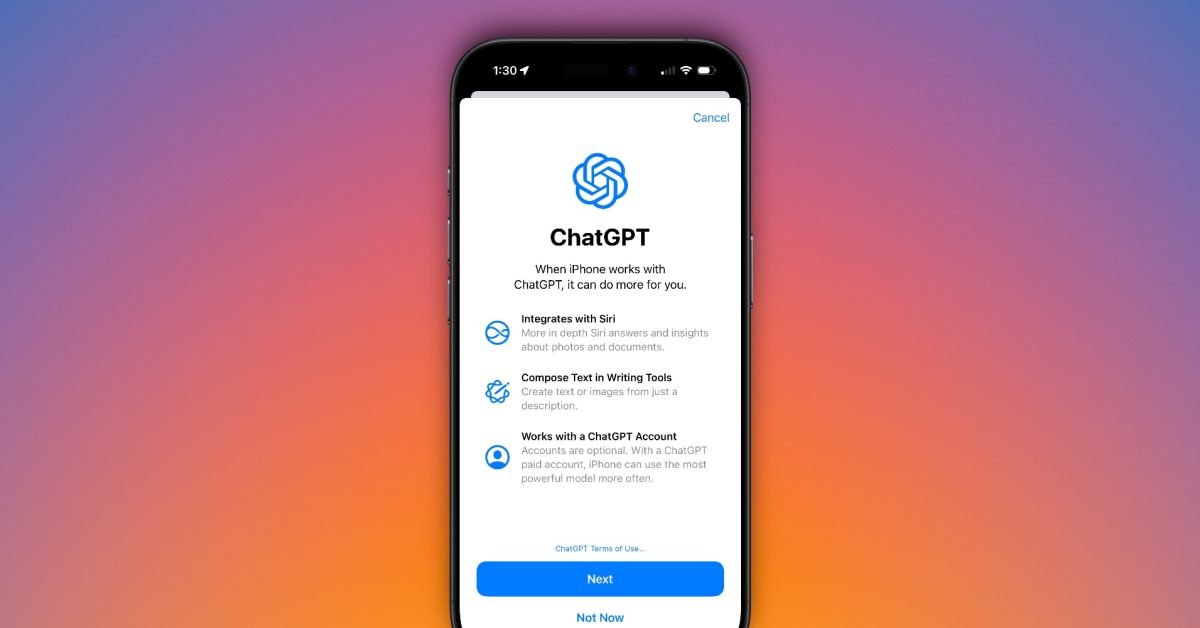
The integration did not change ChatGPT's underlying capabilities; it changed the distribution channel. Instead of users opening the ChatGPT app or visiting the website, Siri was supposed to serve as a soft referral layer, prompting users to allow a query to pass through to OpenAI's model when the request exceeded what Apple's own models could answer locally. That handoff model, it turns out, generated far less traffic than OpenAI expected.
What the filings expose is a structural question about whether bundled AI distribution converts passive device owners into active AI users. Apple's opt-in requirement — designed to protect user privacy and maintain trust — created a confirmation step that most users apparently declined or ignored. The result was that a partnership premised on reaching hundreds of millions of iPhone users produced engagement numbers OpenAI found disappointing enough to document in legal proceedings.
Advertisement
Tech Pulse Daily
Get tomorrow's pulse first
Join engineers who read Tech Pulse before stand-up. Free, weekday mornings.
Who should care about OpenAI Apple Intelligence users showed little
Developers building on top of either Apple's or OpenAI's platforms have a direct interest in understanding how this integration performed, because it signals real constraints on reach when AI is surfaced passively rather than actively chosen. Product teams at companies considering distribution deals with platform owners — banking on OS-level placement to drive adoption — should treat this as evidence that friction at the handoff point dramatically compresses actual usage rates.
For end users, the implication is more subtle: the features they have access to through Apple Intelligence may not reflect how many of their peers are actually using those features. The existence of a ChatGPT integration in iOS does not mean the majority of iPhone owners have ever invoked it. Marketers and analysts citing Apple Intelligence's broad install base as a proxy for ChatGPT reach should revisit that assumption in light of these filings.
How to try OpenAI Apple Intelligence users showed little
The ChatGPT integration inside Apple Intelligence remains available on supported devices running compatible versions of iOS, iPadOS, and macOS. Users who have not yet encountered it can find the option through Siri — when Siri surfaces a prompt indicating a query may benefit from ChatGPT, users can choose to allow that handoff. The feature requires opting in, meaning no data passes to OpenAI without an explicit user confirmation at the time of the request.
Builders who want to evaluate the user experience firsthand should pay attention to how rarely Siri proactively surfaces the ChatGPT option during ordinary use, which may itself explain the adoption data. Testing the integration requires using Siri for open-ended generative queries — not navigation, timers, or other tasks Apple handles locally — and then observing whether the ChatGPT referral prompt appears and how the consent flow is presented to a first-time user.
What to watch after OpenAI Apple Intelligence users showed little
The more consequential question now is whether Apple or OpenAI will renegotiate the terms or mechanics of this integration, particularly around the opt-in friction that appears to have suppressed engagement. If Apple were to change the default behavior — making ChatGPT handoffs more automatic or more prominent — that would represent a significant shift in how the partnership functions and how OpenAI reaches Apple's user base.
On the legal side, the fact that adoption metrics appeared in court filings rather than a joint press release means the relationship between the two companies may be under more strain than public statements have indicated. Observers should watch for any amendments to the partnership structure, changes to how Siri presents the ChatGPT option in future OS releases, or statements from either company that address the underperformance claim directly.
Developer Action Items
- ☐ Verify the claim on the official OpenAI / ChatGPT / Apple page (or 9to5Mac), not from this recap alone.
- ☐ Name the surface that moved — API, policy, model, hardware, or commercial terms — before you Slack the thread.
- ☐ Assign one owner a day to read the primary material and decide: this-sprint, this-quarter, or noise.
- ☐ Do not change production on day-one coverage. Watch the vendor changelog and one independent write-up first.

Author
Dillip Chowdary
Writes Tech Bytes coverage of AI, engineering, and the tools that actually ship. Editor of Tech Pulse Daily.
Related on Tech Bytes
Gemini 3.8 text-to-speech models now available on AI Gateway
Read →
Claude Opus 5.5 now available on AI Gateway
Read →
GPT-6 Astra, Sol, and Luna: For production agents in Microsoft Foundry
Read →
Meta announces camera-free glasses, dedicated Muse AI gadget, more
Read →
Today's Tech Pulse briefing
Full briefing →
Advertisement