Presentation: The Socio-Technical Staff+ Engineer: Architecture, Culture
Vanessa Formicola outlined a socio-technical staff-plus engineering model at QCon London to eliminate wishful architecture and align software systems.
By Dillip Chowdary • Nov 07, 2026 • Source: InfoQ
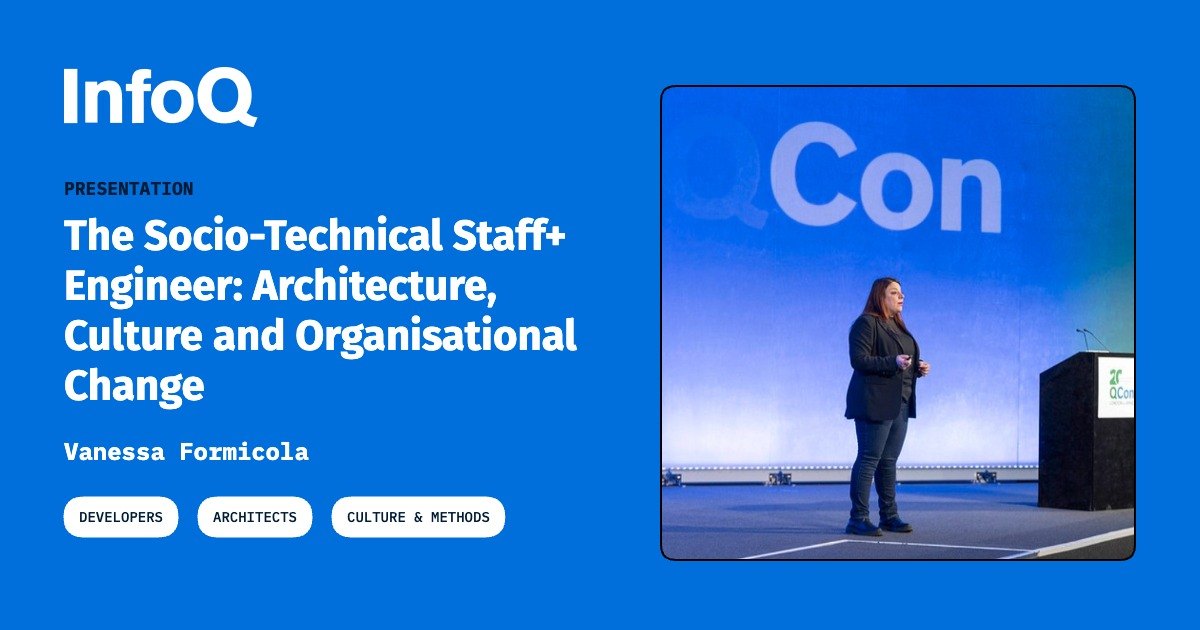
Engineering leader and sociotechnical architect Vanessa Formicola delivered a 51-minute technical presentation at QCon London examining how modern staff-plus engineers must shift from isolated tool selection to systemic organizational design, as detailed in InfoQ's report. Drawing on more than fifteen years of industry experience across Microsoft, Thoughtworks, and Flo Health, Formicola argued that traditional architectural practices frequently falter because senior technologists prioritize idealized architectures over the environmental realities of their organizations. Rather than acting as gardeners who merely pick attractive tools, senior technical leaders must operate as landscape architects who design the protective conditions required for systems and teams to flourish together.
This analysis breaks down Formicola's operational framework for engineering leaders, principal engineers, software architects, and hybrid engineering managers navigating organizational complexity. The breakdown examines how to diagnose recurring structural dysfunctions, replace speculative technology bets with concrete environmental assessments, and align technical architecture with organizational maturity, reward structures, team dynamics, and business delivery goals. By auditing the actual environment in which software runs, technical staff can ensure that capital investments in new software techniques yield durable production value rather than unmaintained shelfware.
Socio-Technical Staff+ Engineer: what actually changed
Senior technical leadership has shifted away from the practice of wishful design, where architects construct theoretical system blueprints based on industry trends rather than organizational reality. In earlier engineering models, a staff-plus practitioner often functioned as a builder or a gardener whose primary remit was selecting popular technologies and mandating their use across product teams. Formicola documented how this dynamic creates recurring failure patterns across companies of varying size, from early-stage startups to corporate enterprises. The modern staff-plus role now requires evaluating systemic variables across technology, operational organization, and people management simultaneously before committing engineering capital to architectural roadmaps.
Under this changed mandate, technical architects must evaluate whether an organization possesses the structural maturity to sustain a technology before introducing it. Formicola highlighted that recurring organizational dysfunctions appear across healthcare, retail, fintech, government, and charitable sectors regardless of the chosen tech stack. The definition of architectural success has moved from simply choosing modern frameworks to engineering the broader ecosystem, including team incentives and operating rhythms. Staff-plus engineers are now evaluated on their ability to build durable organizational greenhouses that shelter engineering practices instead of merely picking isolated plants that wither under normal enterprise strain.
Socio-Technical Staff+ Engineer: how it works
The operational model functions by identifying and eliminating wishful architecture through rigorous environmental auditing. When architects introduce a complex framework without altering the surrounding environment, systems mirror tropical banana trees planted in northern European soil, surviving as bare trunks without ever bearing fruit. In practice, staff-plus engineers map technical initiatives against four distinct external variables: organizational maturity, corporate reward structures, team dynamics, and wider economic or geopolitical shifts. Instead of designing for an idealized best-case scenario, engineers evaluate how local governance and platform capabilities will react when market pressures or company cycles alter everyday operating priorities.
Architects execute this model by replacing unilateral, company-wide tool mandates with disciplined experimentation paired with environmental controls. Rather than deploying an unproven framework across every service repository, technical leaders introduce small, localized implementations while monitoring how surrounding teams adopt them. Formicola cautioned that even successful small experiments can fail if teams replicate them in unready departments lacking proper operational conditions, likening the outcome to palm trees buried under unexpected snow. To prevent this drift, staff-plus architects actively manage team incentives and operational constraints so adopted tools directly support the company's ultimate deliverable product.
Advertisement
Tech Pulse Daily
Get tomorrow's pulse first
Join engineers who read Tech Pulse before stand-up. Free, weekday mornings.
Socio-Technical Staff+ Engineer: why it matters
Addressing socio-technical conditions directly determines whether corporate capital invested in software modernization yields measurable business returns or stranded assets. When engineering organizations purchase or build complex platforms that misalign with their team maturity, executives struggle to challenge the architectural decisions while failing to realize the anticipated return on investment. Formicola noted that well-regarded technologies often become costly liabilities simply because leaders never established the operating conditions required for those tools to deliver business value. Bridging the gap between software system design and team dynamics ensures engineering investments actually generate tangible production output rather than ongoing maintenance overhead.
Furthermore, technical choices that ignore structural team dynamics frequently collapse when company operating cycles rotate or business climates shift. A tool that functions acceptably during well-funded product expansion can instantly paralyze a team when economic pressures demand faster delivery cycles or reduced headcounts. By accounting for the comprehensive environment in which software operates, socio-technical engineering prevents organizations from investing months into architectures that only perform under artificial, best-case conditions. Designing system architecture alongside organizational reward structures guarantees that software delivery pipelines remain resilient across executive transitions, organizational restructuring, and fluctuating industry cycles.
Socio-Technical Staff+ Engineer: who is affected
This framework directly reshapes the daily responsibilities of staff, principal, and distinguished engineers, alongside technical architects and hybrid engineering managers. Technologists who historically focused solely on system diagrams, schema design, and runtime performance benchmarks must now actively diagnose organizational maturity and team incentives. Leaders managing dual technical and managerial responsibilities must use these principles to ensure their team reward mechanisms do not penalize developers for adopting sound architectural practices. Practitioners across startups, mid-tier enterprises, and large corporate environments must adjust their deliverables from static architectural blueprints to adaptable operational systems.
Software delivery teams across diverse domains including financial technology, digital retail, healthcare applications, and public-sector services experience immediate workflow changes under this approach. Instead of having unfamiliar frameworks imposed from above, engineering teams receive technical processes that match their existing skills and operational rhythms. Product managers and engineering directors also gain clearer visibility into technical investments, because technology choices are evaluated against shipping the end product rather than adopting fashionable tools. The entire engineering organization benefits from fewer abrupt architectural rewrites caused by misjudging the company's true technical and cultural readiness.
Socio-Technical Staff+ Engineer: what to watch
Engineering organizations must monitor for the emergence of wishful design patterns whenever evaluating major platform migrations or developer tooling overhauls. Teams should track whether platform adoption yields concrete business results or merely increases operational complexity without producing measurable product velocity. Technical leaders must also observe how newly introduced tools spread across departments, ensuring developer teams do not copy techniques into environments that lack requisite operational support. Formicola warned that unchecked expansion of even beneficial tools into unprepared environments frequently triggers system degradation and maintenance fatigue across adjacent engineering groups.
Looking forward, technical leadership teams should evaluate whether their internal career progressions reward architects for long-term organizational health rather than single tool deployments. Companies must watch whether their architectural decisions withstand external shifts, such as changing market conditions, organizational restructurings, and evolving compliance mandates across global regions. Monitoring the alignment between technical architectures and team operating incentives will serve as the primary indicator of durable engineering execution. By tracking these socio-technical dependencies continuously, engineering organizations ensure their platform investments remain robust, adaptable, and directly tied to reliable software delivery.
Developer Action Items
- ☐ Verify the claim on the official Microsoft / Framework page (or InfoQ), not from this recap alone.
- ☐ Name the surface that moved — API, policy, model, hardware, or commercial terms — before you Slack the thread.
- ☐ Assign one owner a day to read the primary material and decide: this-sprint, this-quarter, or noise.
- ☐ Do not change production on day-one coverage. Watch the vendor changelog and one independent write-up first.
Socio-Technical Staff+ Engineer FAQ
What is wishful architecture according to Vanessa Formicola?
Wishful architecture occurs when technical leaders design systems for an idealized best-case scenario without evaluating whether the organization's maturity and operational environment can support those tools.
Why do popular technologies fail after being introduced across an organization?
Technologies fail when organizations do not establish the necessary operating conditions, reward structures, and team capabilities, leaving systems unable to produce their intended business value.
What role does a socio-technical staff-plus engineer play?
A socio-technical staff-plus engineer acts like a landscape architect by designing the organizational and technical conditions needed for software systems, delivery processes, and teams to succeed together.
Sources

Author
Dillip Chowdary
Writes Tech Bytes coverage of AI, engineering, and the tools that actually ship. Editor of Tech Pulse Daily.
Related on Tech Bytes
Advertisement