Tesla to wind down Cybertruck production
Tesla will wind down Cybertruck production in Texas around mid-2027 after US sales dropped 48 percent to 20,237 units, retooling the factory for the Cybercab.
By Dillip Chowdary • Nov 07, 2026 • Source: nbcnews.com
Tesla will wind down production of its Cybertruck electric pickup at the Austin, Texas gigafactory around mid-2027, according to public statements by Chief Executive Officer Elon Musk. The automaker plans to repurpose factory capacity to accelerate manufacturing of its newly launched Cybercab autonomous vehicle, shifting assembly lines away from an angular stainless-steel truck that struggled with sustained demand. Musk confirmed the timeline in a post on X, calling the transition the end of an era while describing the pickup as the best vehicle the company has ever made. The decision follows years of steep sales declines and regulatory barriers in international markets, as documented in nbcnews.com's report detailing the operational transition at the Texas plant.
This analysis examines the financial data, factory reallocations, and regulatory hurdles that led to the phaseout of Tesla's flagship pickup truck. It covers the commercial trajectory of the vehicle from its 2019 demonstration to its current production status, contrasting initial commercial targets against audited registration volumes. The review is intended for automotive industry analysts, fleet operators, technology investors, and prospective commercial vehicle buyers who need an exact accounting of Tesla's manufacturing roadmap. Readers will find verified delivery statistics, engineering assessments regarding pedestrian crash compliance, and specific details surrounding the deployment of Tesla's driverless passenger fleet in Texas.
Tesla to wind down Cybertruck production: what actually changed
Manufacturing operations at the Texas gigafactory are entering a formal wind-down phase scheduled to conclude around the middle of 2027. Tesla has started reconfiguring plant floor space and tooling to support high-volume manufacturing of the Cybercab, which Elon Musk has positioned at the center of the company's autonomous robotaxi strategy. While Tesla has not confirmed whether any Cybertruck manufacturing equipment will be transferred to another facility or decommissioned entirely, the Austin site remains the only facility across the company's global footprint equipped with the heavy stamping and forming machinery required to fabricate the vehicle's specialized structural panels.
Customer deliveries began in late 2023, but sales volumes steadily collapsed well below internal benchmarks and public projections. Sales data published by Kelley Blue Book shows that Tesla sold 20,237 Cybertrucks in the United States last year, marking a 48 percent drop from the 38,965 units sold across 2024. Before commercial availability began, Musk had publicly forecasted sustained demand reaching 250,000 units annually. Andy Palmer, the former chief executive officer of Aston Martin, observed that shutting down the assembly line is the only rational operational choice when an automobile fails to meet internal sales targets, noting that the volume shortfall makes continued production unjustifiable.
Tesla to wind down Cybertruck production: how it works
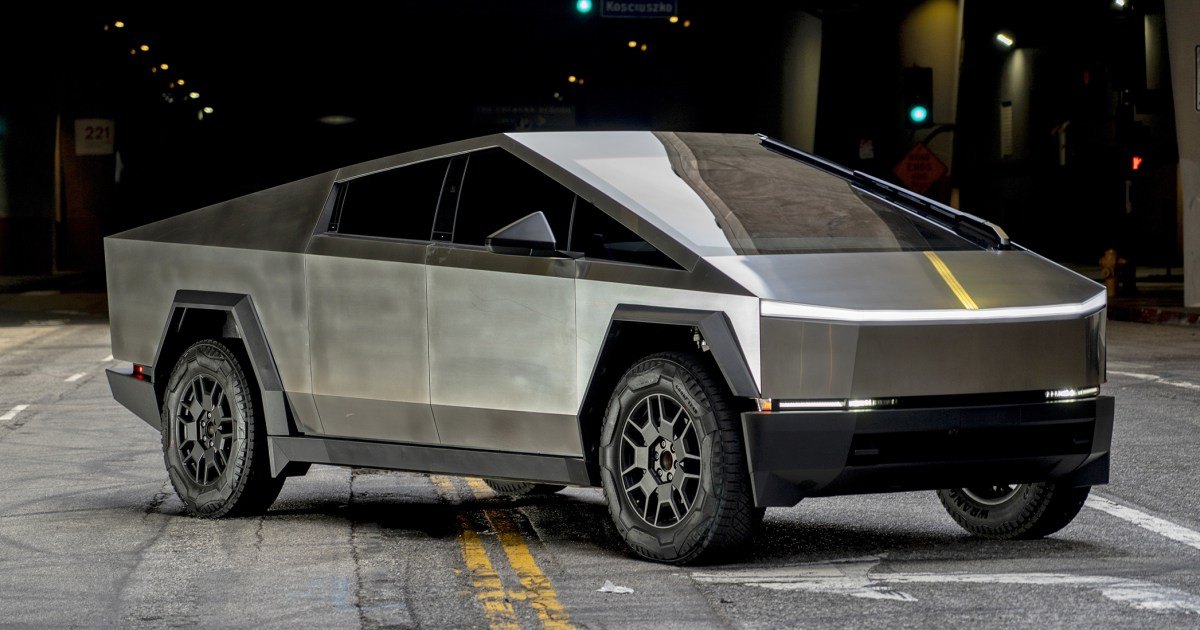
Assembly lines dedicated to the pickup rely on unique production techniques designed specifically for its thick, cold-rolled stainless-steel exterior and custom geometric components. Transitioning the factory floor requires technicians to gradually phase out these bespoke assembly jigs and hydraulic presses in Austin to install dedicated lines for the Cybercab. Cybercab vehicles discard traditional mechanical interfaces entirely, omitting driver steering wheels, accelerator pedals, brake pedals, and side-view mirrors while introducing motorized butterfly doors configured for autonomous ride-hailing services. Cybertruck lead engineer Wes Morrill stated on X that the pickup served as an essential technology development platform whose architectural and manufacturing advances will carry directly into the Cybercab program.
Repurposing plant capacity allows Tesla to redirect capital expenditure toward self-driving vehicle production without expanding its factory real estate footprint. Tesla began operating paid passenger trips using a small trial fleet of Cybercab vehicles in Austin during September, establishing an initial local footprint for testing software dispatch systems and passenger workflows. The manufacturing migration ensures that capital assets, factory electrical distribution, and facility floor space at the Austin gigafactory directly support the autonomous network rather than maintaining idle tooling for low-volume consumer pickups.
Advertisement
Tech Pulse Daily
Get tomorrow's pulse first
Join engineers who read Tech Pulse before stand-up. Free, weekday mornings.
Tesla to wind down Cybertruck production: why it matters
The cancellation highlights the broader commercial failure of full-size electric pickups across the domestic automotive industry. Automotive analyst Felipe Munoz pointed out that while critics have labeled the Cybertruck an operational disappointment due to falling deliveries, competing battery-powered pickups manufactured by legacy competitors such as Ford have also flopped across the United States. Munoz noted that all participating brands lost ground because battery-electric pickups have failed to find broad acceptance among traditional American truck owners who prioritize conventional utility, towing range, and standardized repair logistics.
International expansion was blocked by strict foreign safety mandates that conflicted directly with the truck's rigid exterior geometry. Andy Palmer explained that safety authorities in regions like Europe evaluate pedestrian impact severity during vehicular collisions, creating regulatory barriers that the pickup could never legally overcome. Because the sharp-edged stainless-steel body panels could not absorb kinetic energy during pedestrian impacts under European safety standards, the vehicle could not obtain road certification in overseas markets where electric passenger vehicles routinely achieve high market penetration.
Tesla to wind down Cybertruck production: who is affected
Prospective pickup buyers, current vehicle owners, and rival legacy automakers face an altered commercial market as Tesla prepares to exit the consumer pickup segment. When Elon Musk unveiled the concept design in 2019, he positioned the truck as a direct threat to entrenched models from General Motors and Ford, declaring during the official 2023 launch that the vehicle represented the true aesthetic future of transportation. With Tesla vacating the category, traditional domestic truck builders will retain their commercial customer base without facing continuous price competition or production pressure from the Austin facility.
The transition also impacts Tesla's internal engineering groups and autonomous transit operations. Lead engineer Wes Morrill confirmed that development teams are transferring vehicle control insights and battery architectures developed for the truck into the robotaxi initiative. For Austin rideshare passengers and fleet operations staff, the phaseout accelerates the deployment of purpose-built two-seat autonomous vehicles across municipal routes, redirecting factory labor and automated assembly lines toward commercial transportation services.
Tesla to wind down Cybertruck production: what to watch
Regulatory compliance remains the most pressing hurdle facing the assembly changeover and the subsequent rollout of the Cybercab. Although Tesla launched paid commercial rides for the public in Austin in September, federal regulators continue to review the vehicle's manufacturing specifications. The company must still formally resolve outstanding inquiries from the primary United States automotive safety agency regarding whether the driverless Cybercab was properly self-certified under existing Federal Motor Vehicle Safety Standards given its complete absence of conventional steering systems and braking pedals.
Industry observers will track final production figures from the Austin gigafactory leading up to the mid-2027 cutoff date alongside future Kelley Blue Book registration updates. Observers will also monitor whether Tesla attempts to offer discounted inventory pricing to clear remaining components before lines shut down permanently. As Palmer noted, the truck's financial drag represents little more than a minor rounding error on Tesla's consolidated corporate balance sheet, but final delivery totals will define whether the project concludes as an isolated industrial experiment or a foundation for municipal robotaxis.
Developer Action Items
- ☐ Verify the claim on the official Tesla page (or Hacker News Best), not from this recap alone.
- ☐ Name the surface that moved — API, policy, model, hardware, or commercial terms — before you Slack the thread.
- ☐ Assign one owner a day to read the primary material and decide: this-sprint, this-quarter, or noise.
- ☐ Do not change production on day-one coverage. Watch the vendor changelog and one independent write-up first.
Tesla to wind down Cybertruck production FAQ
When will Tesla stop manufacturing the Cybertruck?
Tesla will wind down Cybertruck production at its Austin, Texas gigafactory around mid-2027.
How many Cybertrucks did Tesla sell before deciding to wind down production?
Tesla delivered 38,965 Cybertrucks in the United States in 2024, followed by 20,237 units the following year, representing a 48 percent annual drop.
Why was the Cybertruck unable to enter the European automotive market?
European pedestrian crash safety regulations made certification impossible due to the vehicle's rigid, sharp-edged stainless-steel design.
What vehicle is replacing the Cybertruck on Tesla's Austin assembly lines?
Tesla is retooling the Austin plant to produce the Cybercab, an autonomous robotaxi equipped with butterfly doors and no steering wheel, pedals, or mirrors.
Sources

Author
Dillip Chowdary
Writes Tech Bytes coverage of AI, engineering, and the tools that actually ship. Editor of Tech Pulse Daily.
Related on Tech Bytes
Advertisement