Why Anthropic's Filing Crushed Tech Stocks
Anthropic revealed an $80 billion annual loss and heavy cross-ownership with Google and Amazon in its draft S-1, sparking a 10% slide across tech stocks.
By Dillip Chowdary • Nov 01, 2026 • Source: thebignewsletter.com
Artificial intelligence developer Anthropic made public its initial draft S-1 registration statement ahead of a planned multi-trillion dollar stock market debut, disclosing unprecedented financial entanglements with direct rivals and triggering a sharp multi-day selloff across the technology sector, according to thebignewsletter.com's report. Following the public disclosure, tech equities tumbled as investors parsed the scale of cross-ownership and capital commitments binding major cloud providers. The release arrived alongside quarterly financial earnings reports from Google and Amazon that missed corporate revenue targets and revealed higher than expected negative free cash flow, including a 12% single-day decline in Google stock that erased half a trillion dollars in market value.
This analysis examines the financial disclosures contained in the draft prospectus, the capital spending patterns shifting Silicon Valley from cash generation to heavy cash burn, and the regulatory background surrounding generative computing partnerships. The breakdown details how cross-investments, debt packages, non-cancellable cloud computing leases, and mutual customer arrangements tie Anthropic to Amazon, Google, Microsoft, and Broadcom. It provides investors, enterprise software buyers, policy analysts, and software engineers with an accounting of how corporate balance sheets across the artificial intelligence sector have become deeply codependent, and why market volatility in one major player now impacts the entire technology ecosystem.
Anthropic's Filing Crushed Tech Stocks: what actually changed
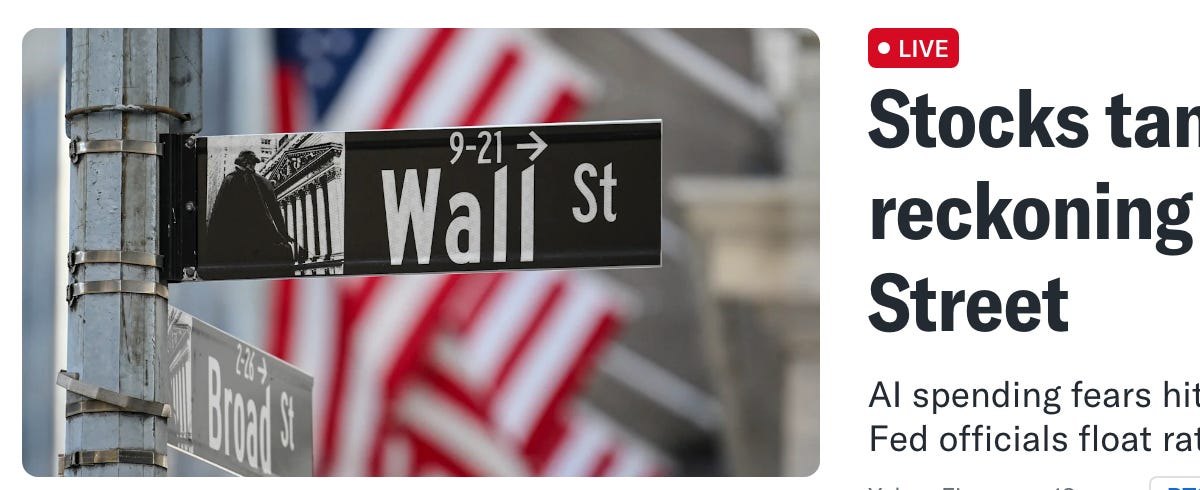
Financial disclosures inside the preliminary S-1 filing confirmed that the tech industry has transitioned from generating massive cash reserves to consuming extraordinary amounts of investor capital. Anthropic reported an annual loss of $80 billion last year, while Amazon posted negative $42 billion in free cash flow over the same period. Disappointing quarterly earnings from Google and Amazon followed the submission, revealing elevated capital expenditures alongside revenue misses. Google shares dropped 12% in a single Thursday trading session, wiping out half a trillion dollars in market capitalization before broad market declines dragged the entire technology sector down 10% from its prior peak.
The market downturn followed earlier signs of valuation strain among neoclouds, which operate as off-balance sheet infrastructure entities for large semiconductor and technology companies. While earlier tech listings like Google in 2004 and Amazon in 1995 depicted standalone enterprises with minimal references to outside firms, Anthropic’s filing reflects deep structural reliance on third parties. The document contains over one hundred and fifty citations to Amazon, more than one hundred mentions of Google, and over a dozen citations each for Microsoft and Broadcom, demonstrating to Wall Street that traditional corporate independence has eroded across frontier model development.
Anthropic's Filing Crushed Tech Stocks: how it works
The operational structure detailed in the prospectus functions through interlocking circles of equity stakes, distribution pacts, cloud hosting arrangements, and commercial debt. Google owns approximately 15% of Anthropic, Amazon holds between 10% and 12%, and Microsoft holds an undisclosed smaller equity position. In addition to equity investments, Amazon has extended tens of billions of dollars in convertible debt that is unlocked through purchases of Amazon Web Services compute capacity. Chipmaker Broadcom acts simultaneously as a key hardware supplier, compute lessor, and lender, guaranteeing $42 billion in borrowing for Anthropic.
In return, Anthropic relies on Amazon, Google, and Microsoft as its primary distribution channels, with the three firms selling roughly 50% of its software products, including Claude for Microsoft 365 and Claude in Chrome. The startup purchases hundreds of billions of dollars in non-cancellable computing resources from these partners while relying on their internal software tools to run daily operations. Conversely, the tech conglomerates purchase Claude as paying enterprise customers. Google reported an unrealized gain on non-marketable equity securities of $117 billion, noting that the figure primarily consists of its private investment in a single company, while its quarterly cloud computing revenue surged 103% to $30 billion. Amazon’s cloud revenue climbed 39% to $46 billion a quarter, driven by large computational commitments from Anthropic.
Advertisement
Tech Pulse Daily
Get tomorrow's pulse first
Join engineers who read Tech Pulse before stand-up. Free, weekday mornings.
Anthropic's Filing Crushed Tech Stocks: why it matters now
The filing establishes that systemic risk is now concentrated within an interconnected web of tech conglomerates that rise and fall together rather than competing as separate entities. In the risk factors section of the filing, Anthropic explicitly warned investors that its relationships with Amazon, Google, and Microsoft create potential conflicts of interest that are difficult to fully anticipate or mitigate because these partners act simultaneously as investors, customers, distributors, and competitors. The disclosure also identified Anthropic as the single largest customer of SpaceX, another company preparing for a multi-trillion dollar initial public offering, multiplying the systemic exposure across private and public markets.
This unified corporate architecture contrasts sharply with the market dynamics of 2019, when Microsoft, Apple, Google, Meta, and Amazon operated in separate commercial domains and largely funded internal expansion from their own operational margins. Starting in 2024, large platforms redirected monopoly profits into heavy capital investments in artificial intelligence and cross-investments in partner firms and adjacent neocloud entities. By documenting hundreds of billions of dollars in mandatory compute commitments, mutual software licensing, and reciprocal revenue recognition, the S-1 confirms that quarterly performance across cloud providers is now heavily dependent on the private startup they bankroll.
Anthropic's Filing Crushed Tech Stocks: who is affected
The primary entities bound into this arrangement are Anthropic, Google, Amazon, Microsoft, and Broadcom, along with their public shareholders and enterprise customers. Investors who valued cloud providers based on independent growth trajectories now face complex balance sheet exposure, as seen when Google reported $117 billion in paper gains from private securities before Anthropic even completed its listing. When Anthropic’s high operating losses and capital requirements were laid bare, market confidence wavered across all participants, pulling the broader technology index down 10% as institutions reevaluated the sustainability of reciprocal cloud accounting.
Federal regulatory agencies and antitrust policymakers are also directly impacted by the disclosures. During the Biden administration, the Federal Trade Commission under Lina Khan opened formal inquiries into overlapping investments in the artificial intelligence sector, while the Department of Justice Antitrust Division sought to force Google to divest its Anthropic stake during the remedy phase of its search antitrust lawsuit. Under the Trump administration, antitrust authorities reversed course, withdrawing the divestment demand against Google and actively encouraging cross-ownership among ten central tech firms, including SpaceX, Oracle, Google, Nvidia, Microsoft, Broadcom, Meta, Amazon, Anthropic, and OpenAI.
Anthropic's Filing Crushed Tech Stocks: what to watch
Market watchers must track the pricing and final institutional reception of the Anthropic initial public offering, as well as the upcoming SpaceX public listing, given the commercial dependencies linking the two multi-trillion dollar debuts. Because Anthropic omitted key financial figures from its initial draft S-1, subsequent amendments submitted to securities regulators will reveal more precise accounting of its operating cash burn, revenue breakdowns, and contractual payment schedules. Observers will also inspect subsequent earnings statements from Amazon and Google to assess whether cloud division growth rates can continue if AI developers slow their non-cancellable hardware lease commitments.
Policy developments surrounding federal data center infrastructure initiatives will also play a critical role in shaping capital deployment. Analysts must observe how the federal economic framework encouraging cross-investment across major semiconductor, cloud, and AI companies handles ongoing negative free cash flow across the industry. Whether tech conglomerates can translate hundreds of billions of dollars in reciprocal computing arrangements into genuine commercial profitability, or whether escalating capital demands will force further equity write-downs and market corrections, remains the central question facing public technology markets.
Developer Action Items
- ☐ Map where Anthropic / Claude / Google sits in your stack (SDK, API key, billing, data-processing addendum).
- ☐ Hold the $80 billion figure to the primary report; do not brief a number that is not on the record.
- ☐ Hold non-urgent migrations until the integration or use-of-proceeds roadmap is public — day-one coverage is not a ship signal.
- ☐ If you are mid-contract or mid-POC, ask the vendor what changes for existing customers this quarter.
- ☐ Write the single decision this forces: stay, dual-source, or exit.
Anthropic's Filing Crushed Tech Stocks FAQ
What caused the recent 10% drop in technology stocks?
Tech equities fell after Anthropic released a draft S-1 revealing an $80 billion annual loss and deep financial dependencies on big tech, coinciding with revenue misses and high negative free cash flow at Google and Amazon.
How much of Anthropic do Google and Amazon own?
Google owns roughly 15% of Anthropic stock, while Amazon holds between 10% and 12%, alongside tens of billions of dollars in convertible debt unlocked through cloud computing purchases.
How do Amazon, Google, and Microsoft distribute Anthropic's products?
The three tech giants act as primary distributors selling roughly 50% of Anthropic's software, including enterprise integrations like Claude for Microsoft 365 and Claude in Chrome.
What role does Broadcom play in Anthropic's operations?
Broadcom acts simultaneously as a hardware supplier, compute lessor, and major creditor, guaranteeing $42 billion in borrowing for the artificial intelligence company.
Sources

Author
Dillip Chowdary
Writes Tech Bytes coverage of AI, engineering, and the tools that actually ship. Editor of Tech Pulse Daily.
Related on Tech Bytes
Advertisement